Bank Indonesia vows to ramp up rupiah defence as it sinks to record low
The currency is down 3.6% so far this year
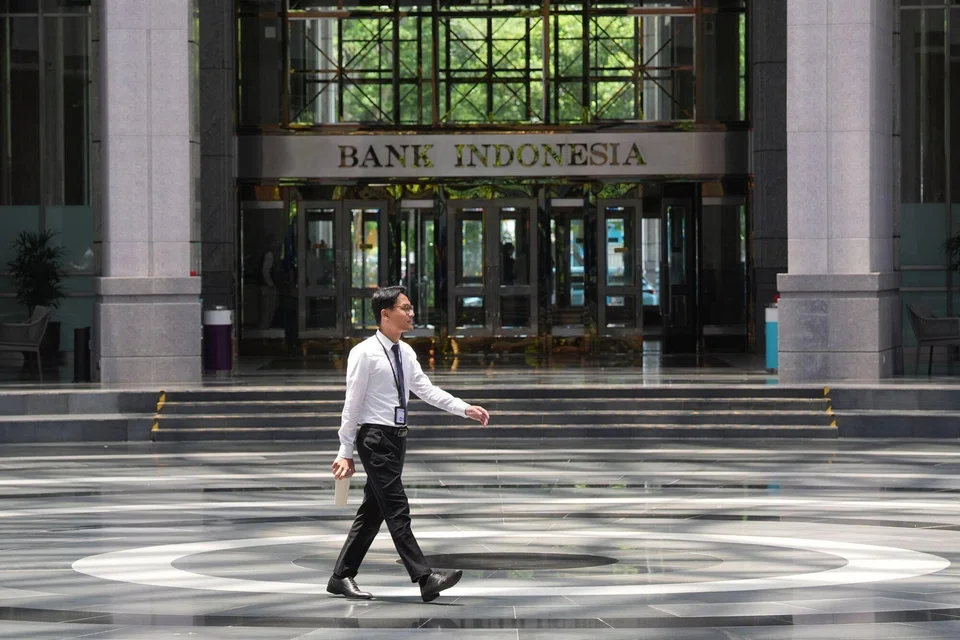
[JAKARTA] Indonesia’s central bank is committed to intervening with increased intensity to defend the rupiah, senior deputy governor Destry Damayanti said on Thursday (Apr 23), after the fragile currency sank to a record low.
The rupiah’s drop against the US dollar was caused by rising global uncertainty and the rate of depreciation was in line with the currencies of Indonesia’s peers in the region, Destry said.
It fell to as low as 17,315 per US dollar earlier in the session and last fetched 17,305, down about 0.8 per cent on the day and on pace for its sharpest one-day decline in seven months.
Bank Indonesia (BI) kept its policy rates unchanged on Wednesday and said that it would go “all out” to defend the rupiah in the face of risk-off sentiment due to the US-Israeli war on Iran that has jolted Asian economies.
Investors and market analysts no longer expect BI to cut rates this year, saying they believe the central bank will focus on rupiah stability and rate hikes could be on the cards to tame inflation if the war goes on for longer.
The central bank has conducted interventions in offshore and onshore non-deliverable forward markets as well as the domestic spot FX market.
“Bank Indonesia will continue to increase the intensity of intervention to maintain the stability of the rupiah exchange rate,” Destry said.
Josua Pardede, chief economist at Permata Bank, said on Thursday’s move is not only a story about an Iran-related global shock; it is also a market judgment that Indonesia’s external position has become more fragile.
“BI being ready around the clock does not prevent IDR from potentially weakening sharply,” he said. “But if the market faces a fresh wave of US dollar demand from importers, foreign investors reducing risk, BI can slow the move far more easily than it can fully reverse it in one session.”



The currency was under pressure even before the war broke out at the end of February. Investors were concerned with Indonesia’s fiscal health, the independence of its central bank and transparency issues in its capital market.
The rupiah is down 3.6 per cent so far this year, making it the second-worst performer in the Asia-Pacific region behind the Indian rupee.
The yield on Indonesia’s 10-year bonds rose 4.9 basis points to 6.687 per cent, its highest in three weeks, LSEG data showed.
Destry also underlined BI’s current monetary policy to increase rates offered on its short-term, rupiah-denominated notes, known as SRBI, aimed at strengthening the country’s interest rate structure without changing the benchmark.
Such an interest rate structure is intended to attract foreign capital flows, she said.
Analysts warned that the currency-protection move may buy the central bank some time, but a deeper slide in the rupiah and depleting FX reserves remained a significant risk that could put a rate hike on the table.
Radhika Rao, senior economist at DBS Bank, sees two preconditions for the BI to shift to tightening: A sharp fall in the rupiah and an increase in the domestically administered fuel prices that lift inflation beyond the official target range. REUTERS
Decoding Asia newsletter: your guide to navigating Asia in a new global order. Sign up here to get Decoding Asia newsletter. Delivered to your inbox. Free.
Share with us your feedback on BT's products and services