


Asean Business logo
SPONSORED BYUOB logo

Indonesia coal giant Indika Energy to invest US$500m in renewables under new energy strategy
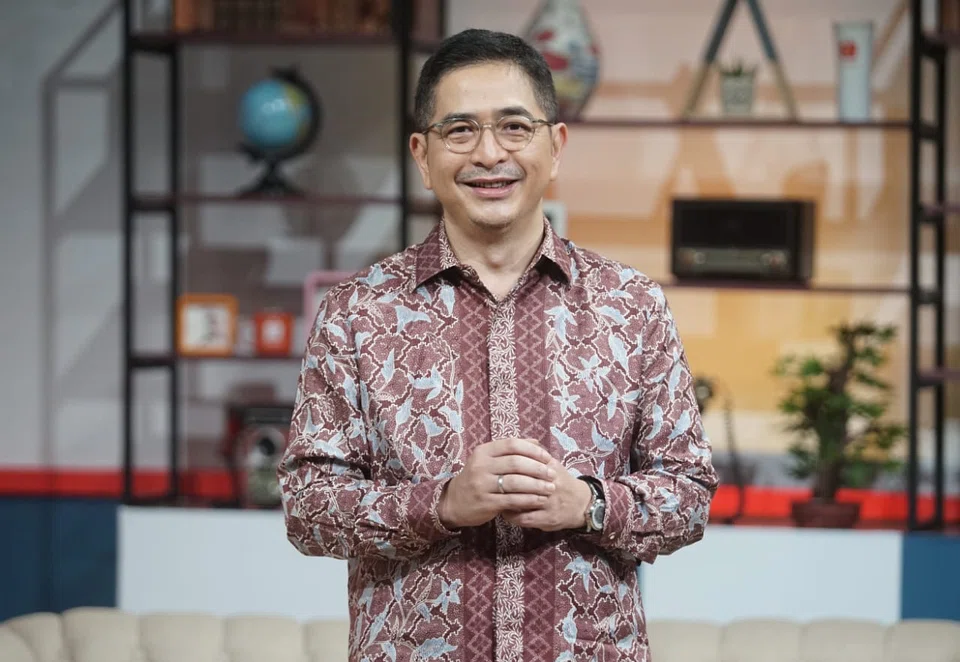
    • Arsjad Rasjid, president director of Indika Energy. TPG Rise Fund’s portfolio company Fourth Partner Energy entered into a JV with Indika, with US$500 million invested in renewable energy.
    • Arsjad Rasjid, president director of Indika Energy. TPG Rise Fund’s portfolio company Fourth Partner Energy entered into a JV with Indika, with US$500 million invested in renewable energy. PHOTO: ARSJAD RASJID
    Published Mon, Dec 19, 2022 · 05:50 AM

    [JAKARTA] At the Group of 20 meetings in Bali in November, some of the world’s political and business leaders had a taste of the future of transportation in Indonesia when they rode on an electric bus produced by Indika Energy Group and Foxconn.

    Indika – one of Indonesia’s top diversified conglomerates with businesses including energy, mining, logistics, infrastructure and digital startups – is betting heavily on renewable energy and electric vehicles (EVs).

    President director Arsjad Rasjid told The Business Times in an interview that Indika has teamed up with Fourth Partner Energy – a solar developer in India – to establish a US$500 million joint venture to invest in Indonesia’s green energy sector. (*See amendment note)

    “The future of Indonesia is green energy and we have made a commitment to invest and develop solar and wind energy,” he said. “We want to be part of the future and we have adopted the vision for Indonesia’s new capital as our guiding vision.”

    He was referring to Nusantara, the new capital city first announced by President Joko Widodo in 2019. When it is ready, it will be the country’s first eco-smart city that uses green energy and EVs as the preferred mode of transportation. Currently, the Indonesian government is already investing heavily in EVs including the production of batteries and components.

    “We have launched our first EV two-wheelers called Alva. These are manufactured in Indonesia and we have capacity to make 100,000 vehicles a year,” said Rasjid. “For the next two phases, we will also look at producing electric buses, as well as small and medium-sized trucks.

    Indika is working with Taiwan-based Foxconn to produce these EVs, and both parties have an agreement to jointly invest US$2 billion over the next few years.

    While the scale of the production is massive, Rasjid said Indika remains committed to achieving net-zero carbon emissions for all its businesses by the year 2050 or sooner.

    The Indonesian government has set a target for the domestic automotive industry to produce 600,000 units of electric cars and buses by 2030, as part of the bigger nationwide push to achieve net-zero emissions by 2060. South-east Asia’s largest economy is home to roughly a quarter of the world’s nickel reserves, making it an attractive market for EV production.

    While coal mining will remain an integral part of Indika’s business and revenue for some time to come, Rasjid said that the company has already started to diversify its assets.

    It has sold a 70 per cent stake in Petrosea, a coal mining services company, for US$146 million, as well as its entire stake in Mitrabahtera Segara Sejati, an integrated coal transport and logistics services firm.

    “We have been divesting our assets from coal and redirecting the funds into our new business ventures,” said Rasjid. “The process started in 2018 and we are in transition.”

    He added that Indika, Indonesia’s third largest coal producer that has transformed into an investment company, is also buying stakes in private ports as it expands into the supply chain sector.

    “At the end of the day, coal is still part of Indonesia’s energy security. However, we have to transition to a more balanced energy policy, and it cannot jeopardise economic growth,” he said.

    He noted that other coal companies have also committed to retire their coal-powered power plants, but many find it difficult to finance solar plants given the higher interest rates levied on developing nations.

    “Developing nations are charged higher interest rates due to the country risks associated with them,” said Rasjid, who is also chairman of the Indonesian Chamber of Commerce and Industry, a powerful umbrella organisation of business chambers and associations. “This is not fair. We all breathe the same air so we should have the same treatment as developed countries.”

    Indika’s new energy strategy has not gone unnoticed. In May this year, Fitch Ratings revised the company’s outlook to stable from negative, and affirmed its long-term and local currency issuer default ratings at BB-.

    “The outlook revision reflects our expectation that Indika will be able to maintain its leverage in line with its current rating over the next four years, while it increases its diversification-related spending to raise its non-coal revenue,” Fitch said in a recent statement.

    It added that it expects Indika’s execution risk of these greenfield investments to be largely manageable based on management’s cautious approach.

    *Amendment note: An earlier version of this article stated that Indika had teamed up with TPG to invest in Indonesia’s green energy sector. Indika’s partner is in fact Fourth Partner Energy, which is a TPG portfolio company.



