


Asean Business logo
SPONSORED BYUOB logo

Indonesia e-wallet provider Dana launches services targeted at foreigners as it looks to expand its ecosystem

Company now allows foreigners to bind their credit cards to the e-wallet, which is a step towards its internationalisation

Summarise
Lionel Lim
Published Mon, Nov 17, 2025 · 11:00 AM
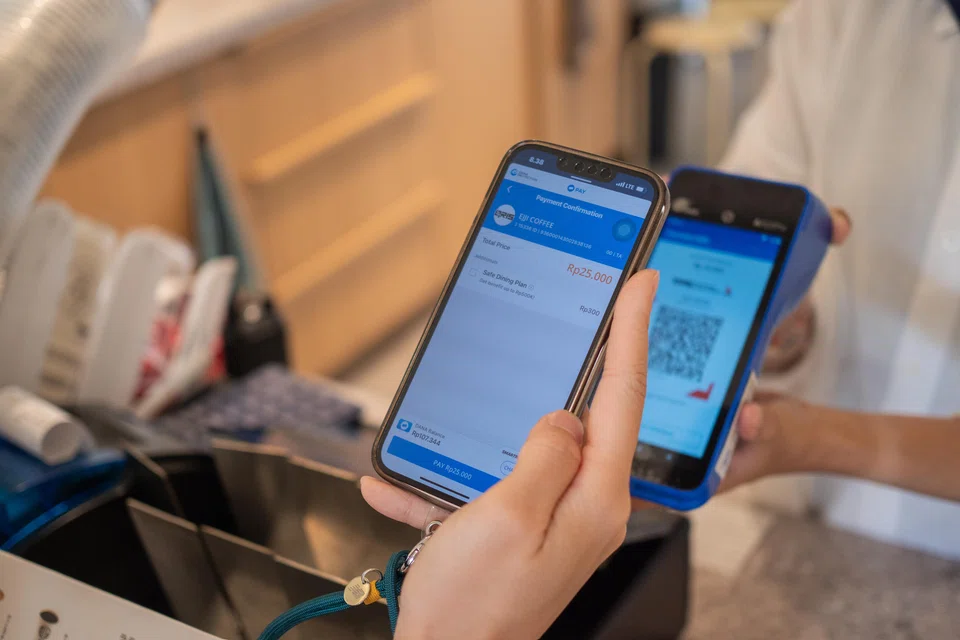
    • Dana is the first major Indonesian e-wallet firm to provide this service.
    • Dana is the first major Indonesian e-wallet firm to provide this service. PHOTO: DANA

    DANA is ramping up its expansion strategy and is now targeting travellers. Such individuals are now allowed to bind their credit cards to the e-wallet firm, so they can use these cards to make payments to micro, small and medium-sized merchants through Indonesia’s unified QR payment system, QRIS.

    Dana, the first major Indonesian e-wallet firm to provide this service, sees this as the next step in its domestic and regional expansion strategy.

    Its chief innovation officer Darrick Rochili told The Business Times at the recent Singapore FinTech Festival: “This does two things. It helps users from overseas easily and seamlessly transact in Indonesia, and it also empowers merchants to accept payments from foreigners.”

    Darrick Rochili, Dana’s chief innovation officer, said: “This does two things. It helps users from overseas easily and seamlessly transact in Indonesia, and it also empowers merchants to accept payments from foreigners,” PHOTO: DANA

    Like all e-wallets, Dana makes money through the data it accumulates through transactions. The data helps the company decide which merchant or consumer is eligible for products such as loans, insurance or investments.

    Yet, unlike other major e-wallet providers in Indonesia, Dana is not tied to, for example, ride-hailing and e-commerce platforms, which can help drive usage. It is also not linked to banks, which may take the opportunity to upgrade e-wallet users into bank customers.

    This means Dana is relying more heavily on its ease of use, for both consumers and merchants, to grow its active user base.

    Major backers of Dana include Ant International and Sinar Mas Group, an Indonesian conglomerate. 

    Rochili said: “It’s an infrastructure. You provide the convenience, you provide access to everyone.”

    The company said it has about 200 million registered users; a third-party data provider estimates the number of monthly active users to be at around 75 million.

    This means that 70 per cent of Indonesia’s 286.5 million people have an account with Dana, and about a quarter of the country is actively using it. The company has a goal to eventually reach all of Indonesia and to have about 150 million active users. 

    “If we are talking about making money, payments is not really a money-making business,” he said. 

    Dana collects only a nominal fee from some merchants who use its services for transactions, and consumers enjoy a certain number of free transfers and top-ups. 

    But Dana can make money through loans it provides to merchants. It needs data, which can be gleaned from transactions, to calculate the lending risks.

    Expanding payment options via the app would create a bigger use case for merchants to accept payments via Dana.

    Rochili said that certain merchants outside Jakarta or Bali, for instance, may still be unable to accept foreign credit cards. Allowing foreigners to bind their credit cards to Dana would thus give these merchants “an opportunity to accept payments and grow their business”.

    He added that the move also aligns with Indonesia’s strategy to make tourism more accessible beyond places such as Bali.

    Beyond Indonesia, Dana is working to gain acceptance regionally; its e-wallet can now be used in countries such as Malaysia, Thailand, or Singapore through the individual country’s national QR payment systems.

    Dana also has similar agreements in Japan, South Korea and China. 

    So while foreigners travelling to Indonesia can now use their own credit cards via the Dana e-wallet in Indonesia, there could be an opportunity in future for Dana to expand that service to Dana users outside Indonesia. This would create a bigger use case for merchants outside Indonesia to accept payments via Dana. 

    “It’s a convenience play, and as part of our growth, we want to provide the best experience. We have a heavy focus on serving our end customers, whether they are merchants or users going overseas,” Rochili said.



