



Indonesia inflation eases slightly to 3 per cent in April
Prices for food items such as rice, chillies, garlic and chicken all fall

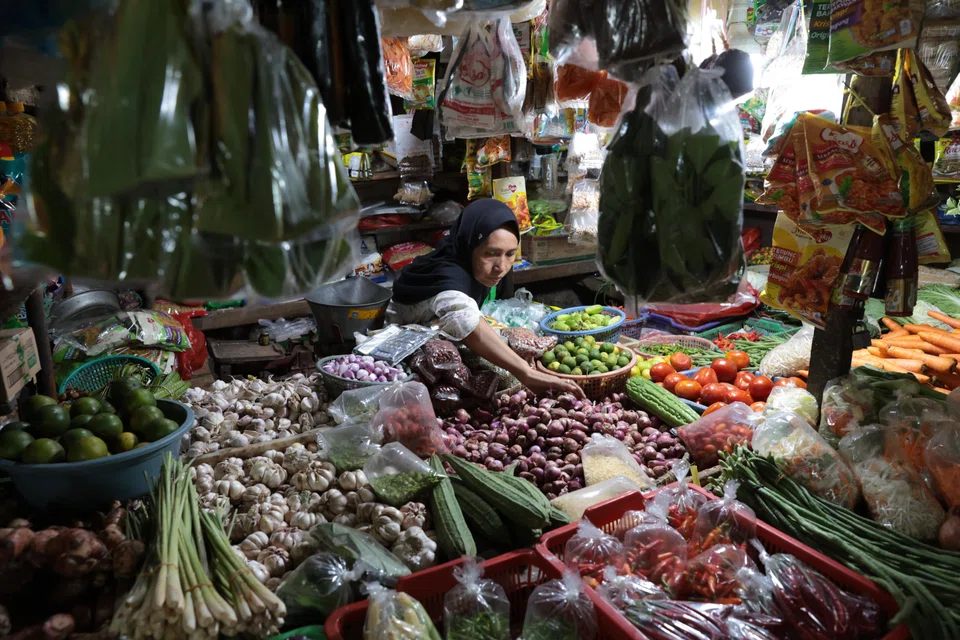
[JAKARTA] Indonesia’s headline inflation moderated to 3 per cent year on year in April – from 3.05 per cent in March – primarily due to lower food prices such as that of rice as the harvest season arrived.
The country’s consumer price index for April fell below the average of 3.1 per cent that was predicted by a group of Bloomberg analysts in a recent poll.
The number indicates that inflation remains within Bank Indonesia’s (BI) target range of 1.5 to 3.5 per cent for the year.
Core inflation – which excludes volatile items such as fuel – stood at 1.82 per cent in April, up slightly from 1.77 per cent in March. On a monthly basis, headline inflation slowed to 0.25 per cent, from 0.52 per cent.
South-east Asia’s largest economy saw a decrease in prices for food items such as rice, chillies, garlic and chicken, all of which are known for their significant contribution to inflation within the food basket category.
Volatile food inflation decreased to 9.63 per cent last month, from 10.33 per cent the previous month.
Amalia Adininggar, the acting head of Indonesia’s statistics agency, noted that the lower prices of food staples occurred after the country entered the annual harvest season during March and April. This resulted in increased stocks in the market.
“This was also caused by the government’s realisation of rice and garlic imports,” she said on Thursday (May 2).
In the past year, rice prices have increased significantly in Indonesia, with premium rice prices rising by over 20 per cent since February last year and exceeding the government’s price ceiling.
The government has decided to import 3.6 million tonnes of rice this year to address disrupted domestic supply caused by an extended dry season and export restrictions imposed by rice-producing countries.
Economists expect inflationary pressures to continue easing in the coming months, with the central bank likely to refrain from further interest rate hikes after the unexpected pre-emptive hike last month.
BI raised its benchmark rate from 6 to 6.25 per cent in order to protect the weakening rupiah, which has fallen to a four-year low due to a strong rally in the US dollar.
“We see BI staying hawkish in the near term, although additional tightening may not be on the table yet,” said ING senior economist Nicholas Mapa in a note.
Despite inflation staying within the parameters set by the central bank, economists warn that Indonesia faces the looming threat of dwindling purchasing power, exacerbated by the prospect of prolonged high interest rates and geopolitical risks globally.
Esther Sri Astuti, the executive director of the Institute for Development of Economics and Finance, highlighted the importance of the government’s fiscal efforts to protect the purchasing power of Indonesia’s roughly 280 million consumers.
Rather than implementing broad fiscal stimulus measures, the government can target support towards the most vulnerable households, she said.
She added: “This approach assists them in managing the impact of high food and energy prices without excessively stimulating overall demand. One effective strategy is the provision of direct cash transfers.”
TRENDING NOW

Two Singapore-listed palm oil firms named in Greenpeace report on Indonesian plantation fires

Singapore Airlines flight returns to San Francisco after ‘unruly’ passenger incident

Singapore looking into which companies responsible for haze-causing fires: PM Wong

Deluge IPO 3.86 times subscribed ahead of SGX debut

