



Indonesia kick-starts long-delayed US$21 billion Abadi Masela LNG project
It is expected to start production in 2029 or 2030, and will be one of the country’s largest gas developments

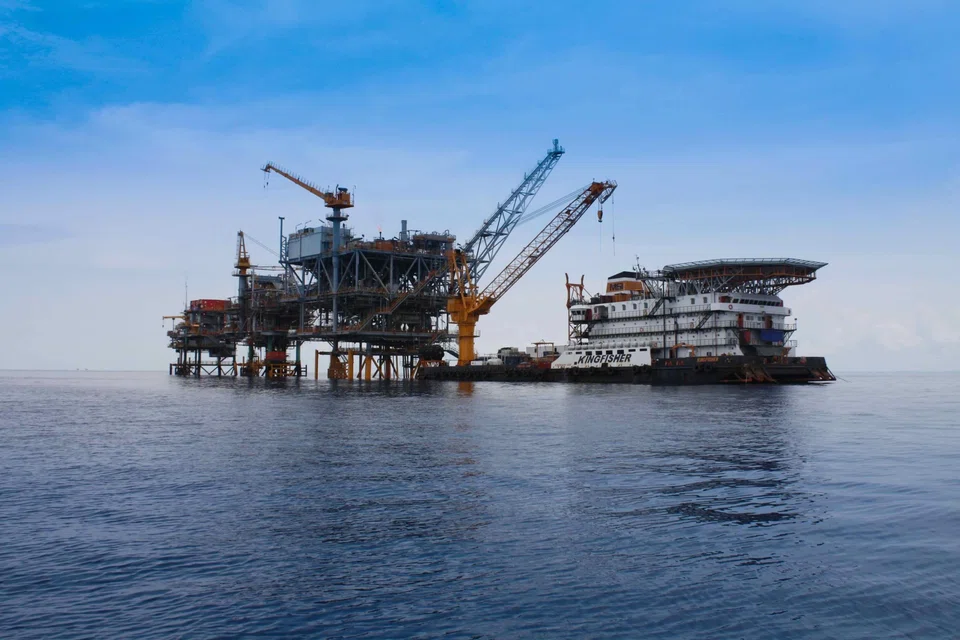
[JAKARTA] Indonesia kicked off construction of the long-delayed US$21 billion Abadi Masela liquefied natural gas (LNG) project on Thursday (Jul 16).
This ends nearly three decades of uncertainty over one of the country’s largest energy developments as it moves to strengthen domestic energy security.
Located in the Masela Block in eastern Indonesia, the project is being developed by Japan’s Inpex Corp in partnership with Indonesia’s Pertamina and Malaysia’s Petronas.
Abadi will be one of Indonesia’s largest sources of natural gas, bolstering domestic energy security for decades while maintaining the country’s position as a major LNG exporter. It is expected to begin production around 2029 or 2030.
Bahlil Lahadalia, Indonesia’s minister for energy and mineral resources, said the project is expected to produce 9.5 million tonnes of LNG annually, along with 150 million standard cubic feet per day of pipeline gas and 35,000 barrels of condensate a day.
“Around 60 per cent of the gas output will be allocated to the domestic market, with priority given to downstream industries, particularly fertiliser production and other industrial feedstock,” he said during a livestreamed groundbreaking ceremony.
'%3e%3cpath%20d='M12.1475%2025.5262C13.7713%2025.4295%2014.94%2023.913%2014.94%2021.8832C14.94%2019.5359%2013.474%2018.093%2011.5917%2018.093C11.3745%2018.093%2010.9582%2018.093%2010.8393%2018.1413V25.2086L11.8891%2025.5745C11.8891%2025.5745%2012.207%2025.5262%2012.1475%2025.5262ZM11.4934%2017.6281C13.2567%2017.6281%2014.3843%2016.4292%2014.3843%2014.4501C14.3843%2012.372%2013.275%2011.2973%2011.4339%2011.2973H10.8393V17.6305H11.4934V17.6281ZM6.66078%2025.6482L7.39265%2025.5492C8.02617%2025.4502%208.26403%2025.3053%208.26403%2025.1097V11.6149C8.26403%2011.4193%208.1451%2011.3709%207.23484%2011.249L6.68137%2011.173L6.6219%2010.7588H11.9508C15.7153%2010.7588%2017.0624%2012.0797%2017.0624%2014.1578C17.0624%2015.9666%2015.7748%2017.1909%2013.4969%2017.6305V17.7041C16.111%2017.948%2017.6571%2019.5382%2017.6571%2021.7636C17.6571%2024.3318%2015.8937%2026.0417%2012.1109%2026.0417H6.60132L6.66078%2025.6482Z'%20fill='%232B2B2B'/%3e%3cpath%20d='M20.6287%2025.6505L21.5596%2025.5515C22.1725%2025.4779%2022.4104%2025.3076%2022.4104%2025.112V11.249H21.9346C20.073%2011.3479%2018.982%2013.0095%2018.408%2014.6227L18.1907%2015.5018H17.6555L18.1701%2010.7588H29.3837L29.6421%2015.4787H29.1664L28.9491%2014.6227C28.3728%2012.8645%2027.3047%2011.2743%2025.5002%2011.249H24.9856V25.1856C24.9856%2025.3812%2025.1251%2025.4548%2025.9965%2025.5515L26.7695%2025.6505L26.829%2026.0417H20.5693L20.6287%2025.6505Z'%20fill='%232B2B2B'/%3e%3c/g%3e%3cdefs%3e%3cclipPath%20id='clip0_5242_21648'%3e%3crect%20width='24'%20height='16.8'%20fill='white'%20transform='translate(6%2010)'/%3e%3c/clipPath%3e%3c/defs%3e%3c/svg%3e)
The project will also incorporate carbon capture and storage technology, making it one of Indonesia’s first large-scale LNG developments to integrate emissions reduction measures from the outset.
Long-delayed project
The groundbreaking is seen as a key test of Indonesia’s ability to execute large-scale investments and reassure foreign investors that multi-billion-dollar projects can move forward.
The project, first conceived in the late 1990s, was repeatedly delayed by regulatory changes, revisions to its development plan and shifting investment priorities.

The Abadi Masela gas field contains an estimated 6.97 trillion cubic feet (TCF) of natural gas reserves, making it one of Indonesia’s largest undeveloped offshore gas resources.
Located about 160 km off Yamdena island in the Arafura Sea, the deep-water field sits at depths of between 400 and 800 m.
The production-sharing contract for the Masela Block was signed in November 1998 during the administration of former president BJ Habibie. Despite almost three decades having passed since the agreement was signed, the project has yet to produce its first gas.
Its development was slowed by years of exploration work, revisions to the project’s development plan and prolonged negotiations over its investment structure.
A major turning point came in 2016 when the Indonesian government required the LNG processing facility to be built onshore rather than offshore, forcing developers to redesign the project and significantly increasing costs.
To accommodate the delays, Jakarta extended the original production-sharing contract, first by 20 years to 2048 and later by another seven years to 2055.
Takayuki Ueda, Inpex president and CEO, said on Thursday that the Masela project is one of the Japanese energy company’s most significant overseas investments and a cornerstone of its global LNG portfolio.
Inpex has operated the Masela Block since 1998, while Pertamina and Petronas joined the project after Shell exited in 2023.
Energy security push
President Prabowo Subianto has made energy self-sufficiency one of his administration’s priorities, alongside accelerating downstream processing of natural resources and attracting greater foreign investment into strategic industries.
The 74-year-old politician said bringing the project online has become increasingly important as Indonesia faces rising domestic gas demand.
“We must continue downstream industrialisation, which requires energy. Indonesia has abundant energy resources, and despite global uncertainties, we have the resilience and measures in place to keep the country on a stable course,” Prabowo said during the ceremony.
Supply concerns triggered by geopolitical tensions, including the Iran conflict that disrupted sentiment across global oil and gas markets, have reinforced Jakarta’s push to develop strategic domestic energy resources and reduce vulnerability to external shocks.
Indonesia uses most of its natural gas at home.
Of the country’s total gas supply, about 69 per cent is allocated to the domestic market to support industries, power generation and other energy needs, while the remaining 31 per cent is exported.
The country was once the world’s largest LNG exporter, but has gradually lost market share over the past two decades as output from ageing gas fields declined and new projects faced delays.
Concerns over potential supply disruptions stemming from tensions in the Middle East have lifted Asian spot LNG prices to around US$20.20 per MMBtu, their highest level since late March.
Asia’s LNG outlook remains positive over the next decade, with regional LNG supply projected to increase by a cumulative 104 billion cubic metres, according to a March note by BMI.
The research firm said Indonesia and Australia are expected to drive most of the new LNG capacity in the region over the medium term.
BMI added that the region’s longer-term growth will largely depend on Indonesia’s ability to revitalise upstream exploration and production while accelerating the development of its existing gas discoveries, including large projects such as the Masela Block.
Decoding Asia newsletter: your guide to navigating Asia in a new global order. Sign up here to get Decoding Asia newsletter. Delivered to your inbox. Free.
Copyright SPH Media. All rights reserved.
TRENDING NOW

Government to bring forward raising of retirement age, give employers more financial support to create flexi-load jobs

If Europe goes to war, the fallout will be felt in East Asia

Former minister Maliki Osman, Revolut chairman join Asia Gulf Holdings advisory board

Small nuclear reactors could boost the Asean Power Grid: GE Vernova executive

