Indonesia launches open digital network to boost digital economy, empower MSMEs
Network is being developed with partners such as Google
[JAKARTA] Some 30 million micro, small and medium-sized enterprises (MSMEs) in Indonesia – from a small batik producer in Solo or a food business in Makassar – are set to plug into the country’s fast-growing digital economy through the launch of the Indonesia Open Network (ION).
The India-inspired, open digital commerce system was designed to bring informal businesses online without tying them to a single platform.
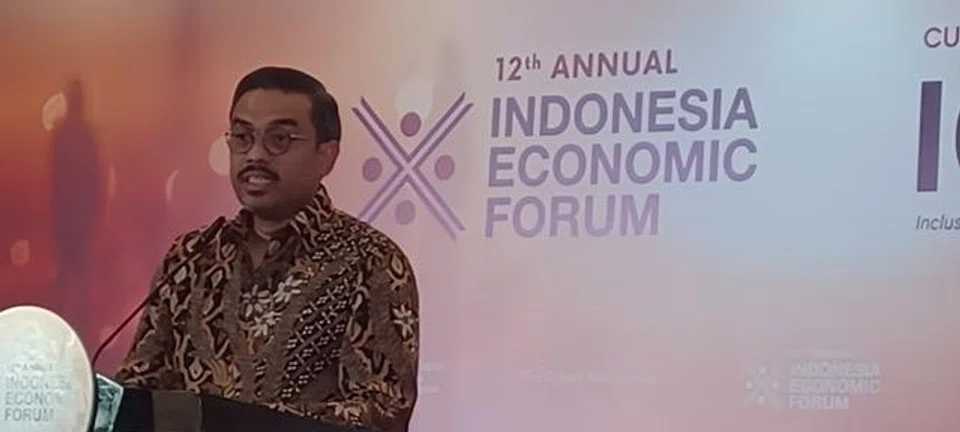
It was launched by Minister of MSMEs Maman Abdurrahman at the Indonesia Economic Forum on Thursday (Feb 5).
Unlike other e-commerce platforms such as GoTo and Shopee, ION will connect buyer applications, seller systems, logistics platforms, payment services and other digital services without locking participants into a single marketplace.
“Our challenge is no longer to create more MSMEs, but developing a unified system that can empower these enterprises, and ION is a critical component of that goal,” Maman said at the forum.
“Nearly 90 per cent of our MSMEs operate in the informal sector; so if we can bring them to the formal sector, the impact on both gross domestic product and income of small business owners will be significant,” he added.
In its operational roll-out, ION plans to integrate with existing national and institutional digitalisation programmes including SAPA UMKM; attract major consumer ecosystems as on-network demand drivers; and activate hyper-local digital commerce through collaborations with various Indonesian government agencies.
Modelled after India’s open network for digital commerce, ION is being developed with technology and ecosystem partners such as Google, Protean eGov Technologies, Pidge and others.
Unlocking economic participation
Shinta Kamdani, chairwoman of the Indonesian Employers Association, noted in her address that only 30 per cent of MSMEs are satisfied with the current digital infrastructure policies, and only 12.5 per cent of MSMEs have adopted digitalisation in their business operations.


“ION will thus unlock economic participation at scale by removing structural constraints,” Shinta said. “Without an open digital infrastructure, Indonesia will not be able to help MSMEs scale.”
Indonesia’s e-commerce market is currently dominated by major players such as Tokopedia, Shopee and TikTok Shop, which operate as closed ecosystems controlling everything from product discovery to payments, delivery and advertising.
Instead of one platform acting as the marketplace, ION allows sellers to list products through one network and become discoverable across multiple buyer applications.
Alfons Tefa, chief executive officer of Automa, an Indonesian e-logistics company that tracks movement of goods across every leg of the journey, noted that ION will also encourage more balanced digital growth beyond Java by enabling regional logistic firms, cooperatives and local marketplaces to plug into the same commerce infrastructure.
Despite the opportunities that ION offers, challenges remain – particularly around trust, dispute resolution and service quality.
Customer experience depends on multiple independent players – sellers, delivery providers and buyer apps. Hence, inconsistent standards could affect consumer confidence.
Indonesia’s complex geography as an archipelago spread across more than 17,000 islands makes logistics challenging. Integrating networks will also be an uphill task.
MSMEs, particularly those located outside major urban centres, often encounter high-delivery costs, restricted service options and inconsistent delivery performance.
The launch of ION reflects Indonesia’s broader push towards building digital public infrastructure following the success of interoperable payment systems such as QRIS.
While the initiative is still in its early stages, policymakers see it as part of a long-term effort to ensure that the benefits of the digital economy extend beyond large platforms to millions of small businesses across the country.
Decoding Asia newsletter: your guide to navigating Asia in a new global order. Sign up here to get Decoding Asia newsletter. Delivered to your inbox. Free.
Share with us your feedback on BT's products and services