



Indonesia moves to loosen share buyback rules, delays short-selling to stem market chaos
As one of Asean’s worst-performing markets due to Trump’s tariff uncertainties, Indonesia is weighing looser buyback rules to help corporate giants reclaim shares without shareholder approval

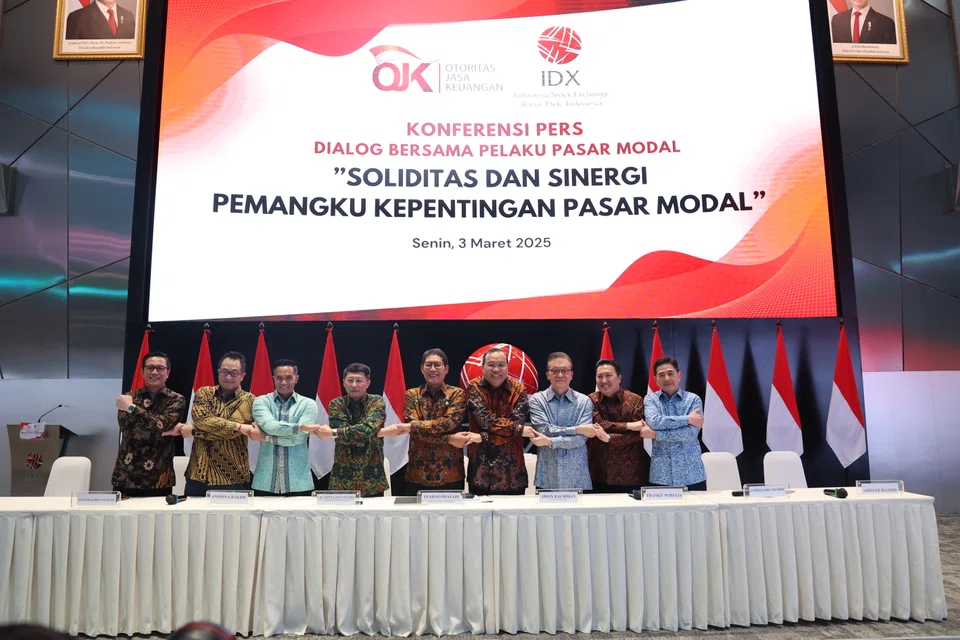
[JAKARTA] In a major move to curb heightened volatility after a recent market rout, Indonesia is considering relaxing share buyback rules without shareholder nod, a measure last used during the 2020 pandemic to stabilise markets amid the Covid-19-driven turmoil.
The decision follows a joint dialogue on Monday (Mar 3) between regulators – the Financial Services Authority (FSA) and the Indonesia Stock Exchange (IDX) – and blue-chip conglomerates such as Sinar Mas and Barito Pacific, as uncertainty over US President Donald Trump’s tariff policies rattles investors.
Following the discussion, the IDX has also postponed the launch of short-selling for domestic retail investors – originally set for the second quarter – due to prevailing market turbulence.
Speaking at the dialogue, FSA’s chief executive of capital market, derivatives and carbon exchange supervision Inarno Djajadi said: “From the regulator’s side, we understand the concerns regarding pressure on the market. Taking this into account and considering feedback from market players, there is a policy option to review stock buybacks without shareholder approval.”
Some of Indonesia’s most influential business moguls were in attendance, including Franky Widjaja of agribusiness giant Sinar Mas, Anindya Bakrie of media and energy conglomerate Bakrie Group, and Salim Pangestu of petrochemical leader Barito Group.
Also present were Arsjad Rasjid of mining and energy firm Indika, Garibaldi Thohir of coal powerhouse Alamtri Resources, and Agus Projosasmito of gold and copper producer Amman Mineral.
Combined, these blue-chip stocks and index heavyweights have a market capitalisation of some 1,113.5 trillion rupiah (S$91 billion).
Back in 2020, when Indonesia allowed companies to repurchase shares without shareholder approval, it capped buybacks at 20 per cent of paid-up capital to steady markets. This time, however, it remains unclear what shape or form the easing will take as regulators review the move.
If the buyback rules are eased, Indonesia’s large conglomerates are likely to take the chance to support their share prices; more so, as market volatility is expected to intensify amid rising tariff uncertainties.
“If allowed, we will proceed,” said Thohir, president director of energy conglomerate Alamtri, at a media briefing after the dialogue.
“I see that many companies still have strong fundamentals, so their valuations are low – it’s a good time to buy,” said Thohir. The 59-year-old tycoon is the majority shareholder of Alamtri Resources Indonesia, formerly known as Adaro Energy Indonesia, one of the world’s biggest coal exporters, with a market capitalisation of 63 trillion rupiah.
With shareholder approval from last year’s annual general meeting, Alamtri Resources has allocated up to four trillion rupiah for a share buyback programme, which runs until May this year. If the rules are eased, the company has the option of raising the threshold, he added.
Rasjid of Indika Energy believes that the flexibility of share buybacks without the need for a shareholder meeting could be a strategic move to support stock prices.
“We’re waiting to see how the situation unfolds, but if the opportunity (to buy back) arises, why not? After all, we believe the value is actually higher,” Rasjid said.
Okatvianus Audi, vice-president at Kiwoom Sekuritas, warned that allowing share buybacks without shareholder approval could help stabilise volatility but risks price distortions and manipulation if not backed by genuine market fundamentals.
Wobbling equities
Indonesia’s recent market rout pushed the benchmark Jakarta Composite Index (JCI) into a technical bear market end of last week, as investor sentiment soured over global trade tensions, sluggish economic growth and concerns about the government’s spending plans.
On Tuesday, the JCI opened 0.8 per cent lower, pressured by the impact of Trump’s newly imposed tariffs on imports from Mexico and Canada. Year to date, the JCI has fallen by nearly 8 per cent.
The ripple effects of his trade policies have unsettled Indonesia’s financial markets with calls for the country to mitigate the risks by deepening intra-Asean trade and focus on advancing domestic reforms – an agenda closely watched under President Prabowo Subianto’s administration.
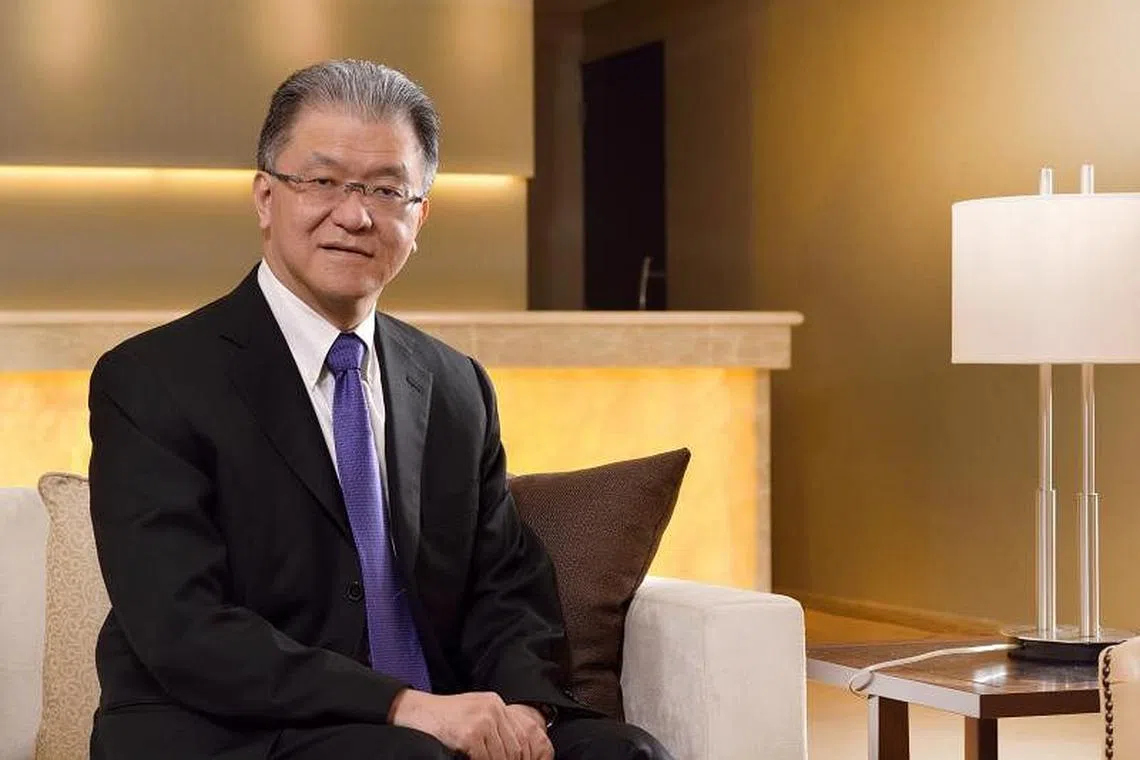
Widjaja, whose Sinar Mas Group has several subsidiaries listed on the IDX, and who also serves as chairman and CEO of Singapore-listed palm oil giant Golden Agri-Resources, warned that Indonesia will not be immune to the ripple effects of the escalating US-China trade war.
With Indonesia serving as a key commodity supplier to China, the economic friction between the two giants is expected to cast a shadow over the country’s financial market. “Domestically, we still see confidence, but globally, it’s the tariff policies we need to watch closely,” said Widjaja, who was also at the briefing.
Short-selling delay
In Monday’s extraordinary meeting, IDX also announced it will postpone the launch of short-selling for domestic retail investors, a move originally scheduled for the second quarter of this year.
The plan, which would have allowed investors to short-sell 10 selected stocks as a hedge against bearish markets, is now on hold due to heightened market volatility.
“The roll-out could be pushed to later this year, depending on market conditions,” said Inarno Djajadi, head of capital markets supervision at FSA.
Kiwoom’s Audi noted that while suspending short-selling could ease short-term volatility, it may hinder liquidity targets.






