



Indonesia must refocus on short-term wage gains to combat recession: former trade minister
[JAKARTA]
BY MOST accounts, Indonesia has enjoyed a fairly successful year even as the government continues to navigate the twin global headwinds of rising inflation and slowing economic growth.
Growth in South-east Asia’s largest economy is expected to reach 5.4 per cent for the full year, according to latest projections by the Asian Development Bank. This is fuelled largely by higher commodity prices and robust consumption, which allowed the country to book its first current account surplus in 11 years.
Indonesia was also in the international spotlight last month as Bali was the venue of the annual Group of 20 summit, where world leaders reaffirmed their commitment to upholding international law and the multilateral system. President Joko Widodo, the event’s host, was widely praised for his role in helping to cool global tensions.
But as Indonesia and the rest of the world prepare to enter the new year, there are a number of major obstacles ahead.
The prices for Indonesia’s export commodities are likely to trend downwards heading into the global recession that is expected next year, which may add greater pressure on the rupiah and force the central bank to raise interest rates more aggressively to defend the currency. This, said Indonesia’s former trade minister Thomas Lembong, will slow the economy even further.
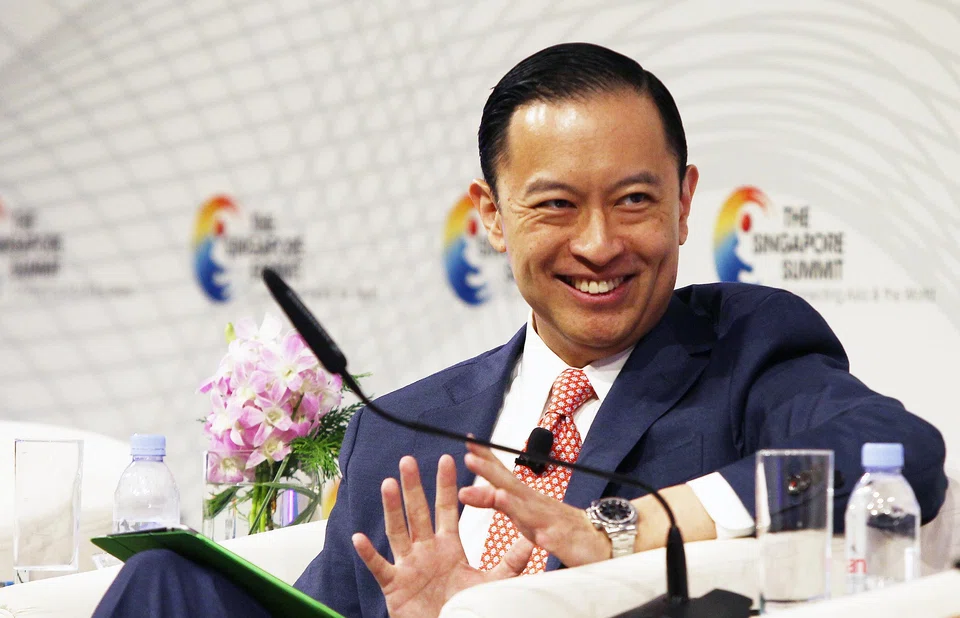
The 51-year-old Lembong – who is also the economic adviser to former Jakarta governor and presidential hopeful Anies Baswedan – warned that tougher times lie ahead and that the next government will need to focus on resolving policy contradictions and boosting short-term wages and employment.
In an exclusive interview with The Business Times, Lembong gave an indication of what would be his policy recommendations to Baswedan on Indonesia’s economic direction, if the latter was successful in his quest to become the next president. Indonesia is set to hold direct presidential elections in February 2024.
“The vast majority of the current government’s economic programme has been focused on capital-intensive sectors like nickel smelters, and long-term assets like large-scale infrastructure,” he said. “The theory is that the government’s so-called mineral downstreaming strategy and better infrastructure will eventually lead to the creation of the more labour-intensive industries much further down the production chain.”
He added that the economy will need a short-term counter-cyclical boost to employment and wages as soon as possible, with the signs indicating that the world is headed towards a recession next year.
“Capital-intensive investments primarily benefit the small group of owners of capital, rather than the labour force which constitutes the vast bulk of domestic consumption, and therefore will do little to boost the economy’s aggregate demand,” said Lembong.
“The current and mostly natural resource-based growth engines will sputter next year, and not enough effort is being made in labour-intensive industries to make up the difference,” he added.
Beyond these short-term measures, he said the government should place a greater focus on developing human capital, given the large skills gap in the workforce. The country lags behind many of its regional peers in basic literacy and numeracy scores, with mental acuity among children also low, said Lembong.
“Even before we go into tech skills, we need to develop basic human skills to operate in a modern economy,” said Lembong.
During the interview, Lembong, who is a former chairman of Indonesia’s Investment Coordinating Board, also made the point that Indonesia “suffers from too many policy contradictions”, which in turn has a negative impact on foreign investment.
“We want foreigners to invest in our country, but we do not want them to own our assets or be successful in selling their products in Indonesia. At some point, this lopsided strategy will collapse under the weight of its own contradictions,” he noted.
Referring to the recently-legislated criminal code that caused wide-spread criticism of increasing government intrusiveness, Lembong said that this was also evident in the economic sphere.
“While government rhetoric is about supposedly pushing hard to open up and deregulate the economy, the fact is that we see more efforts at state control over the economy rather than allowing the markets to function,” he said.
The criminal code law, for example, was rushed through parliament and has raised concerns among foreign investors. The impact on trade, tourism and investment are likely to be stark, as confidence in the country could be eroded, said Lembong.
“We are sending out mixed signals to the global community as our actions do not match our words. We are entering into a hostile monetary and macroeconomic environment over the next couple of years,” he said.
TRENDING NOW

First Resources blames El Nino, outside fires for Kalimantan hotspots amid haze scrutiny

High Court rules against Julius Baer’s Singapore trust arm in US$50 million family trust dispute
Singapore key exports jump by higher-than-expected 68.4% in September, led by non-electronics

MSCI proposes downgrading Indonesia to standalone market status

