Indonesia ownership warning spurs sell-off in tycoon-linked firms
Regulators speed up reforms to avoid an MSCI frontier market downgrade and foreign fund outflows
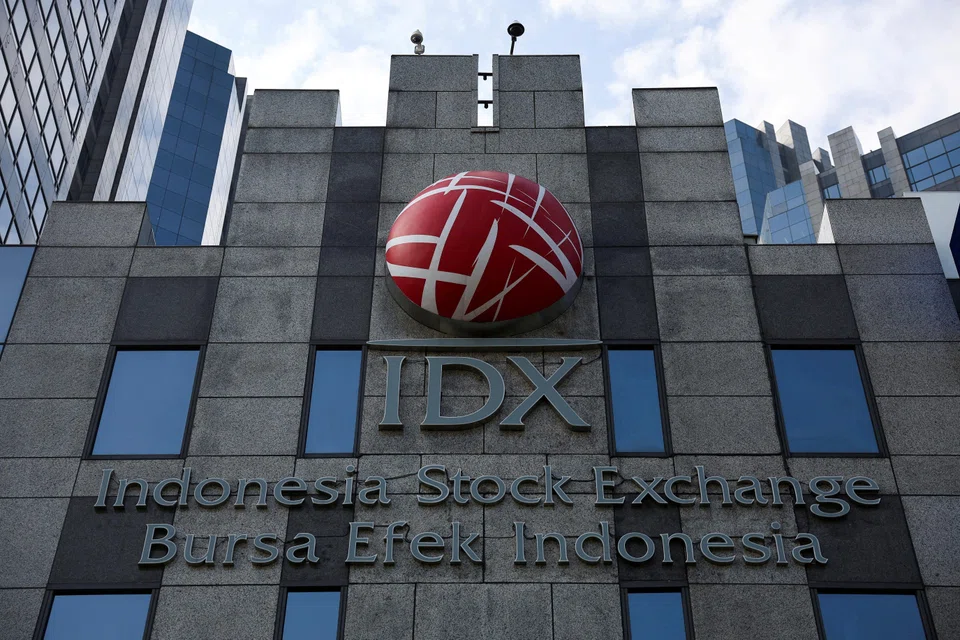
[JAKARTA] Indonesian tycoon-linked stocks tumbled on Monday (Apr 6) after the exchange flagged companies with tightly held shareholdings, stoking concerns of index exclusions and foreign outflows.
Shares of Barito Renewables Energy, backed by billionaire Prajogo Pangestu, slumped to their lowest in more than two years while Widjaja family’s Dian Swastatika Sentosa dived 14 per cent, becoming the biggest laggards on the Jakarta Composite Index as trading resumed after a Friday holiday.
The Indonesia Stock Exchange said late on Apr 2 that a number of listed firms have more than 95 per cent of shares held by a small group of investors. The disclosure is part of reforms aimed at meeting MSCI’s standards on ownership transparency. Other companies identified by the bourse include Samator Indo Gas and Abadi Lestari Indonesia, both of which dropped 15 per cent.
Regulators are fast-tracking the changes ahead of a May deadline to avoid a potential downgrade to frontier market status by MSCI that could spur foreign outflows. The IDX last week also issued a regulation that requires listed companies to increase shares available for public trading – or free float – to 15 per cent, giving firms up to three years to achieve the level.
The stricter requirements are already rippling through the market, with telecommunications infrastructure builder Solusi Tunas Pratama – controlled by Djarum Group heirs Martin Hartono and Victor Hartono – announcing on Monday (Apr 6) plans to delist as it struggles to meet a new free-float threshold.
There is a possibility that Barito Renewables and Dian Swastatika might be excluded from MSCI Indonesia Index, similar to what happened in Hong Kong when the local authority took similar steps, said Wilbert Arifin, an equity analyst at Mirae Asset Sekuritas Indonesia. That may prompt active investors to sell ahead of potential passive fund outflows if the exclusions materialise, he added.
Barito Renewables and Dian Swastatika are both currently MSCI Indonesia constituents.
A Barito Renewables spokesperson said in response to Bloomberg News that company is fully in compliance with all disclosure and free-float requirements, with relevant information transparently disclosed to the market.
The company remains focused on operational performance and long-term value creation while supporting efforts to strengthen Indonesia’s capital market, she said.

Samator, Dian Swastatika and Abadi Lestari did not offer immediate response to requests for comment from Bloomberg News on Monday.
The push for greater disclosure mirrors Hong Kong’s 2016 move to publish shareholder concentration data, IDX’s president director Jeffrey Hendrik said at a briefing on Apr 2.
Indonesia’s stock market has long been dominated by family-owned conglomerates that operate dozens of listed and private entities spanning industries from mining to petrochemicals.
The 20 largest tycoon-linked companies on the Jakarta Composite Index account for nearly 43 per cent of index’s weighting, including Bank Central Asia and Bayan Resources, according to Trimegah Sekuritas Indonesia data from June 2025.
While increased transparency may reduce Indonesia’s MSCI Emerging Market weight and trigger about US$1 billion in passive outflows, “the reforms significantly lower the risk of a frontier market downgrade,” Arifin said. The policy “signals constructive regulatory engagement and is likely a modest net positive for market sentiment.” BLOOMBERG
Decoding Asia newsletter: your guide to navigating Asia in a new global order. Sign up here to get Decoding Asia newsletter. Delivered to your inbox. Free.
Share with us your feedback on BT's products and services