Indonesia palm oil producers on alert as Sumatra fires coincide with peak harvest
Analyst warns fires and haze could hamper palm oil harvesting operations and logistics, reducing yields and creating short-term tightness in the market

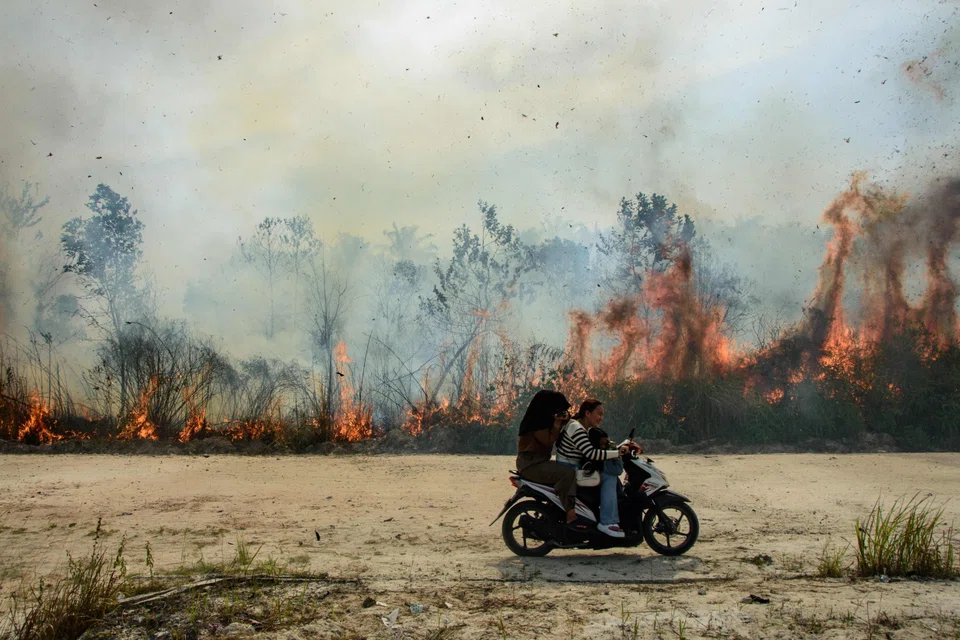
[JAKARTA] Indonesia’s palm oil industry is on high alert as forest and peatland fires intensify across Sumatra, posing a risk to operations in key plantation areas and raising concerns of production disruptions during the peak harvest season.
April Group, one of the largest pulp and paper producers operating in Riau, told The Business Times that it remains fully operational while maintaining heightened vigilance.
“In the weeks ahead, our fire response teams remain on high alert,” said Craig Tribolet, the company’s deputy director of sustainability. “We continue to coordinate closely with local communities and government authorities to prevent fire outbreaks and protect our plantations, conservation areas, and surrounding villages.”
Tribolet said April Group has implemented a no-burn policy since 1993 and follows a fire management strategy focused on prevention, preparedness, suppression and recovery.
Riau Province, one of Indonesia’s largest palm oil-producing regions, has declared a state of emergency as fires continue to spread across multiple districts.
Despite the escalating fires, the Indonesian Palm Oil Association (Gapki) confirmed that none of its members’ plantations in Riau have been affected. Gapki chairman Eddy Martono said that companies remain on high alert and have been preparing for the dry season for several months.
“Ahead of every dry season, we issue official reminders to all members through formal letters,” he said.
He added that the fires so far are not occurring within company-managed areas but warned that risks remain high, especially as weather conditions worsen.
Flaming hotspots
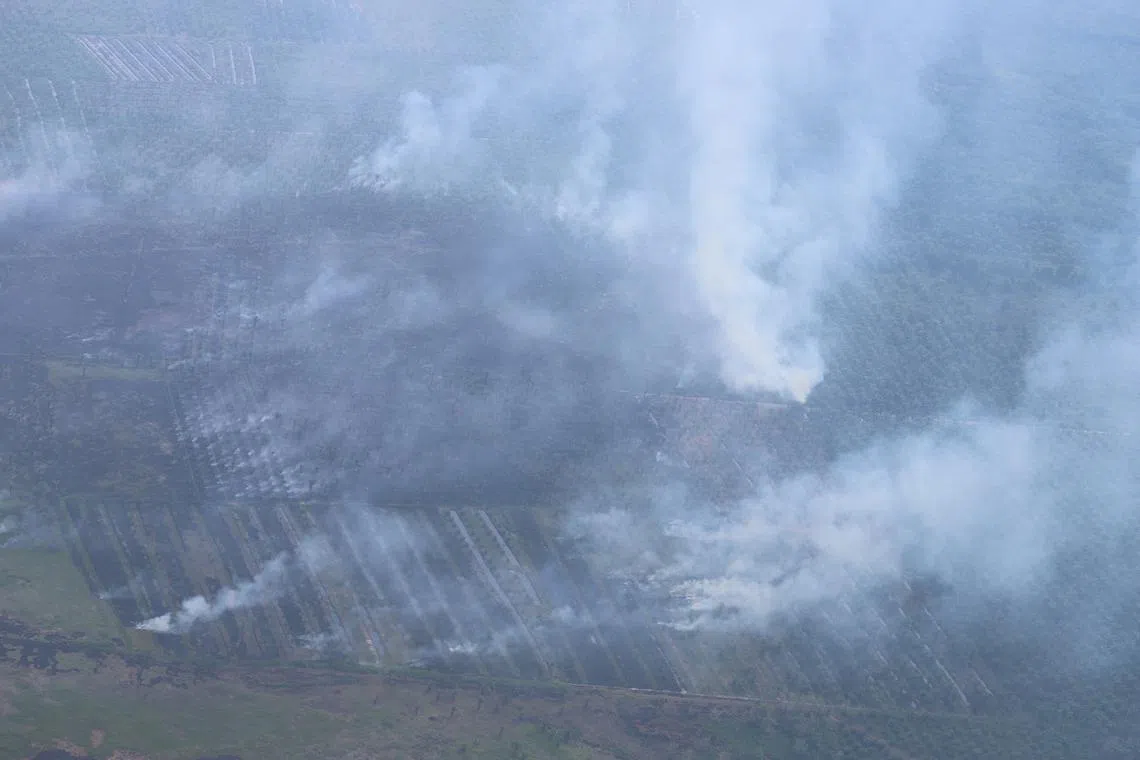
On Tuesday (Jul 22), the National Disaster Mitigation Agency reported that fire hotspots in Riau surged from 392 to 583, burning approximately 50 hectares of land in the Rokan Hulu and Rokan Hilir areas.
Several areas in Riau remained wrapped in a thick blanket of haze on Tuesday, though choking smoke had yet to make its way into the provincial capital, Pekanbaru, according to the region’s chief of police.
Dry conditions are expected to hold firm until the end of the week, before wetter weather possibly arrives to clear the air and ease the haze situation. The agency has deployed helicopters to conduct aerial patrols and water bombing operations through Friday.
Meanwhile, the Meteorological, Climatological and Geophysics Agency has issued a warning that the region will soon enter an extreme heat phase, further fanning the flames of fire risk in the weeks ahead.
Disruption risk
Analysts say the situation, while still contained, could have short-term implications for output if fires spread into plantation zones or lead to operational slowdowns.
“The elevation of the forest fire alert to emergency status in Riau, combined with warnings of an extreme heat season, poses notable risks to Indonesia’s palm oil sector,” said Matthew Biggin, a commodities analyst at BMI, a unit of Fitch Solutions.
“July is a particularly important month because it falls within the peak harvest season, meaning any disruption from fires or heat can have a greater impact on output and supply.”
Biggin said fires and haze could interfere with harvesting and logistics, leading to tighter near-term supply. However, he noted that Malaysia’s relatively stable production could help offset the broader market impact.
“While these developments are providing a floor under palm oil prices, we do not expect a sharp price upturn at this stage,” he added.
“For now, we maintain our price forecast and production outlook,” said Biggin, adding that should the fires worsen, it could lead to a downward revision to the production outlook.
BMI forecasts global palm oil production to reach 80.6 million tonnes in the 2025/2026 season, marking a 2.4 per cent year-on-year increase. This growth is supported by a projected 0.5 per cent rise in Malaysia and a 3.3 per cent increase in Indonesia.
Cross-border haze
The effects of the fires are beginning to extend beyond Indonesia’s borders. While Singapore has yet to experience transboundary haze despite a recent spike in forest and land fires in Sumatra, the National Environment Agency said on Tuesday that it is monitoring the situation closely.
Meanwhile, in Malacca on Malaysia’s west coast, restaurant owner Roger Soong noted that the haze has already started to drift into the area.
“I can smell the burning outside,” said Soong, who runs the open-air cafe The Baboon House. “We have installed more air purifiers to cope. In previous years, the haze has hit our customer traffic. It hasn’t gotten that bad yet this year, but we are watching the situation closely.”
In Singapore, Philip Gan, the founder of travel agency Singatour, said he has not seen tour cancellations yet, but warned that worsening haze could affect regional travel if conditions deteriorate.
Land fires frequently occur in Indonesia, particularly in Sumatra and Kalimantan, largely due to the continued use of burning as a method for land clearing, despite it being illegal and harmful to the environment.
As at 2025, the Indonesian Law Enforcement Task Force has reported 35 incidents of forest and land burning in Riau, resulting in 44 individuals being named as suspects in relation to these cases.
Additional reporting by Evan See