Indonesia palm oil shares, rupiah take hit from tougher export ban
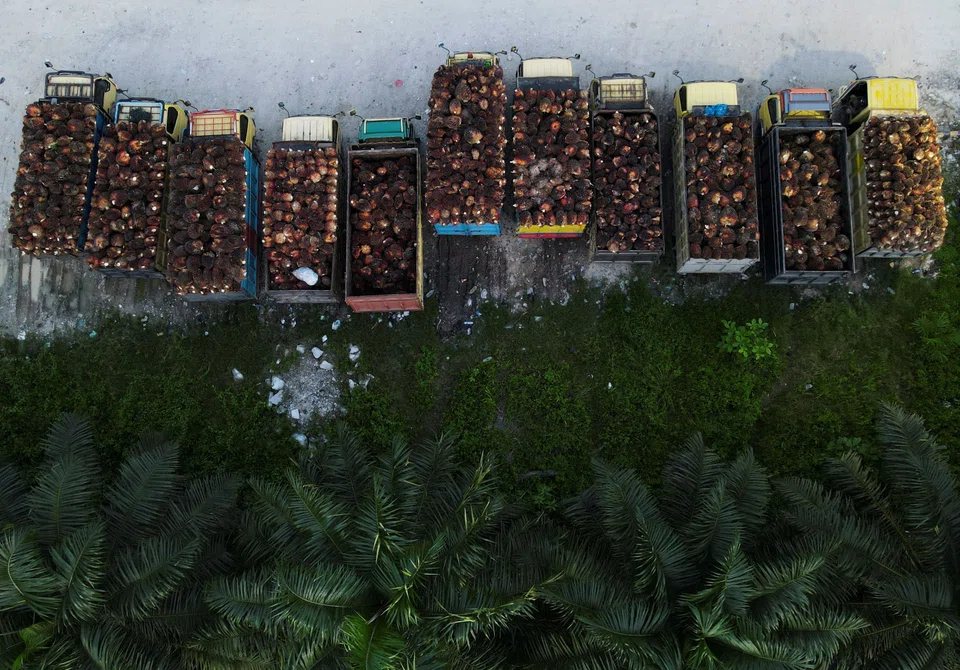
SHARES of some of Indonesia's leading palm oil plantation companies and the rupiah currency fell on Thursday (Apr 28), after the government shocked markets by making last-minute changes to an export ban to include crude palm oil and other refined products.
Markets had earlier been relieved when Indonesia's chief economic minister said the ban would only cover refined, bleached and deodorized (RBD) palm olein. But in a stunning policy U-turn late on Wednesday, authorities in the world's largest palm oil producer announced other products would also be included.
The move had an immediate impact on global vegetable oil prices, sending palm oil futures in Malaysia up by 9.8 per cent. The jittery mood spilled over into markets on Thursday as well, the day after the midnight ban took effect.
Shares in Indonesia palm oil company Astra Agro Lestari fell as much as 6.6 per cent, Sinar Mas Agro Resources and Technology dipped 2.39 per cent and Salim Ivomas Pratama dropped 4 per cent in Jakarta before recouping ground.
Demonstrating Indonesia's determination to enforce the export ban, its navy on Thursday said it had seized 2 tankers carrying crude palm oil, palm olein and methanol for paperwork discrepancies the day before the measure took effect.
In an investor note, brokerage Trimegah Securities said the ban could be a short-term policy aimed at cutting stubbornly high prices for domestic cooking oil but warned it was hard to predict a timeline.
President Joko Widodo said on Wednesday people's need for affordable food trumped revenue concerns for now.
Concern over the ban also pushed the rupiah currency to its lowest since July 2021.
Radhika Rao, senior economist at DBS Bank, said the prospect of exports being impacted was negative for Indonesian earnings and the current account and would "dampen sentiment on the rupiah". The downside risks would increase if the ban continued beyond one or 2 months, she said.
A trade ministry regulation issued on Wednesday said the export policy would be reviewed monthly or as often as needed.
Meanwhile, the Indonesian navy said the 2 seized tankers - MT World Progress and MT Annabelle - had breached regulations, despite departing prior to the ban taking effect, with issues over travel documents and permits respectively.
MT World Progress was travelling towards India carrying 34,854.3 tonnes of palm olein, and MT Annabelle was bound for Shajrah in the United Arab Emirates with 13,357.4 tonnes of crude palm oil and 98 barrels of methanol on board, the navy statement said.
The trade ministry regulation also said exporters who secured customs declaration by Apr 27 at the latest would still be allowed to export their products.
Chief Economics Minister Airlangga Hartarto said the ban would be lifted when the price of bulk cooking oil had come down to 14,000 rupiah (S$1.3) a litre across Indonesia.
Bulk cooking oil was still being offered at 19,000-20,000 rupiah a litre in Jakarta's traditional markets on Thursday. REUTERS
Decoding Asia newsletter: your guide to navigating Asia in a new global order. Sign up here to get Decoding Asia newsletter. Delivered to your inbox. Free.
Share with us your feedback on BT's products and services