



Indonesia passes sweeping Bill expanding central bank role to spur growth
Promoting sustainable economic growth is already part of Bank Indonesia’s mandate, along with price and foreign exchange rate stability
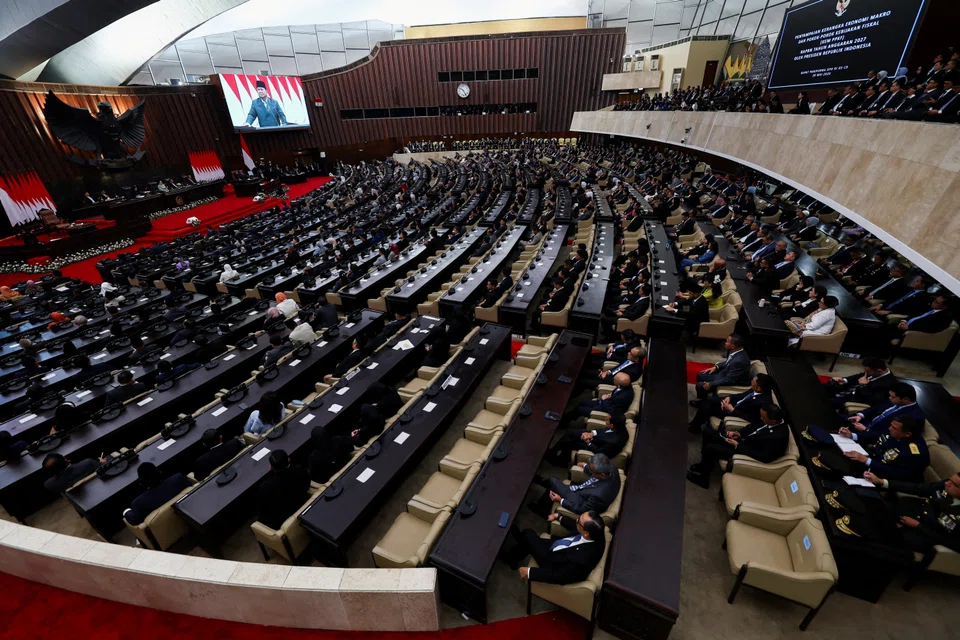
[JAKARTA] Indonesia’s parliament on Thursday (Jun 4) passed sweeping legislation that places further emphasis on Bank Indonesia supporting economic growth, while empowering lawmakers to evaluate independent financial regulators and the central bank.
Parliament passed the Bill by acclamation, with support from all parties, according to the deputy speaker, Sufmi Dasco Ahmad, who led on Thursday’s plenary session.
The Bill, which has not yet been made public, has added to concerns among investors about the possibility it could lead to political interference in the central bank, with President Prabowo Subianto determined to stick to his high-growth agenda and achieve 8 per cent economic expansion during his term.
Finance Minister Purbaya Yudhi Sadewa at a hearing with parliament’s finance commission on Wednesday said that existing legislation would be expanded to require the central bank to implement policies that “that create an economic environment conducive to real sector growth and job creation”.
Passage of the Bill was a formality, with Prabowo’s “big-tent” coalition controlling more than 80 per cent of parliament, where the biggest party outside of his alliance has declared it is not an opposition party. It comes as investors cool on Indonesia, a G20 economy of US$1.4 trillion, with Moody’s and Fitch earlier this year cutting their credit rating outlooks to negative from stable, citing reduced policymaking credibility and predictability.
The rupiah has lost more than 7 per cent against the US dollar so far this year, making it among the worst-performing emerging Asian currencies. It hit a historic low of 18,045 per US dollar on Thursday.



The stock market has plunged more than 30 per cent year to date.
Promoting sustainable economic growth is already part of Bank Indonesia’s mandate, along with price and foreign exchange rate stability. REUTERS
Decoding Asia newsletter: your guide to navigating Asia in a new global order. Sign up here to get Decoding Asia newsletter. Delivered to your inbox. Free.
Share with us your feedback on BT's products and services
TRENDING NOW

DBS, OCBC, UOB rout lops billions off STI as inflation, rate concerns spook investors

Grab CEO’s wife Chloe Tong on life with Anthony Tan and finding her purpose

OCBC sheds S$8 billion in value as shares close nearly 6% down; analysts cautious on banks

Deal between tycoon friends sparks scrutiny of Philippine power sector

