Indonesia plans to raise 2024 budget to 3,325.1 trillion rupiah
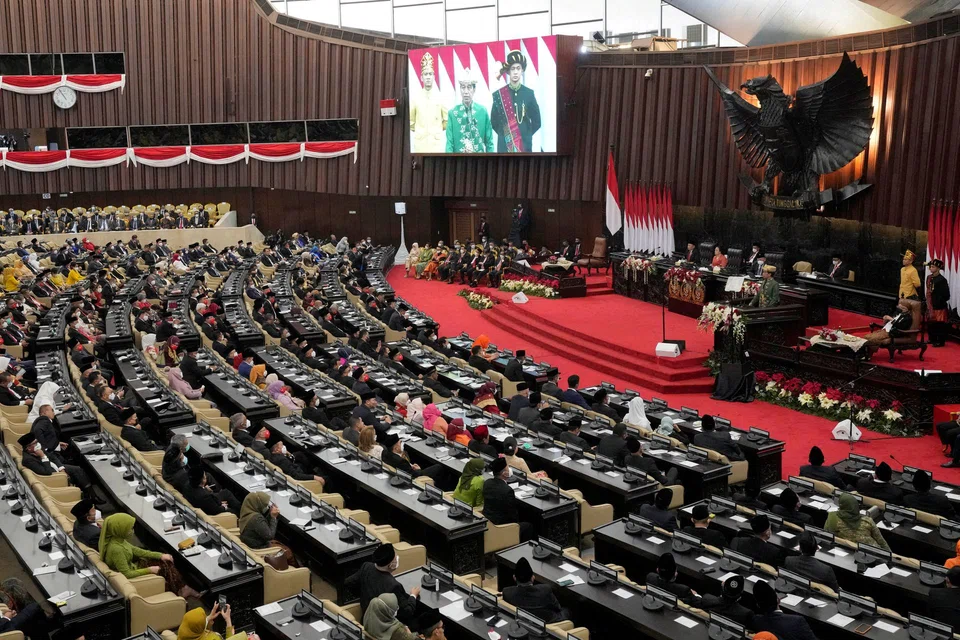
THE Indonesian parliament’s budget committee and the government on Thursday (Sep 7) agreed on key assumptions for President Joko Widodo’s 2024 budget and tentatively raised next year’s spending to 3,325.1 trillion rupiah (S$296 billion).
Widodo had originally proposed to spend 3,304.1 trillion rupiah next year versus the 2023 outlook at 3,123.7 trillion rupiah.
During deliberations with lawmakers, the government and the budget committee approved most of the budget assumptions in the original proposal, including setting 2024’s economic growth target of 5.2 per cent against 5.1 per cent for this year’s outlook.
However, they raised the prediction for average Indonesian crude price to US$82 per barrel from US$80 per barrel in the original proposal, said the committee’s chair, Said Abdullah.
The target for oil lifting was also raised to 635,000 barrels per day (bpd) from 625,000 bpd.
The forecast changes were expected to bring in more oil revenues for the government, which justified the increase in spending plans. The total revenue target was approved at 2,802.3 trillion rupiah.
The budget deficit-to-GDP ratio was still expected at 2.29 per cent versus 2023’s outlook at 2.30 per cent.
The committee and the government will also provide two more capital injections to two state construction companies, Hutama Karya and Wijaya Karya, amounting to 6.1 trillion rupiah and 6 trillion rupiah, respectively, Finance Minister Sri Mulyani Indrawati said at the same meeting.
Lawmakers are now expected to deliberate on details of next year’s spending plan.

A wider parliamentary vote is needed for the 2024 budget, likely later this month or in October, but the committee’s endorsement is usually passed. REUTERS
Decoding Asia newsletter: your guide to navigating Asia in a new global order. Sign up here to get Decoding Asia newsletter. Delivered to your inbox. Free.
Share with us your feedback on BT's products and services