



Indonesia pledges transparency reforms, probes market manipulation after US$80 billion rout
The reforms follow an MSCI warning on market transparency that sparked a sell-off and forced top officials to resign

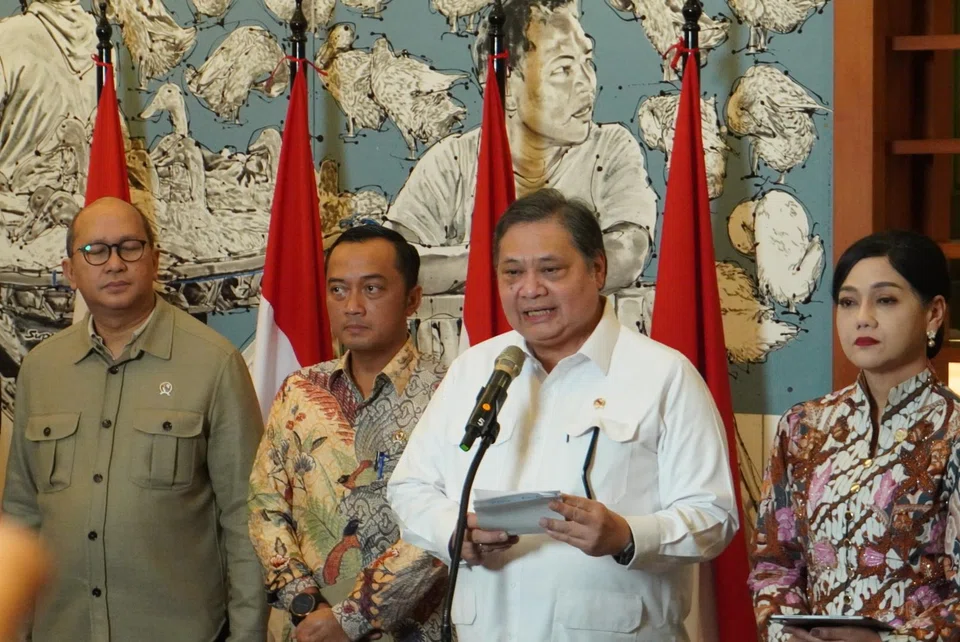
[JAKARTA] Indonesia is scrambling to restore confidence after an MSCI transparency warning triggered an US$80 billion stock rout and toppled senior market officials, pledging a fast-track crackdown on manipulation and tougher disclosure rules including a 15 per cent minimum free float.
Indonesia Stock Exchange (IDX) and capital market authorities are set to meet MSCI on Monday (Feb 2) to discuss the methodology used to calculate public shareholding, or free float – a core issue cited by the index compiler.
Friderica Widyasari Dewi, acting chairwoman and vice-chair of the Financial Services Authority, said she would personally attend the meeting alongside senior officials from the regulator, the exchange and the central securities depository.
“The main objective is to assure MSCI that Indonesia has a strong commitment to improving transparency and strengthening capital market governance,” she said at a press briefing on Saturday.
The reform package will also strengthen disclosure of beneficial ownership and clarify shareholder affiliations, addressing longstanding concerns raised by MSCI and global investors in a market dominated by conglomerates with concentrated ownership.
The government has also pledged zero tolerance for speculative share pricing and manipulative practices that distort prices and undermine investor confidence. Investigations will be launched into “pump and dump stocks allegations”.
The warning that sparked a sell-off
The government and financial regulators are racing to reassure investors after the benchmark Jakarta Composite Index plunged as much as 16 per cent over two days last week, following warnings from MSCI over what it described as “fundamental investability issues” in the Indonesian market, including concerns over free-float calculations, non-transparent ownership structures and possible coordinated trading behaviour.
MSCI said on Jan 28 it would halt rebalancing and weighting changes for Indonesian stocks, citing low free float, data quality and share classification concerns that the index provider had raised since mid-2025.
The MSCI’s decision means there will be no increase in the foreign inclusion factor or number of shares for Indonesian stocks in its indices, no additions to the MSCI Investable Market Indexes, and no upward migration between index segments, including from small-cap to standard indices.
Low free float has long been a challenge in Indonesia’s stock market, with only a small portion of shares publicly traded while most remain in the hands of families or institutional investors.
MSCI also said Indonesian stocks would be excluded from its February rebalancing, and warned that Indonesia could be reclassified from an emerging to a frontier market if no resolution was made by May.
The announcement triggered heavy foreign selling that led to two consecutive trading halts, wiping about US$80 billion off the market’s value.
Official data showed foreign investors recorded net outflows of 12.6 trillion rupiah (S$953.5 million) between Jan 26 and 29, with equities accounting for 12.4 trillion rupiah of the total.
The market turmoil has escalated into a leadership shake-up among top financial officials in South-east Asia’s largest economy.
Mahendra Siregar, chair of the Financial Services Authority, and Iman Rachman, president director of the Indonesia Stock Exchange, both stepped down on Friday last week, alongside three other senior officials at the regulator, including the head of capital markets supervision.
The regulator said Siregar’s resignation was a “form of moral responsibility to support the creation of the necessary recovery steps”, while the exchange described Rachman’s departure as “a form of accountability over the condition of the Indonesian capital market”.
The turmoil comes amid broader uncertainty over Indonesia’s economic and fiscal outlook under President Prabowo Subianto, who has pledged higher social spending even as revenues have come under pressure.
The rupiah has hovered near record lows, partly weighed down by concerns over central bank independence after Prabowo nominated his nephew Thomas Djiwandono as deputy governor – a move approved by parliament this week.
Dedi Dinarto, lead Indonesia analyst at Global Counsel, said the MSCI warning should be understood as the culmination of accumulated investor concerns over Indonesia’s economic outlook.
“The commitment by authorities to pursue structural reforms should be viewed positively by investors,” he said. “But the biggest challenge is to accelerate implementation and align reforms with global standards, while also addressing broader concerns over fiscal policy and economic direction.”
Damage control
As part of the damage-control effort, the government has sought to project stability and resolve in the aftermath of the sell-off.
Coordinating Minister for Economic Affairs Airlangga Hartarto said on Saturday that, following instructions from Prabowo, the government will implement measures including structural reforms to enhance transparency, as well as steps to boost market liquidity.
Central to this effort is a plan to raise the minimum public free float requirement to 15 per cent, in line with international standards. “The government stands firmly behind our financial markets, and we are committed to an investment climate that is transparent, fair, and world-class,” Airlangga said.
To support liquidity, Indonesia sovereign wealth fund Danantara will be mobilised, and the equity investment ceiling for pension funds and insurers will be raised from 8 per cent to 20 per cent of assets.
Dinarto from Global Counsel said Danantara’s scope for intervention in the capital market is likely to be limited.
“Fundamentally, Danantara will act as an institutional investor rather than a tool for short-term policy intervention.”
Analysts welcomed the swift response but cautioned that execution and credibility will be critical. Wijayanto Samirin, senior economist at Paramadina University, said the government’s reaction was “a good start”, but warned against heavy-handed enforcement.
“Law enforcement must be handled with great care. The police should not take a front-line role, as this could unsettle investors,” he said, adding that FSA should lead the process with a focus on restoring market function rather than punishment alone.
Greg Wisnu Rosariastoko, economist and independent commissioner at Bank Resona Perdania, said the government’s response to this crisis will be a critical test of its commitment to reform and investor protection.
“Without meaningful reforms and strict enforcement, any recovery will be short-lived and superficial. Investors must remain cautious, and regulators must recognise that restoring confidence requires more than rhetoric.”
TRENDING NOW

Once staunchly pro-China, Malaysian Chinese businesses are now distancing themselves from Beijing

Looking beyond looming CEO succession, should UOB potentially pursue a transformative merger?

Could stablecoins be the future of money?

Grab CEO’s wife Chloe Tong on life with Anthony Tan and finding her purpose

