



Indonesia president says rupiah’s drop still ‘safe’, flags tax incentives
Salamat Sanwan
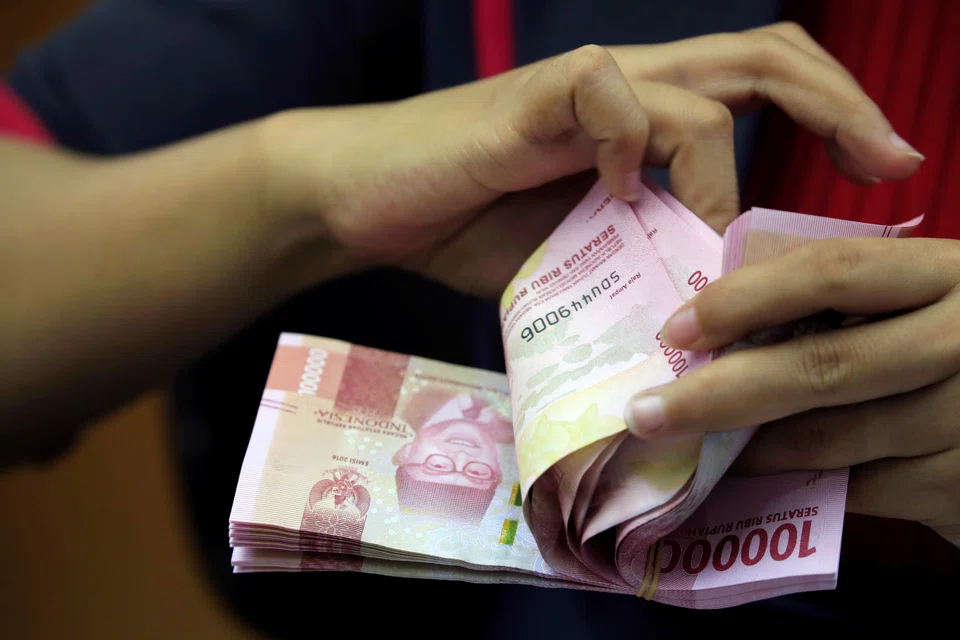
INDONESIA President Joko Widodo said on Tuesday (Oct 24) the rupiah’s recent depreciation rate against the US dollar was still “safe” for South-east Asia’s largest economy and its inflation targets and that his government was drafting tax incentives to boost growth.
Speaking at a seminar attended by investors, Jokowi, as the president is popularly known, warned of a potential for oil prices to soar due to the escalating conflict in the Middle East and capital outflows linked to US monetary tightening, which could affect Indonesia’s economy.
“If we see the percentage of the depreciation of our currency, it’s still safe for the real sector, safe for the financial sector, as well as for inflation,” Jokowi said.
The rupiah has dropped by as much as 4.7 per cent from its last peak in early September, coming under pressure amid investors’ risk-off sentiments.
On Tuesday the currency strengthened as much as 0.66 per cent to trade at 15,825 against the US dollar, but continued to trade near its weakest levels since 2020.
“We have to be calculative and prepare for the long run,” the president said, adding that his state budget still has the endurance to withstand shocks until 2024 with his finance minister still holding 616 trillion rupiah (S$53 billion) in cash as at Oct 13.
Jokowi said the government is also preparing tax incentives for the property sector, which may include the removal of value-added tax for house purchases.
Finance Minister Sri Mulyani Indrawati said late on Monday the government would come up with policy packages aimed at keeping inflation low, protecting people’s purchasing power and supporting economic growth.
Indonesia’s central bank last week unexpectedly raised interest rates to arrest the fall in the rupiah’s exchange rate, with some economists saying more hikes are likely if the currency continues to fall.

The September headline inflation rate was 2.28 per cent, within Bank Indonesia’s target range of 2 per cent to 4 per cent. REUTERS
Decoding Asia newsletter: your guide to navigating Asia in a new global order. Sign up here to get Decoding Asia newsletter. Delivered to your inbox. Free.
Share with us your feedback on BT's products and services
TRENDING NOW

World’s largest offshore wind platform by Seatrium consortium on track to be completed by 2028

Is stamp collecting enjoying an analogue revival or are its best days over?

GovTech retrenches another 38 staff in second round of layoffs
MBS adjusted property Ebitda falls 20.6% in Q3 with fewer high-roller visits, weaker hold

