



Indonesia releases details on export overhaul of palm, coal
The list may provide some relief to markets after Prabowo’s initial announcement sowed confusion
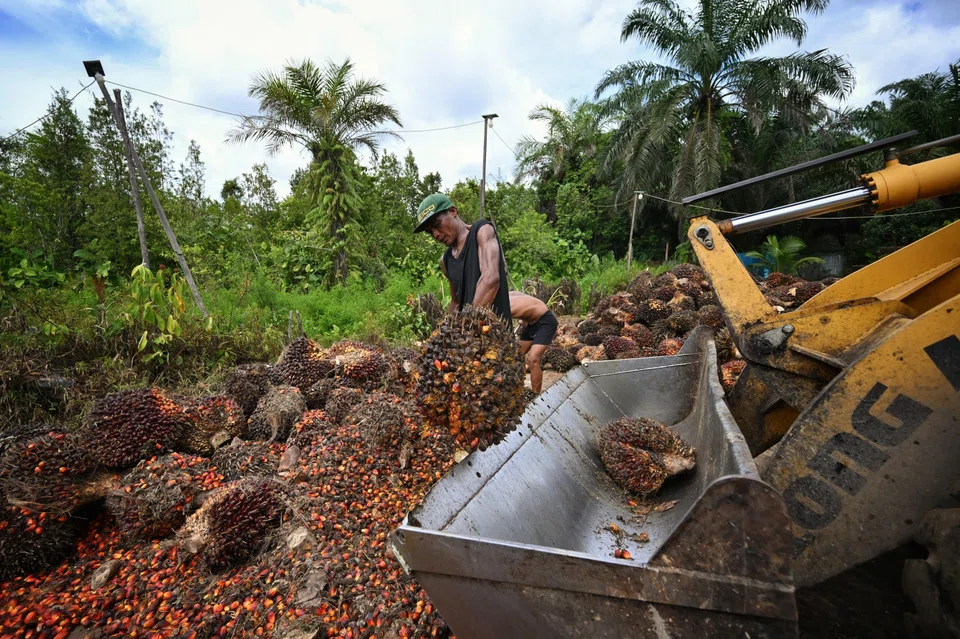
[JAKARTA] Indonesia on Friday (Jun 5) unveiled a much-anticipated list of commodities subject to its new export regime, showing the rules will capture most of its major palm oil products in addition to coal and ferronickel.
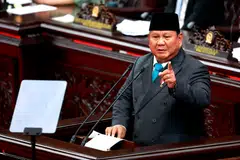
The details help answer one of the key questions surrounding the policy announced by President Prabowo Subianto two weeks ago that will involve some of the nation’s top commodities exports being taken over by a new state firm. The overhaul has rattled raw materials markets and left traders searching for clarity, even as a transition period went into effect on Monday.
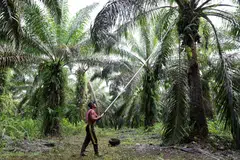
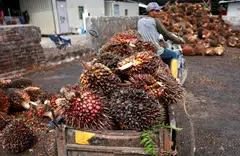
For palm oil, the rules cover the crude variety, alongside refined, bleached and deodorised palm oil and olein that’s commonly used as cooking oil, as well as used cooking oil and residues including palm oil mill effluent, according to information from the government’s communication agency released on Friday. Palm oil is sold in a wide variety of forms, and the rules encompass several of the most common types of exports.
Coal products covered include anthracite, bituminous coal, as well as both agglomerated and non-agglomerated lignite and peat. The ferroalloy list includes ferro-silico-manganese and ferronickel and products containing by weight more than 2 per cent carbon. Any additional commodities will be determined through future ministerial meetings, the government said. Full implementation of the export policy is due by Jan 1.
The list may provide some relief to markets after Prabowo’s initial announcement sowed confusion and triggered sharp swings in commodity markets. Traders, producers and even some government officials had been scrambling for answers on how the policy – aimed at curbing under-invoicing and increasing transparency – would be enforced. Indonesia supplies about half of the world’s palm oil and is the largest exporter of thermal coal.
The transition phase will run until Dec 31 at the latest, with an evaluation scheduled within the first three months, according to the government’s communication agency. During this period, exporters can continue shipping as usual but must electronically submit transaction reports to newly established state-owned entity Danantara Sumberdaya Indonesia. Once the policy is fully implemented, the entire export process will be taken over by Danantara Sumberdaya, which will handle everything from contracts to shipping and payments.
Sovereign wealth fund Danantara Indonesia, Danantara Sumberdaya’s parent company, said on Friday that it’s building a digital platform to “analyse transaction data” on exports of strategic natural resource commodities and identify potential under-invoicing, where a lower value than the actual transaction price is declared on an invoice.
Transactions deemed fair will be allowed to proceed normally, and existing contracts can continue to be carried out provided there is no evidence of under-invoicing, it said.
“Businesses that are already implementing sound export practices will not face obstacles in conducting their business, thereby ensuring legal certainty and a conducive business climate,” Danantara Indonesia said.
SEE ALSO

Post-transition period, commodity prices will be determined by a standard methodology that is transparent, reflects actual transactions and closes loopholes for manipulation, it said. BLOOMBERG
Decoding Asia newsletter: your guide to navigating Asia in a new global order. Sign up here to get Decoding Asia newsletter. Delivered to your inbox. Free.
Share with us your feedback on BT's products and services
TRENDING NOW

S$8 billion wiped off OCBC value as shares slide 5.8% in heavy trade

Grab CEO’s wife Chloe Tong on life with Anthony Tan and finding her purpose

Brookfield denies accusation it cut Soilbuild out of Mapletree deal

8 public officers referred to police over property buys near unannounced MRT stations: Chan Chun Sing

