Indonesia rolls out fresh incentives to boost spending amid planned VAT hike
South-east Asia’s largest economy unveils new fiscal boost including tax breaks, EV incentives, and relief for workers

[JAKARTA] Indonesia has announced a fresh wave of fiscal incentives to spur consumer spending, including extended tax breaks for electric vehicles (EVs), property and automotive sectors, alongside a 50 per cent electricity tariff cut for middle-income households.
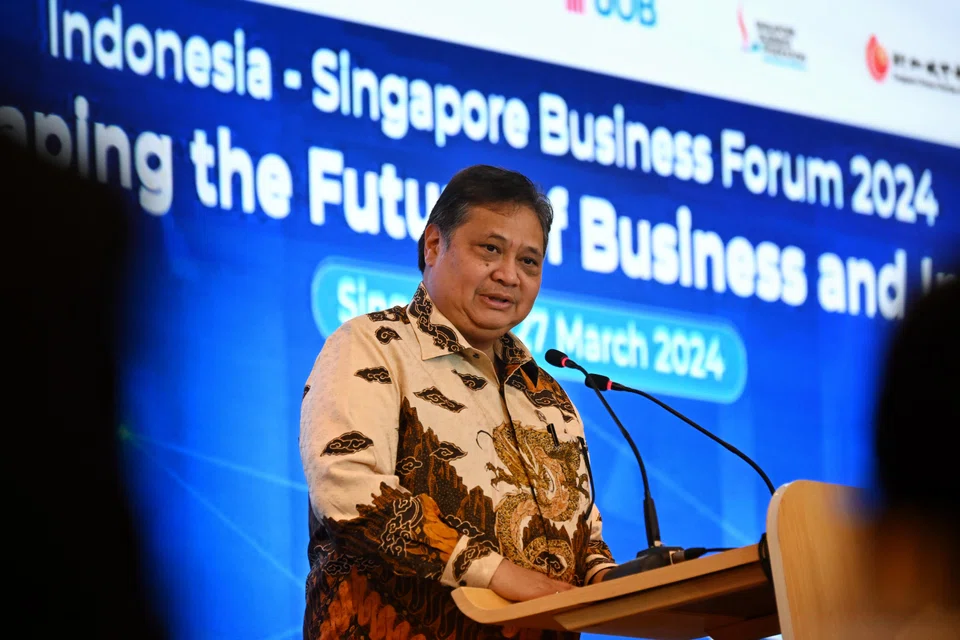
The new fiscal measures were announced by Airlangga Hartarto, Indonesia’s coordinating minister for economic affairs, during a press conference on Monday (Dec 16).
Finance Minister Sri Mulyani Indrawati, who was also present at the briefing, explained that these incentives are designed to help South-east Asia’s largest economy remain resilient amid global economic turbulence.
“We want to ensure that the economy continues to move forward, even as we acknowledge the numerous global challenges and domestic issues that require our constant vigilance,” she said.
Workers in labour-intensive industries earning less than 10 million rupiah (S$840) per month will receive full income-tax exemptions, offering crucial relief to the workforce following a regional minimum-wage increase.
The government will extend tax incentives for EVs and introduce new ones for hybrid EVs, applicable to both completely built-up and completely knocked-down units. This move is expected to benefit carmakers such as Citroen and Chinese EV giant BYD, which have already committed to setting up manufacturing plants in Indonesia.
Meanwhile, the government has decided to extend the 11 per cent value-added tax (VAT) exemption on home purchases valued at up to two billion rupiah to the end of next year.
David Sumual, economist at Bank Central Asia, expects that the selective continuation of VAT exemptions could boost consumers’ purchasing power, particularly for durable goods.
Tax hike for luxury items
The move comes as the government presses ahead with its controversial plan to hike the VAT to 12 per cent starting next year, a decision that has sparked public outcry but remains firmly on the agenda.
The proposed hike has faced criticism for being poorly timed, amid weakened consumer spending and growing economic uncertainty.
The tax hike will target high-end goods and services, including premium-grade rice, select cuts of meat and fish, international schools, and globally accredited hospitals, marking the first time such details have been disclosed after a long wait.
On the other hand, staple foods will remain VAT-free, while essential items such as government-supplied cheap cooking oil and industrial sugar will also be exempt from the higher rate.
“The VAT rate will increase to 12 per cent as scheduled, while maintaining the principle of fairness,” said Hartarto.
Bhima Yudhistira, executive director of the Jakarta-based think tank Center of Economic and Law Studies, noted that aside from the tax break for hybrid vehicles, the government’s latest incentives offer little in terms of innovation.
He also voiced scepticism about whether these measures could help balance the long-term effect of the rise in VAT. “Even with the incentives already in place, purchasing power remains weak, indicating that the impact of the 12 per cent VAT hike will be difficult to offset with the new economic stimulus.”
The Indonesian government is targeting economic growth of 5.2 per cent in 2025, with hopes that rising public consumption will fuel further expansion.
While President Prabowo Subianto had set an ambitious 8 per cent growth goal for the next five years, analysts warn that this target could encounter tough hurdles along the way.
Radhika Rao, economist at DBS, noted that the current administration’s move to proceed with the VAT increase underscores the pressing need to boost government revenues to support the rising expenditure on social assistance, key campaign promises, and capital projects.
However, she suggests, the government must carefully balance the need to strengthen tax collections with the imperative to protect the purchasing power of low-income households, given the regressive impact of indirect taxes.
“In the near term, consumption demand faces headwinds, with sentiments, retail sales and consumption loan growth pointing to tepid trends this year,” she added.
TRENDING NOW
Grab CEO’s wife Chloe Tong on life with Anthony Tan and finding her purpose
He built the Vingroup empire. Now South-east Asia’s richest man is handing some key roles to his sons
HDB reviewing ‘jumbo’ flat scheme after Telok Blangah unit listed for sale at S$2.18m
What role can Japan play in Asean’s future?