Indonesia’s new capital city Nusantara progressing well as efforts to attract foreign investment continue
It’s been reported that Singapore investors have expressed the most interest so far, followed by those from Japan, China and Malaysia

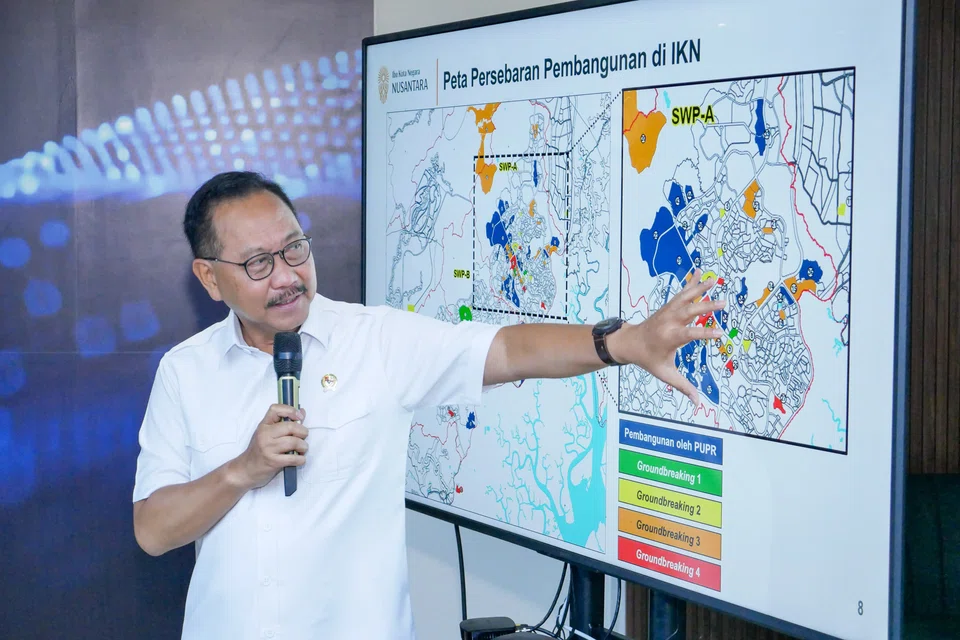
[BALIKPAPAN, EAST KALIMANTAN] The first phase of the lengthy process to develop Nusantara, Indonesia’s brand new capital in East Kalimantan, is more than 70 per cent complete, said Bambang Susantono, the chairman of Indonesia’s Nusantara Capital Authority.
“The project has seen significant and quite progressive development, with several groundbreakings in the last few months and we will see more this year,” said the 60-year-old, a former acting minister of transportation, in an interview with The Business Times.
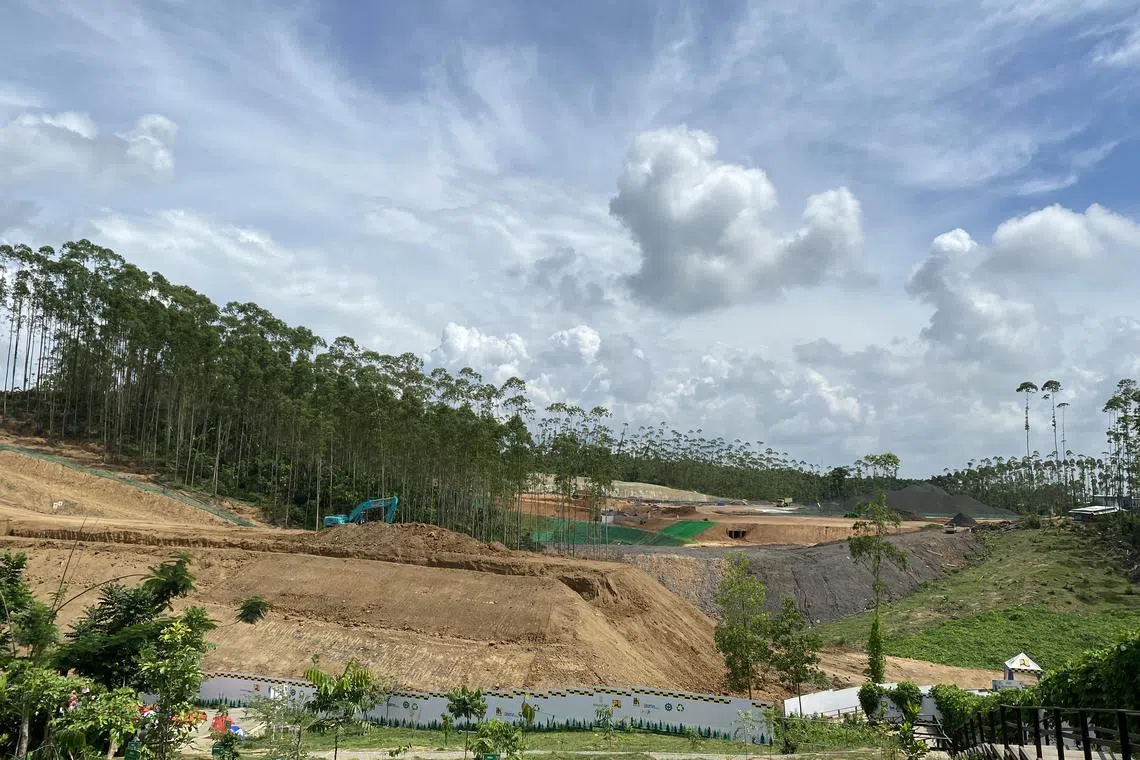
Work is frantically taking place around the clock as the first phase – comprising the presidential palace, the offices of several government ministries, and basic infrastructure such as roads and housing – is on track to mark its inauguration on Aug 17, which happens to be Indonesia’s Independence Day.
The project – which is estimated to cost 466 trillion rupiah (S$40 billion), which the government hopes can be largely funded by foreign investors – is slated to be fully complete in 2045.
It has been reported that Singapore investors have expressed the most interest so far, followed by those from Japan. China and Malaysia are joint-third.
Prabowo push
Prabowo Subianto’s decisive win in last month’s presidential election has paved the way for outgoing President Joko Widodo to press on with ambitious plans to relocate the capital from the sinking metropolis of Jakarta to an area in East Kalimantan that’s more than 1,300 km away.
Prabowo and his vice-presidential running mate Gibran Rakabuming Raka, who is Widodo’s eldest son, have promised to continue the policy to build the Nusantara capital once they take office in October.
Sitting on some 256,000 hectares of land on Borneo island, the new capital city is roughly four times the size of Jakarta and about three-and-a-half times larger than Singapore.
The Nusantara Capital Authority is a government agency appointed directly by Widodo in 2022, with the mandate to manage and promote direct investment in Nusantara by formulating investment policies.
Over the past two years, the authority has actively engaged both local and foreign investors. As things stand, the state will fund about a fifth of the total cost, with the rest coming from public-private partnerships and private investment.
As at Jan 31 this year, the project has received a total investment of 47.5 trillion rupiah, with private investment accounting for 35.9 trillion rupiah, including from local conglomerates.
Bambang, a civil engineer by profession, said the agency has received more than 350 letters of intent to invest in Nusantara, but it has been a challenge to get the larger investors to commit, even with the many attractive tax incentives available to them.
Still, despite the bleak macroeconomic outlook, the authority has a target to bring in more than 100 trillion rupiah from private investors in 2024. This will go towards the development of hospitals, hotels, shopping malls and others.
“We know the global situation is not so great right now. We are still recovering from the pandemic, dealing with climate change, and there is conflict in some parts of the world,” said Bambang.
“Despite all that, we see there are still investors that would like to invest in some of our projects that can have good returns in the next 10 to 15 years,” he added.
He reiterated the fact that investors no longer have to worry about the continuity of the projects being derailed by the political situation. The project is backed by constitutional law, which makes it difficult to be revoked.
Green goals
While Nusantara is poised to be the new political epicentre of South-east Asia’s largest economy, Jakarta will retain its position as the country’s financial hub.
Nusantara has also signed several agreements with leading universities to explore opportunities for research and education projects in the new city, with the likes of Stanford University in the US, the National University of Singapore and Singapore Management University.
But some critics say there has been limited public consultation on the project’s development plans. Environmentalists fear the massive construction will affect wildlife in the forests, and cause an increase in pollution.
Addressing this issue, Bambang said the government will fully commit to use renewable energy in Nusantara.
Last November, work began to develop a solar power plant that will have a total capacity of 50 megawatts. The government envisions Nusantara to be a city where only electric vehicles will ply the roads by 2040.
“We would also like to put a stamp on ESG (environmental, social and governance). Anyone who invests in this project will see this credibility and see this is a good project – not just good for their investment returns, but... also good for the environment,” said Bambang.