



Indonesia’s US$2.5 billion Singapore-inspired oasis to woo tourists, transform Jakarta’s north coast

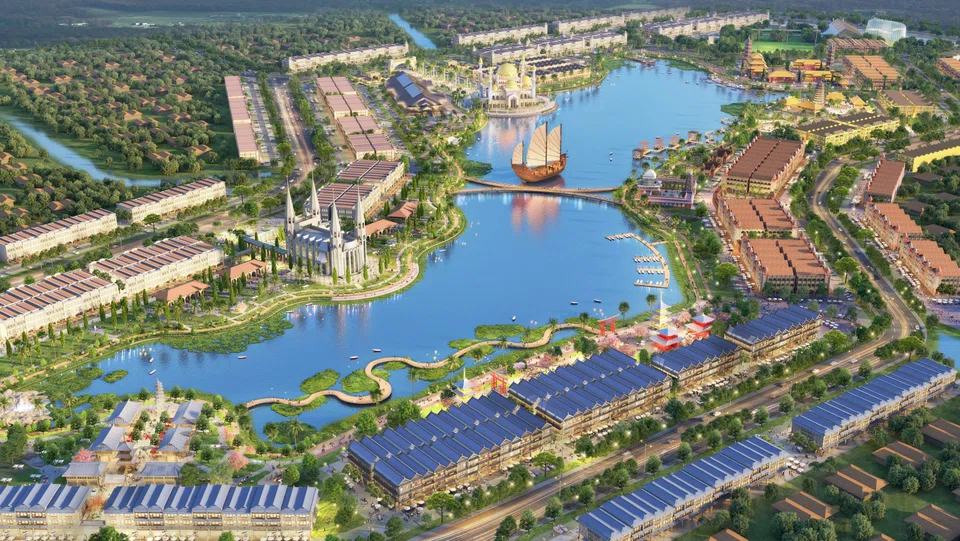
[JAKARTA] Indonesian conglomerate Agung Sedayu Group’s multibillion-dollar project, inspired by Singapore’s Sentosa Island and set to revitalise Jakarta’s north coast in three years, will feature a 27-hole golf course, a Formula 1 racetrack and a sports complex.
The grand project called Tropical Coastland – one of Indonesia’s recently unveiled 14 national projects to galvanise activity across key sectors – is hoping to woo tourists from neighbouring countries Singapore and Malaysia, amid growing demand for the sport.
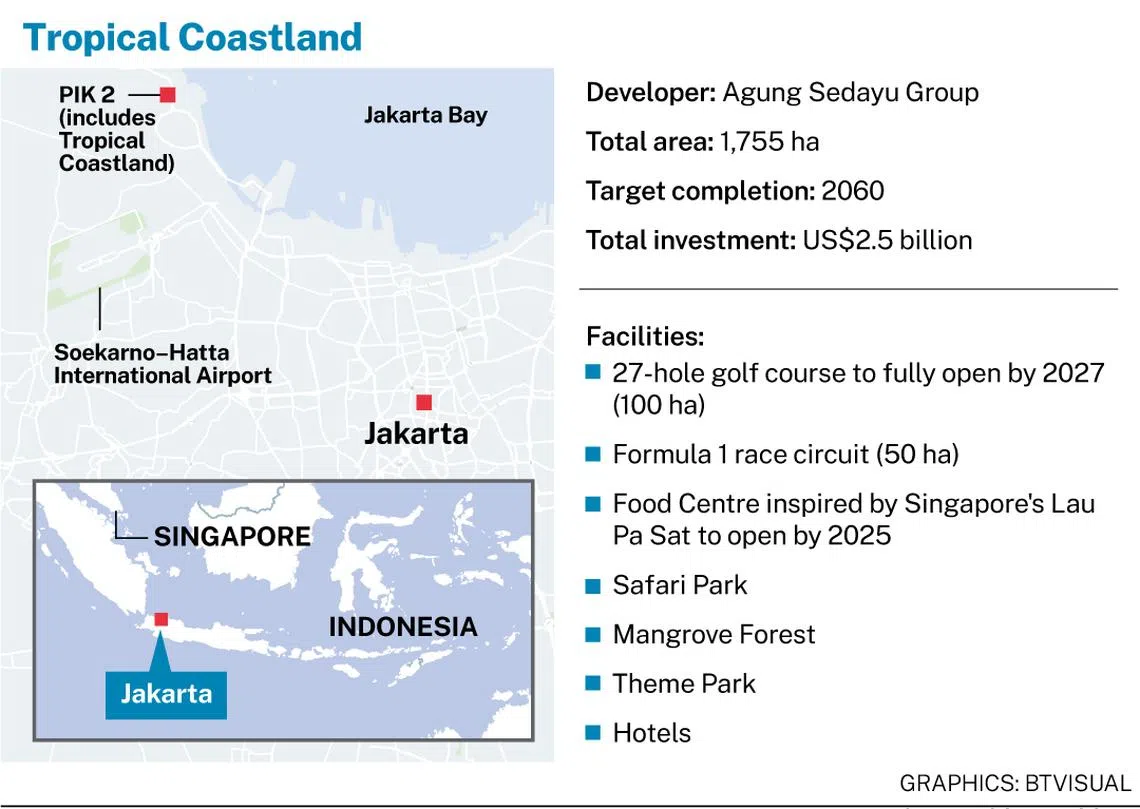
Agung Sedayu’s chief executive officer Richard Kusuma, who grew up in Singapore during his elementary to high school years, told The Business Times that the golf course will span 100 hectares (ha) and will fully open in 2027.
The project – a “green tourism destination” – has ambitious targets to draw 10 million domestic and foreign visitors a year, he said.

He is the son of prominent Indonesian businessman Sugianto Kusuma, who founded Jakarta-based Agung Sedayu, one of the largest property developers in Indonesia.
A big part of Tropical Coastland, including the golf course, drew inspiration from Sentosa – a Singapore island and major tourist attraction with theme parks, luxury resorts and lush greenery.
“I drew inspiration mainly from Sentosa’s mature landscape, characterised by its lush greenery and tropical scenery. I aim to recreate a similar ambience here – infused with local flair,” he said.
He added that the company is actively progressing with plans to build a dedicated circuit for Formula 1 racing, allocating 50 ha of land specifically for the racetrack.
“The development of this racing circuit is currently in the design phase. Given our limited experience in track construction, we are open to collaboration,” he said.
Tropical Coastland, a tourism estate development valued at 40 trillion rupiah (S$3.4 billion) or US$2.5 billion, is located along Jakarta’s coastline in a large waterfront township called Pantai Indah Kapuk Dua (PIK 2) in Banten, Indonesia’s western-most province. It will also include a safari park, theme parks and a mangrove forest upon its completion by 2060.
Having been designated as a “national priority project” signifies that the development has government backing, including support for land clearing and incentives, due to its potential to draw more tourists to South-east Asia’s largest economy.
PIK 2 is being developed by a joint venture between two of Indonesia’s business dynasties – Kusuma’s Agung Sedayu and another conglomerate, the Salim Group, owned by Anthoni Salim.
Located about 30 minutes by car from Jakarta’s Soekarno-Hatta International Airport, the extension project of PIK 2 is being built on 1,775 ha of land – nearly four times the size of Sentosa.
The township will be linked to Jakarta and the city’s main airport via a 20 km toll road, which is under construction and expected to open within a year.
Interestingly, a food centre taking shape in the area has drawn inspiration from another of Singapore’s famed spots – its iconic hawker centre Lau Pa Sat. The food centre, set to feature 50 stalls when it opens in 2025, will include an alfresco portion dedicated to satay – a popular South-east Asian dish of grilled, skewered meat served with a rich peanut sauce.
Agung Sedayu, founded in 1971, has grown to become one of Indonesia’s leading real estate conglomerates, having built major integrated projects and townships. It has a land bank of more than 1,000 ha worth some 190 trillion rupiah.
The company started developing the township in northern Jakarta back in 2002.
In 2020, it completed the first phase of PIK 2 with reclamation works on two islands, transforming them into a mixed-use waterfront residential and commercial estate in northern Jakarta.
The integrated township features residential complexes named after well-known cities in countries including the US, Australia and Japan.
Additionally, it includes shopping malls, hospitals, schools and even a green-belt park where residents can do activities such as yoga, rollerblading and kayaking.
During the planning and development process of the PIK area, the company consulted and collaborated with various foreign consultants, including Singapore’s architectural industrial design firm DP Architects.
Rising gem
PIK 2 has amenities such as open-air parks, an artificial beach and numerous cafes and restaurants.
“Currently, almost a million visitors come every month,” said Kusuma.
According to property consultant Colliers, the average land price in the area has increased three-fold since the company initiated the first-phase rollout of PIK 2 in 2016.
During the early stages of the Covid-19 pandemic when international borders were shut, PIK 2 became a popular destination for locals seeking to escape the cities.
Syarifah Syaukat, a senior research adviser at Knight Frank Indonesia, highlighted that the strategic location of PIK 2, with its proximity to the airport and direct connectivity through a toll road, makes it an essential gateway to accessing the Jakarta market’s outskirts.
Given PIK 2’s status as a national strategic project, it offers abundant opportunities for investors aiming to diversify within the saturated property market of Jakarta, she said.
“In the future, we anticipate a surge in investments in the area, which will significantly impact the development of the property sector,” she added.
TRENDING NOW

Chairman’s role in spotlight with raft of proposed new rules for Singapore boards

Director of PR firm sacked for secretly recording internal meeting loses wrongful dismissal claim

Indonesia stocks suffer worst plunge in nearly 30 years as MSCI proposes standalone status

If Europe goes to war, the fallout will be felt in East Asia

