



Indonesia struggles to reignite loan growth despite deep monetary easing
Corporate sentiment remains cautious across sectors, particularly among capital-intensive industries

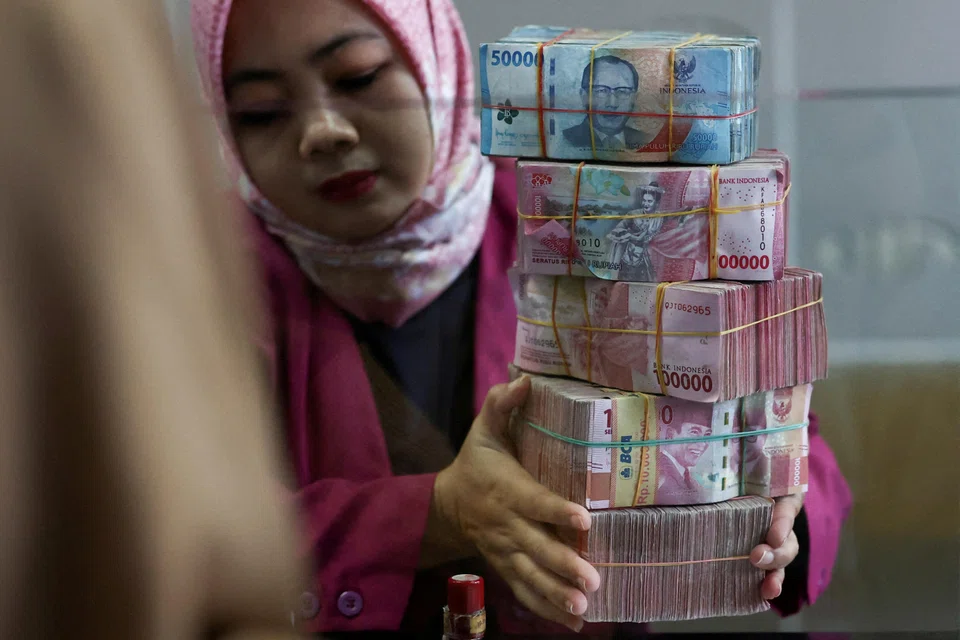
[JAKARTA] Loan growth in Indonesia is expected to remain subdued despite ample bank liquidity and deep rate cuts, as cautious borrowers and policy uncertainty continue to weigh on the credit cycle.
After cutting its benchmark rate by 125 basis points since last year, Bank Indonesia (BI) has shifted its focus to pushing banks to pass on lower rates.
Still, businesses and bankers warn that cheaper credit will do little to lift borrowing without stronger confidence in the economic outlook.
Trioksa Siahaan, senior vice-president of the Indonesian Banking Development Institute, told The Business Times: “Household purchasing power has yet to fully recover, which continues to warrant caution. It has weighed on business expansion and corporate performance, potentially dampening credit demand and affecting loan repayment quality.”
While policy rates have fallen sharply, lending rates have declined by only around 15 basis points.
The central bank has attributed the slow pass-through to deposit competition, as banks face pressure to maintain attractive savings rates to retain funding. However, analysts say the larger issue lies beyond pricing.
Ibrahim Kholilul Rohman, acting head at Indonesia Financial Group (IFG) Progress, said the main constraint on credit growth lies not in supply but in demand. “Banks are liquid and ready to lend, but businesses are holding back because they lack clarity on where the economy is heading.”
Indonesia’s economy came under strain in 2025 as layoffs mounted, consumer demand softened, public protests and tariff uncertainty from US trade protection weighed on sentiment.
In an effort to revive credit growth, the government placed 200 trillion rupiah (S$15.3 billion) of liquidity into the banking system in September, a move spearheaded by newly sworn-in Finance Minister Purbaya Yudhi Sadewa, who pledged to kickstart the economy through ample liquidity.
Despite the government’s liquidity push, credit growth remained subdued at 7.7 per cent in November, down from 10.8 per cent in November 2024 and well below the central bank’s 12 per cent target.
The gap between liquidity and demand is visible in elevated undisbursed loans, which amounted to 2,509 trillion rupiah in November last year, or roughly a fifth of approved credit, based on BI data.
Seeing limited impact on lending, Purbaya later pulled 75 trillion rupiah of government funds from banks, signalling a shift from liquidity support towards direct fiscal spending.
Lower interest rates have failed to move the needle for consumers. Studies conducted by IFG Progress through late 2025 indicate that households have become increasingly insensitive to interest rate changes, undermining traditional monetary transmission channels.
IFG Progress’ Ibrahim said this suggests that further rate cuts or pressure on banks to lower lending rates may have limited impact on loan growth.
“When demand-side conditions are weak but policy responses focus on supply side tools, the result is ineffective credit expansion,” he said.
Shares of major banks fell last year, pressured by weak credit growth and high interest rates that curbed borrowing. State-owned banks have extended their losses into 2026, with Bank Mandiri down over 14 per cent year on year and Bank Rakyat Indonesia dropped 7.7 per cent as at Jan 12.
Businesses on edge
Corporate sentiment remains cautious across sectors, particularly among capital-intensive industries.
Business leaders in mining told BT they remain wary of policy unpredictability under President Prabowo Subianto, citing increased state involvement in key sectors, evolving fiscal priorities and a perceived lack of sustained dialogue with the private sector.
Several executives declined to be named due to reputational concerns and regulatory risk.
“Uncertainty around regulation and state involvement makes long-term capital commitments difficult,” said one mining executive.
Among the policies unsettling mining companies is the obligation to keep export proceeds in local banks, alongside an increase in coal royalties that took effect early last year.
Demand for syndicated bank loans remained subdued towards the end of 2025, a trend reflected in the decline in deals led by mandated lead arrangers. Bloomberg data show that such transactions totalled US$28.88 billion by year-end, down 11.1 per cent year on year.
Maybank Indonesia president director Steffano Ridwan said customers are currently utilising credit facilities conservatively, borrowing only in line with immediate operational needs rather than growth plans.
Economists predict that syndicated loan activity this year will remain largely unchanged from last year.
Nailul Huda, an economist at the Center for Economic and Law Studies, said the slowdown reflects the end of the infrastructure boom that had previously driven much of syndicated lending.
Infrastructure projects, once a key driver of growth under former president Joko Widodo, have lost steam, with Prabowo’s administration now prioritising human capital development initiatives such as the free meal programme.
State-owned banks with a strong focus on financing government-backed projects have seen their profits decline.
Bank Rakyat Indonesia reported a 9.1 per cent year-on-year drop in profit for the January-November period last year, while Bank Mandiri and Bank Negara Indonesia posted declines of 6.4 per cent and 6 per cent, respectively.
Earnings in the spotlight
For equity and credit investors, the subdued investment climate raises questions over earnings growth, asset quality and the sustainability of bank profitability.
Loan growth has traditionally been a key driver of Indonesian banks’ earnings, and analysts said prolonged weakness could pressure net interest income even as liquidity remains abundant.
On the asset quality front, risks remain skewed towards the downside, particularly in micro, small and medium-sized enterprise lending.
Prabowo has pledged to lift Indonesia’s economic growth to 8 per cent from around 5 per cent through flagship programmes such as free nutritious school meals and food security initiatives.
While these programmes may support near-term consumption, analysts have raised concerns over fiscal reallocation, including budget cuts to non-priority programmes and the effectiveness of such spending in generating multiplier effects.
Ibrahim warned that fiscal stimulus will only translate into stronger credit demand if it builds local value chains that support sustainable income generation.
“If fiscal programmes do not create integrated supply chains from inputs and logistics to labour, then they will not lift local economies or stimulate borrowing,” he said.
Looking ahead, investors are likely to focus less on additional rate cuts and more on policy coherence and communication. Ibrahim argued that clearer guidance and coordinated messaging from the government would be critical to restoring confidence.
“Without a clear and credible economic direction, neither fiscal stimulus nor monetary easing will be sufficient to restart Indonesia’s credit cycle.”
TRENDING NOW

MSCI proposes standalone status for Indonesia; Jakarta stocks plunge 8%

Palm oil stocks slide after Singapore begins looking into which firms responsible for haze

High Court rules against Julius Baer’s Singapore trust arm in US$50 million family trust dispute

Why is the haze so bad in South-east Asia this year?

