



Indonesia trade surplus falls sharply in January on softer exports
The surplus is expected to persist but narrow gradually as exports normalise and imports remain strong under pro-growth policies

[JAKARTA] Indonesia recorded a smaller-than-expected trade surplus in January as imports grew faster than exports, with analysts expecting the surplus to narrow gradually and the rupiah to stay stable but sensitive to global risks.
South-east Asia’s largest economy posted a trade surplus of US$950 million in January, official data showed on Monday (Mar 2), the lowest since April 2025 and well below economists’ expectations of US$2.8 billion in a Bloomberg survey.
Analysts expect the surplus to persist this year but narrow gradually as export growth normalises after last year’s front-loaded shipments to the US, and imports remain supported by pro-growth fiscal policies.
Josua Pardede, chief economist at Permata Bank, said elevated geopolitical tensions in the Middle East and slower growth in China – Indonesia’s key trading partner – continue to weigh on the outlook.
He estimated that Indonesia’s current account deficit will remain below 1 per cent of gross domestic product this year, from 0.1 per cent in 2025, despite ongoing tariff uncertainties. However, renewed geopolitical escalation could widen the deficit further.
As the current account deficit slightly widens, the rupiah is projected to trade between 16,675 rupiah and 16,775 rupiah per US dollar by end-2026, slightly weaker from 16,690 rupiah at end-2025.
“This level remains manageable and reflects a stable external position, providing room for Bank Indonesia to adopt an easing bias over the medium to long term,” he said.
Indonesia’s exports grew 3.39 per cent year on year, falling short of the Bloomberg consensus forecast of 11 per cent.
The slowdown was mainly driven by weaker shipments of key commodities, particularly iron, steel and coal.

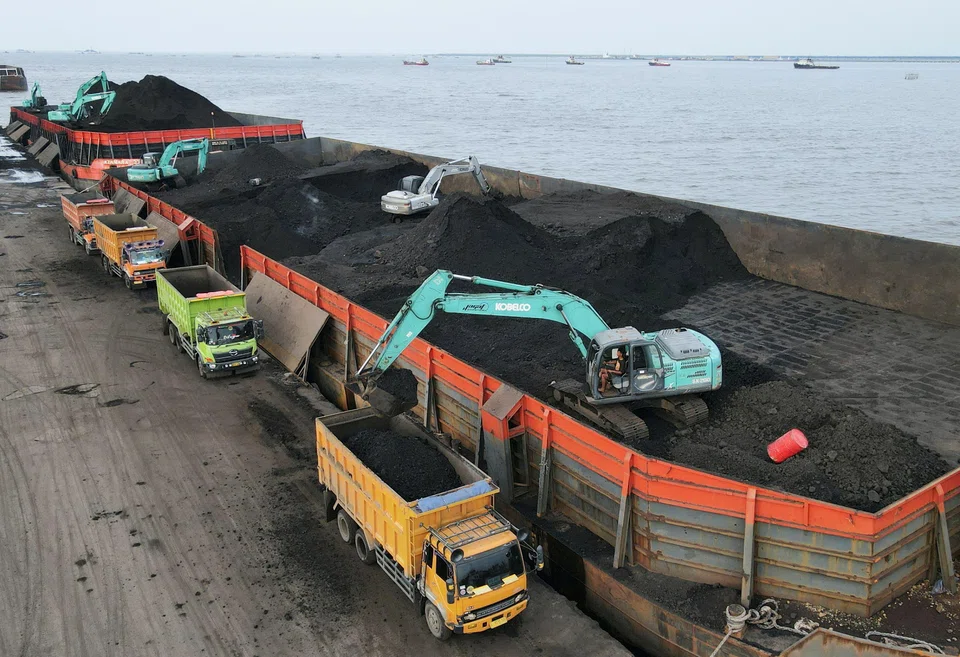
The resource rich country exported 29.5 million tonnes of coal in January, a 2.9 per cent decline from a year earlier, with value at US$18.2 million. Shipments to its main markets, China and India, eased during the month.
Analysts said the moderation reflects mainly seasonal patterns at the start of the year, when trade activity typically eases after year-end shipment acceleration.
In contrast, imports grew 18.21 per cent year on year in January, accelerating from 10.81 per cent in December. All major import components strengthened, including consumer goods, raw materials and capital goods.
Economists said rising capital goods imports signal continued investment in infrastructure and industrial expansion, while stronger raw material imports indicate improving manufacturing momentum.
Inflation surges on base effect and seasonal demand
Separately, Indonesia’s inflation accelerated sharply in February 2026, driven by base effects, seasonal Ramadan demand and rising gold prices – temporarily pushing headline inflation above Bank Indonesia’s target ceiling.
Headline inflation rose to 4.76 per cent year on year in February from 3.55 per cent in January, reflecting the fading impact of last year’s electricity tariff discount that created a low comparison base, as well as stronger seasonal demand during Ramadan.
Core inflation increased to 2.63 per cent from 2.45 per cent, supported mainly by higher gold prices amid global uncertainty and a slightly weaker rupiah.
Radhika Rao, senior economist at DBS, said the jump was largely expected and likely temporary, noting that fading one-off stimulus effects from early 2025 were visible in the administered price component.
With Ramadan under way, Indonesia typically experiences a surge in demand for goods as consumers prepare for the upcoming Eid al-Fitr holiday in mid-March.
Permata Bank expects headline inflation to remain above 3 per cent year on year in the first quarter of 2026 before gradually moderating below 3 per cent towards year-end.
Analysts project inflation to close 2026 at around 2.72 per cent, assuming no prolonged escalation in global tensions.
However, risks remain for Indonesia, given its status as an oil-importing economy.
If Brent crude averages US$85 a barrel and fuel subsidies are adjusted, analysts said inflation could rise by an estimated 1.74 percentage points, constraining monetary policy flexibility.
Rao expects Bank Indonesia to extend its policy pause this month to safeguard capital flows and stabilise the currency amid geopolitical uncertainty.
Decoding Asia newsletter: your guide to navigating Asia in a new global order. Sign up here to get Decoding Asia newsletter. Delivered to your inbox. Free.
Copyright SPH Media. All rights reserved.

