



Indonesian coal giant Adaro Energy in big push to become greener
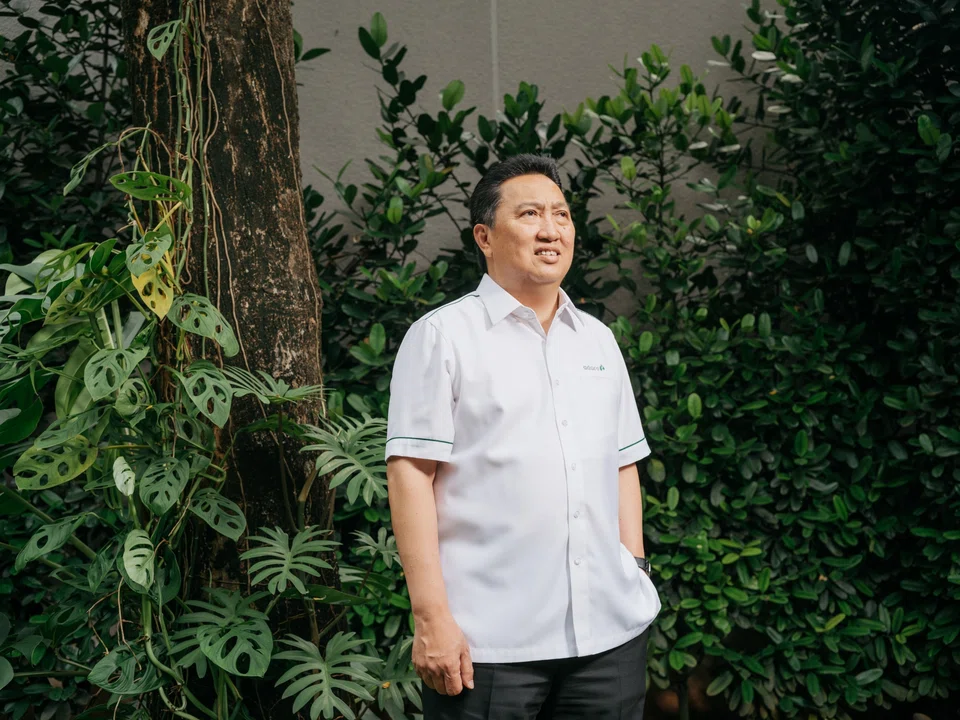
[JAKARTA] Garibaldi Thohir is the president-director and chief executive officer of Adaro Energy, one of the world’s top coal exporters. He is one of the most influential businessmen in Indonesia, with his family also operating numerous restaurants and co-owning hotels.
It was back in 2005 when, together with several partners, Thohir acquired Adaro Energy and took it public three years later.
In 2015, he was appointed commissioner of the Indonesian Stock Exchange, a position he held until 2017. In 2021, he was named president-director of GoTo, a company formed after the merger of Indonesia’s ride-hailing giant Gojek and e-commerce firm Tokopedia.
The 57-year-old – the older brother of Indonesia’s Minister of State Owned Enterprises Erick Thohir – has many other businesses and investments in sectors such as property, food, sport, automotive and media.
Adaro Energy made headlines in late-2021 when it announced plans to build a US$728 million aluminium smelter that will be powered by electricity from renewable sources. Its subsidiary, Adaro Aluminium Indonesia, is building the smelter at the Green Industrial Park in North Kalimantan.
In a recent email interview with The Business Times, Thohir talks about the growth of the company, its ongoing push to reduce emission levels, and why the smelter project is critical to meet the global demand for aluminum. This transcript has been edited for brevity.
Indonesia has a priority to decarbonise its economy and reduce its reliance on coal. What role is Adaro Energy playing in the country’s energy transition, and will this affect the company’s operations in any way?
Adaro supports the transition to new energy and renewable energy. We have a commitment to actively participate in renewable energy as part of our support for the government to achieve the national energy mix target. We’ve always had a goal to reduce emissions.
In Central Kalimantan, we have installed rooftop solar panels to supply electricity to the Kelanis port area. We also added a floating solar panel that is one of the most extensive in Indonesia. It’s estimated that these two solar panels will produce 618,000 kWh of electricity each year, reducing 515 tonnes of CO2 emissions annually.
The Adaro Group continues to explore renewable energy development through several subsidiaries. We are actively participating in the tender for (Indonesia state-owned company) PLN’s renewable energy project, as well as developing an aluminum smelter in North Kalimantan’s green industrial estate.
What are Adaro’s latest coal production figures and what are the main export markets?
Adaro’s target is to produce between 58 million and 60 million tonnes of coal in 2022, and the company reached over 45 million tonnes as at September 2022. We are on track to meet our production targets for the year.
Besides the Indonesian market, which is our primary market, we also sell to countries in Asia such as India, China and Malaysia. The breakdown is domestic (23 per cent), East Asia (28 per cent), South-east Asia (24 per cent), India (14 per cent), China (9 per cent) and Europe (1 per cent).
The company has a reputation for being one of the country’s best managed coal companies, for its ability to keep production costs low while maintaining high earnings. How has this success been achieved?
Due to the integrated business model, which includes mining, coal ports, and power plants, the company can increase its efficiency and maintain a solid financial position. For the first nine months of 2022, profits reached US$2.33 billion, an increase of 262 per cent over the same period last year.
We maintain strong liquidity with a net cash position of US$1.85 billion. The total cash position increased over the previous year to US$3.35 billion from US$1.51 billion.
Adaro continues to expand and diversify its business outside of the coal industry and is committed to becoming a more sustainable company through long-term initiatives to capture opportunities in the green economy. The synergy between our strategy and global needs aligns with Indonesia’s initiative to increase processing activities and develop downstream industries.
What’s the latest on the aluminium smelter project in North Kalimantan?
According to estimates, the global demand for aluminium will increase. The development of the green economy contributes to this increase. One of the sectors experiencing growth is the automotive sector, which is seeing an increase in electric vehicles. Due to Indonesia’s abundant natural resources and energy, aluminium production will be competitive in Indonesia.
The smelter will be located in one of the world’s most prestigious green industrial estates. The smelter will ensure a stable supply to meet the increased demand for aluminium.
Initially, the smelter will have a capacity of 500,000 tonnes per year, with a completion target set for 2025. The first phase will require an investment of US$1.1 billion, so we require the support of a partner. We intend to become the majority shareholder of the project, but we are exploring the possibility of forming a partnership.
As a result of this green industrial estate, North Kalimantan has bright prospects. The area is expected to encourage the growth of domestic and foreign investment there. There is the potential to develop public facilities on a large scale, and these may include ports to support the logistics industry and hydropower plants to provide electricity to industrial estates.
TRENDING NOW

KKR founders among investors buying 42% of Peter Lim’s Valencia; club valued at US$1.4 billion

Singapore’s central gas buyer affirms Indonesia’s role as ‘important partner’ amid export review warning

Why the biggest business decision about AI isn’t which model to choose

NEA issues notices to 10 Singapore-based companies, including Wilmar and APP, over haze

