



Indonesian farmers harness tech to shield crops from El Nino’s wrath
Technology, with precise, localised instructions, is helping small-scale farmers tackle productivity loss during the dry season

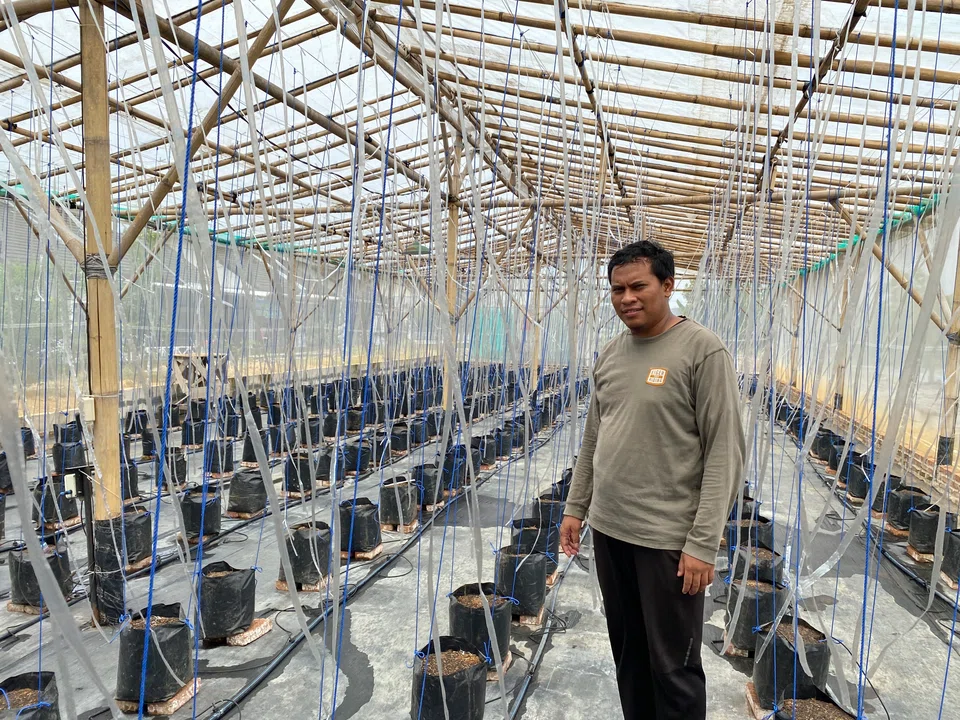
[JAKARTA] As El Nino threatens to dry out Indonesia’s abundant harvest season, disrupting planting and diminishing yields, the country’s smallholder farmers have found a beacon of hope – they are arming themselves with the necessary tech tools to mitigate the drought’s impact.
In Subang Regency, West Java, small-scale farmer Adimas Muhammad Wibisana has deployed Internet of Things technology on his 1.5-hectare farm to slash expenses and boost labour efficiency to grow hydroponic cantaloupe melons.
The dry season, the 38 year-old lamented, significantly affects the fruit quality. They are smaller and the volumes are lower, owing to water scarcity, which can also diminish nutrients.
“The weather today is extremely challenging. In a typical season, we only need to water the plants twice a day – in the morning and afternoon. However, with this extreme heat, we now need to water them at least three times,” said the former medical device salesman who ventured into farming five years ago.
With an initial capital of 35 million rupiah (S$2,950), he purchased equipment from local agri-tech startup Habibi Garden.
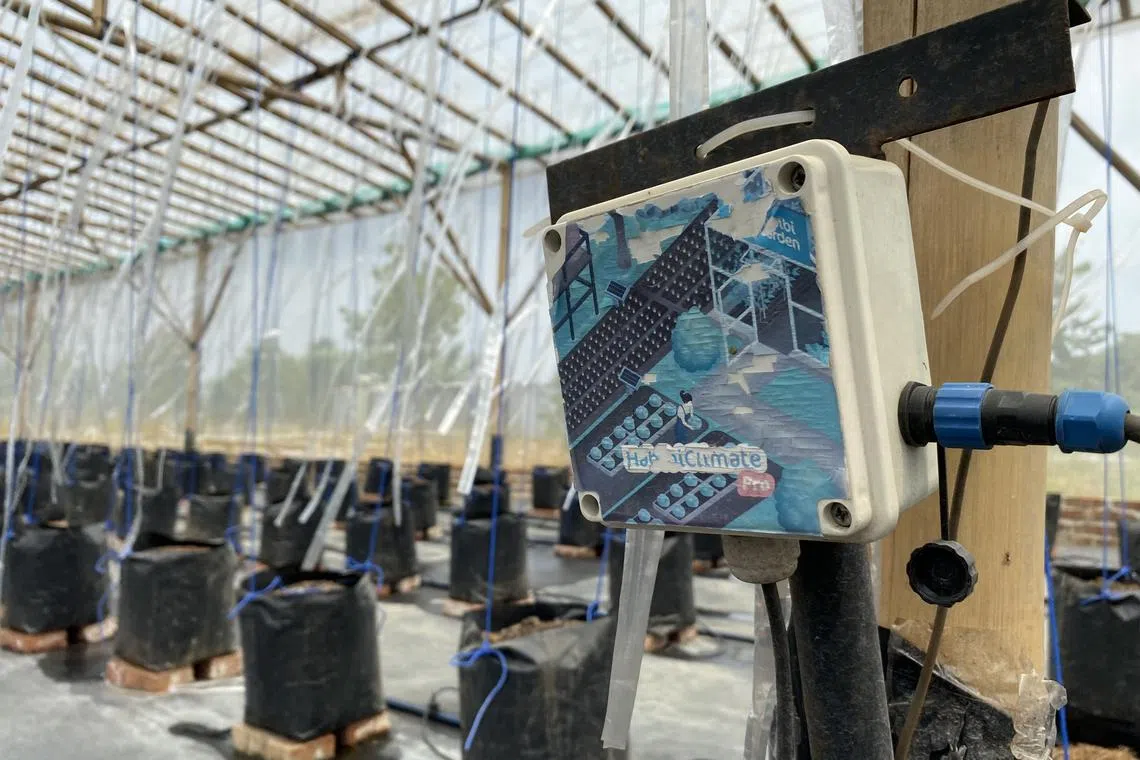
The device is equipped with sensors that can detect the moisture level and nutrient content in the soil. When the soil experiences water shortage and signs of malnourishment are detected, the sensor sends a notification to his smartphone application.
With just a few clicks, the smart irrigation technology provides the crops with the optimal amount of water and fertiliser at the precise time it is needed.
This practice is efficient because if he had to do it manually, he would need at least two farmers to water the plants every day and pay them a daily wage of 50,000 rupiah.
Generally, the farm incurs operational costs of up to 25 million rupiah for each planting period.
“In the farming business, manpower represents the most significant cost. But with smart irrigation, I can save up to 50 per cent of the operational costs,” Wibisana said.
His farm produces at least two tonnes of fresh melons monthly, generating sales of 30 million to 40 million rupiah. He also grows Cavendish bananas and a variety of other fruits and vegetables.
“Many young people see farming work as dirty and difficult, but with technology, it doesn’t have to be that way,” he said.
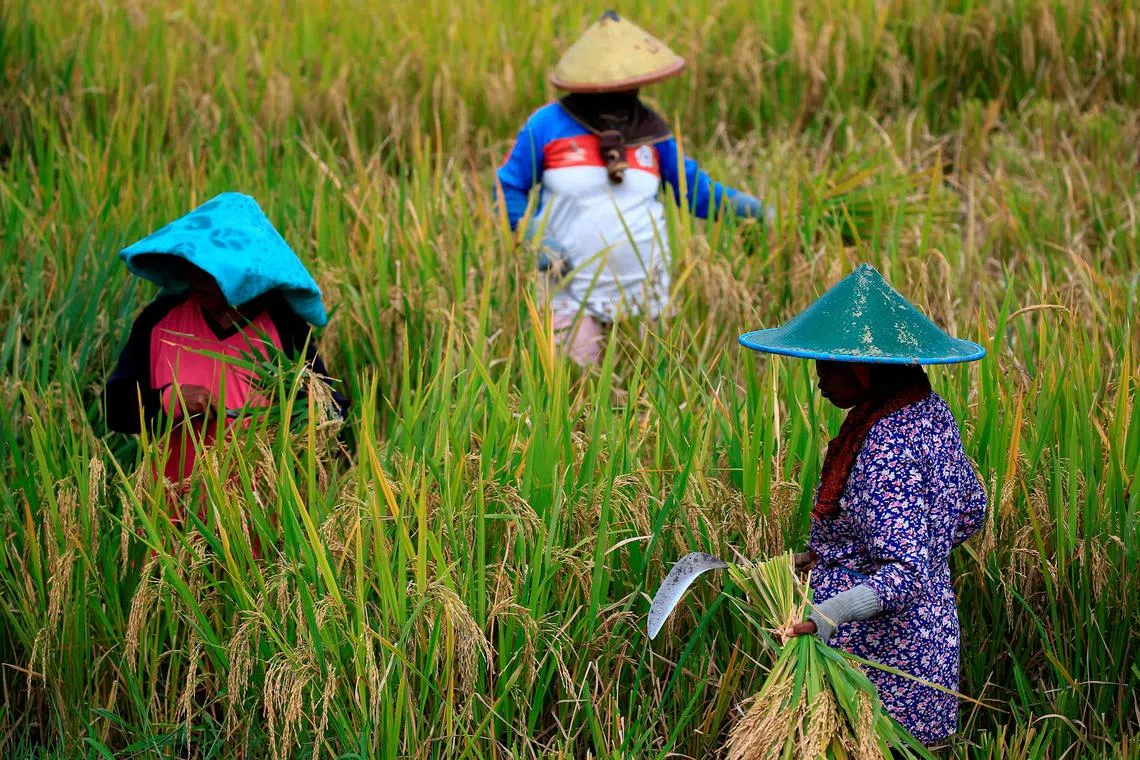
The current El Nino event is causing unusually warm temperatures across South-east Asia, including Indonesia, and is expected to lead to drought conditions in several regions.
The Meteorology, Climatology, and Geophysics Agency of Indonesia forecast that nearly two-thirds of the country’s area will experience a dry period from May to August 2024. The weather is expected to be characterised by blazing temperatures and sunny conditions, with the mercury reaching 34 deg C.
Apart from affecting water supply, the prolonged hot season also causes pests to become more aggressive.
Wilson Ong, chief operations officer of Terra Agri, saw growing demand for the use of drone technology among Indonesian farmers to help them combat the spread of pests during the planting season.
“Many farmers we work with complain about increased pest activity during El Nino, which makes things difficult for them because it can threaten crop yields,” he told BT.
Terra Agri is a business unit of the Japan-based drone service provider Terra Drone, which offers crop intelligence and plantation control systems to monitor site conditions, utilising aerial and ground information.
Since 2016, the company has partnered with 600 farmers across the country.
He noted that drone technology is widely used in Indonesia’s agricultural sector, particularly among larger companies with more resources and younger workers.
According to the company’s study, utilising drones for pesticide spraying could result in cost savings of up to 30 per cent and is 60 times faster than traditional methods. Drone technology can also reduce the health effects caused by frequent pesticide spraying.
Rising food prices
The extended hot season affecting agriculture has led to a surge in food prices, posing a threat to the well-being of vulnerable communities in Indonesia.
Last year, El Nino and a prolonged dry spell in parts of the country saw rice production fall by around 18 per cent, Ministry of Agriculture’s data showed. The price of rice has risen over 20 per cent since February last year.
Recognising the burden of rising rice prices on consumers and over 15 million food-producing households, the government has begun selling discounted rice and providing cash handouts to hard-hit families. It also plans to import 3.6 million tonnes of rice this year to meet domestic demand.
In an e-mail response to BT, a spokesperson from The Ministry of Agriculture said the government has taken steps to increase agricultural production to address the threat of El Nino.
These include measures such as revitalising dams in several water-stressed regions and distributing 10,000 water pumps to farmers in West Java, one of the provinces with the largest agricultural output in Indonesia.
Farmer crunch
Agriculture remains the main source of income for about a third of the population. The sector is a major employer, hiring almost 30 per cent of the working-age population, or about 45 million people, as reported by the statistics agency.
Indonesia’s agricultural landscape faces complex challenges, including a sharp decline in farmland and a shortage of skilled labour.
According to statistical data, the population of older farmers (aged 55 to 66) increased by 20 per cent last year compared to 2013. Conversely, the number of young farmers (aged 25 to 44) fell by 10 per cent over the same period.
Agus Pakpahan, chairman of the joint association of Indonesian Plantation Farmers, said the dearth of fresh talent entering the farming profession has plunged Indonesian agriculture into a state of crisis, as a large chunk of the younger generation has dropped out to seek higher incomes elsewhere.
This has created a situation where only three per cent of nearly 20 million farmers utilise new technologies in the fields, he said.
Without sufficient farmer regeneration, he said, Indonesian agriculture would suffer from a lack of innovation and technological progress, given that older farmers are less adaptive to technology or change.
TRENDING NOW
Two Singapore-listed palm oil firms named in Greenpeace report on Indonesian plantation fires

Singapore Airlines flight returns to San Francisco after ‘unruly’ passenger incident
Singapore looking into which companies responsible for haze-causing fires: PM Wong
Deluge IPO 3.86 times subscribed ahead of SGX debut

