Indonesian textile giant Sritex’s bankruptcy woes expose cracks in the country’s garment sector
The industry’s crisis is a call for newly elected President Prabowo to revitalise the country’s manufacturing sector, a key plank in his economic agenda

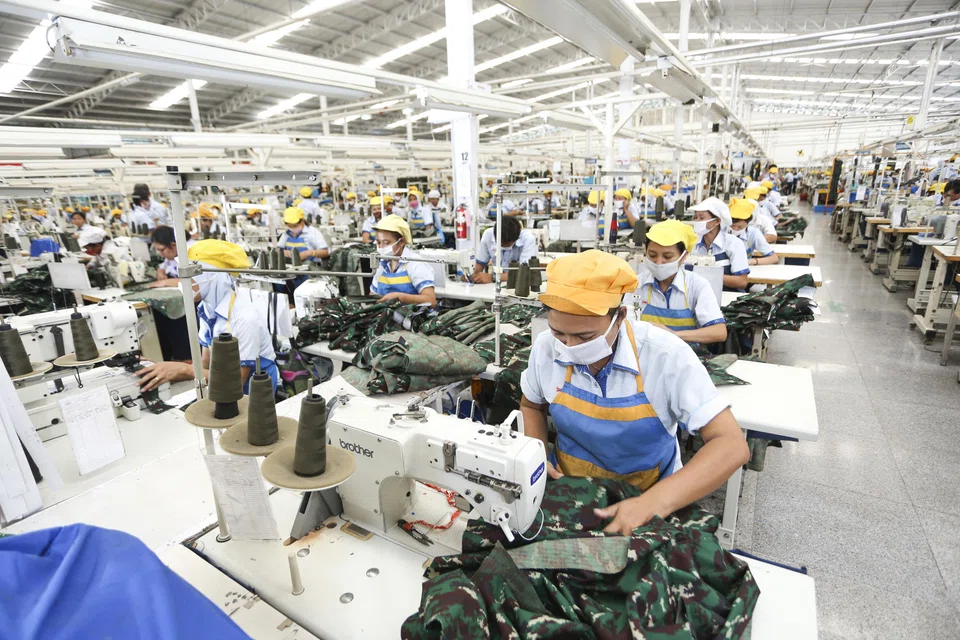
[JAKARTA] Indonesia is racing to save its largest listed textile company, Sri Rejeki Isman (Sritex), from collapse after the industry giant declared bankruptcy last week, threatening nearly 50,000 jobs.
Known for supplying high-street brands such as H&M and Forever 21 and for producing military uniforms for Nato, the 58-year-old company now faces the prospect of urgent government intervention to stabilise it and protect its workforce.
Following President Prabowo Subianto’s directive, four ministries, including those for finance and manpower, are scrambling to devise a rescue plan.
Industry Minister Agus Gumiwang Kartasasmita said in a statement on Monday (Oct 28): “The government is committed to taking immediate action to support the company and protect its workforce.”
Once a South-east Asian textile powerhouse, Sritex now teeters on the brink of closure amid mounting debts, following a court’s acceptance of a petition from a trade partner over unpaid obligations last week, triggering the government’s move to revive the national icon. Sritex’s management met officials from the Ministry of Industry on Monday.
The company’s president-commissioner, Iwan Kurniawan Lukminto, disclosed that Jakarta had urged the company to devise a rescue strategy. “The government has made it clear (that) our operations must continue,” he said, in remarks reported by news outlet, Bisnis Indonesia.
However, he acknowledged that the company was unable to define a clear strategic path forward because of ongoing internal consolidation efforts.
Debt-pile crisis
Headquartered in Sukoharjo in Central Java, Sritex boasts a significant market presence in South-east Asia and the US, and has a yarn production capacity exceeding 1.1 million bales per year.
The Lukminto family, which owns the company, were once among Indonesia’s 50 richest, with a fortune estimated at US$515 million on Forbes’ 2020 list. The clan has since fallen off the list amid Sritex’s struggles with declining global demand and competition from low-cost imported fashion.
In 2019, Sritex reported sales of US$1.1 billion and a profit of US$87 million. However, the pandemic triggered a sharp decline, sending sales down to US$847 million in 2021.
The downturn has persisted, and by 2023, sales had fallen further to US$325 million, resulting in a net loss of US$174 million, driven by rising operational costs and mounting liabilities.
Following a string of crises in the company, the Indonesian stock exchange halted trading in its shares in March 2021. The following year, the company secured a restructuring agreement with creditors to manage over US$1.5 billion in debt, but last week, a court annulled the deal, following a petition from trade partner Indo Bharat Rayon.
Sritex’s financial woes have only deepened. Its debt stood at US$1.6 billion as at June, intensifying the pressure on the struggling textile giant.
Reality check
Its bankruptcy underscores the significant challenges facing Indonesia’s textile sector, which has struggled in the wake of the pandemic with falling demand, rising competition and supply-chain disruptions, leading to waves of mass layoffs.
The industry crisis is a wake-up call for Prabowo – sworn in as head of state just last week – and thrown the spotlight on the urgent need to revitalise the country’s manufacturing sector, a cornerstone of his economic agenda.
Achmad Nur Hidayat, an economist and public policy specialist at UPN Veteran Jakarta, a public university, noted that the Indonesian garment industry has long depended heavily on export markets.
The surge of inexpensive imported fashion intensified competition, exerting additional pressure on the profit margins of local manufacturers such as Sritex.
“The situation faced by Sritex is not just an internal company issue, but a reflection of the challenges faced by the entire garment industry in Indonesia,” he told The Business Times.
The episode also underscores the industry’s vulnerability to the unpredictable tides of global demand and the shifting dynamics of the international economy, including the ongoing trade war between the United States and China and rising domestic production costs, he said.
“President Prabowo needs to promote the strengthening of the domestic market as a strategy to maintain stability in the textile industry,” Hidayat said.
He emphasised the importance of government collaboration with banks and financial institutions, and urged them to develop flexible debt restructuring schemes tailored for struggling textile companies.
Such a move could provide a lifeline for these businesses as they navigate the current challenges.
The textile industry, once a powerhouse driving Indonesia’s economy and providing jobs for millions, is also grappling with inefficiencies and dwindling production capacity.
Even with Indonesia’s economy growing at about 5 per cent a year in recent years, the textile industry has had a significant downturn, contracting by as much as 2 per cent, said the Statistics Bureau.
Another publicly listed textile firm, Pan Brothers, is also fighting to restructure its US$325 million debt to stave off bankruptcy.
Once hailed as the second-largest garment manufacturer in Indonesia, Pan Brothers has faced significant challenges in the wake of the pandemic, with plummeting exports wreaking havoc on its operations.
The company failed to repay several loans in 2021 and received approval to restructure its debt at the end of that year. This year, the company once again defaulted on its interest payments.