Indonesians shun cash as QR code payments now the norm
Rate of QR payments in South-east Asia’s largest economy has tripled nearly every year since this service was launched in 2019
[JAKARTA] Santy Caesar, a 32-year-old from Jakarta, was out shopping during a vacation in Bangkok earlier this year when she realised her credit card was blocked due to the bank detecting an unusual purchase pattern.
As she hunted for other payment options, she noticed that many shops in the Thai capital accepted quick response (QR) code payments via an app that she managed to link to her local bank account.
Buoyed by the ease of going cashless when overseas, she is also going to rely on QR payments for her next trip – to Singapore next March for the Taylor Swift concert.
“It never crossed my mind that I could make any transaction (in Thailand) without having to change my rupiah to Thai baht first,” she said, noting that QR payments save her the hassle of carrying cash and ease her worries about pickpockets.
Indonesia – the largest economy in South-east Asia – is one of five countries in the region that last year signed a landmark cross-border payments deal that allows transactions through QR code. The others involved in this ambitious project are Singapore, Malaysia, Thailand and the Philippines.
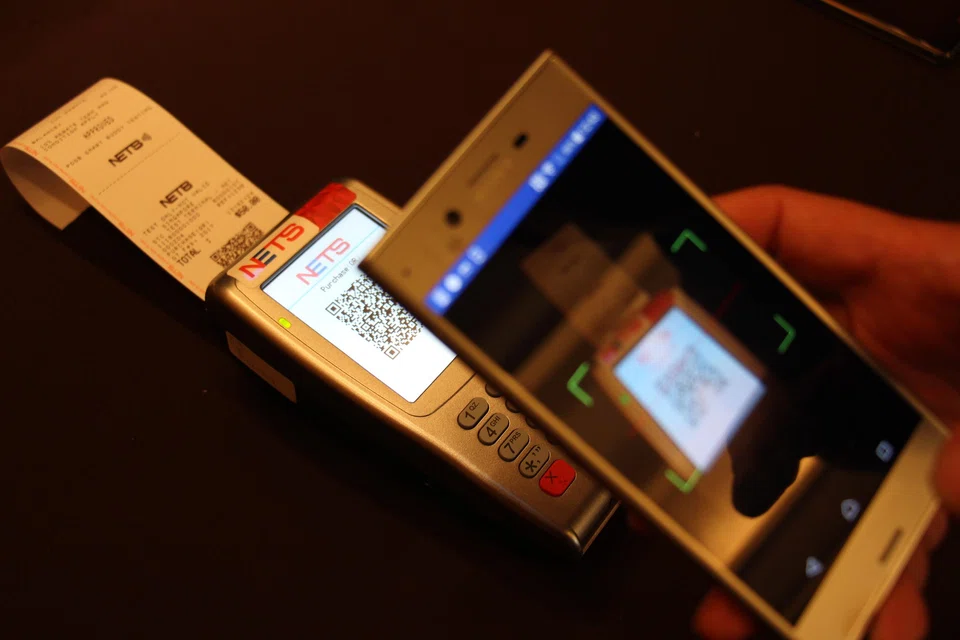
A fortnight ago, it was announced that businesses and individuals from Indonesia will be able to scan QR codes provided by e-payments service provider Nets in Singapore by the end of this year. And Singapore travellers to Indonesia will be able to use their smartphones to make QR code payments from their Nets-linked bank accounts.
This is part of the cross-border linkage between the Quick Response Code Indonesian Standard (QRIS) and Nets.
Indonesian consumers have embraced QR payments in recent years due to their convenience, while merchants have come on board because of the relatively low fees involved.
The rate of QR payments in Indonesia has trebled nearly every year since this service was launched in 2019. The value of QR transactions totalled 98.5 trillion (S$8.7 billion) in 2022, and this number is set to go up this year, with Indonesia’s central bank recently doubling the transaction limit to 10 million rupiah.
There are about 30.9 million QRIS users in Indonesia, far ahead of Thailand (seven million) and Malaysia (1.1 million).
Over the years, countries in South-east Asia have been pushing for the wider use of local currencies in transactions and trade in the region as they look to reduce their reliance on the US dollar.
Since the start of 2020, Bank Indonesia (BI) has required digital payment services to use standardised QR codes to ensure that all banks and electronic wallets are interoperable.
BI has been heavily promoting the use of QRIS ever since, working with commercial banks, e-wallet providers and businesses to get more merchants – even street vendors – to display their unique QR codes for customers to scan and make payments.
A key characteristic of the QRIS system is that BI – unlike other payment providers like Ovo and GoPay – charges a 0.3 per cent fee on most commercial transactions.
Observers say that while this could make it harder for the central bank to boost the adoption of QRIS, this fee is competitive compared to what consumers pay when using a credit card or other payment platforms such as PayPal.
“The future of money and payments is undoubtedly digital. There’s no room for us to just sit and wait,” said BI deputy governor Filianingsih Hendarta.
Bank Mandiri’s head economist Andry Asmoro said that the QRIS will go a long way to help bridge the gap between traditional banking systems and the unbanked or underbanked population.
Indonesia has one of the world’s largest unbanked and underbanked populations, with estimates for the size of that group ranging from 140 million to 180 million.
“The accessibility and ease of use (of QRIS) can promote financial inclusion, allowing more individuals to participate in the digital economy,” said Andry.