



Indonesia’s central bank cuts benchmark rate by 25 basis points to 5.25%
It also trims the overnight deposit and lending facility rates to 4.5% and 6%, respectively

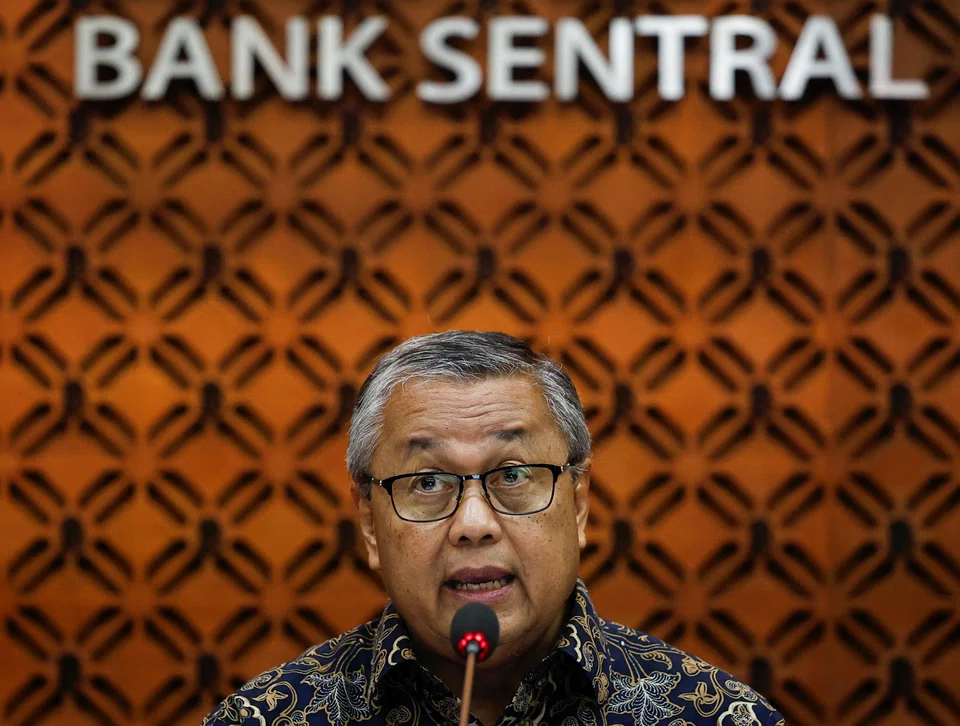
[JAKARTA] Indonesia’s central bank cut its benchmark interest rate for the third time this year, shortly after the country finalised a trade deal with the US that sets a 19 per cent tariff on goods from South-east Asia’s largest economy.
Bank Indonesia (BI) on Wednesday (Jul 16) lowered its benchmark rate by 25 basis points to 5.25 per cent, aligning with market consensus compiled by Reuters. It also reduced its overnight deposit and lending facility rates to 4.5 per cent and 6 per cent, respectively.
BI governor Perry Warjiyo said the decision was driven by low inflation – which remained within the target range – and the continued stability of the rupiah, in line with its fundamentals as well as the ongoing need to support economic growth. Inflation in June stayed near the bottom of the central bank’s target range of 1.5 to 3.5 per cent.
Warjiyo also expressed support for the recently concluded trade agreement, saying it would boost sentiment for Indonesia’s exports and economic growth, while providing greater clarity for financial markets.
BI estimates Indonesia’s gross domestic product growth will reach 5 per cent this year, slightly below the target of 5.2 per cent.
The rupiah slipped 0.1 per cent to 16,278 against the US dollar on Wednesday, while the Jakarta Composite Index maintained its upward momentum after the tariff deal was sealed, gaining 0.72 per cent at the close.
Analysts said that BI may keep the door open for further rate cuts later this year, as it aims to bolster growth amid mounting global uncertainties and signs of slowing domestic demand.
Indonesia’s economy is under mounting pressure from weakening consumption – a crucial growth driver, as evidenced by a decline in retail sales during the second quarter of this year.
Lavanya Venkateswaran, Asean economist at OCBC, said the rate cut was broadly expected and reflects BI’s continued focus on sustaining growth momentum amid rising global and domestic headwinds.
OCBC projects Indonesia’s GDP growth to moderate to 4.7 per cent in 2025 from 5 per cent in 2024, amid weaker external demand and slowing domestic consumption. “BI clearly left the door open for further cuts, the timing of which will be tied to rupiah stability,” Venkateswaran added.
On Tuesday, US President Donald Trump announced the completion of a trade deal with Indonesia, under which Indonesian goods will face a reduced tariff of 19 per cent – down from the previously threatened 32 per cent – while US exports will be exempt from any levies.
Indonesia became the fourth country to clinch a pact with the US, after the UK, Vietnam and China – though Beijing’s agreement with Washington remains a truce.
South-east Asia’s largest economy reportedly committed to purchasing US$15 billion in US energy exports and US$4.5 billion in agricultural goods, alongside increasing its orders for Boeing aircraft.
While uncertainty surrounding Trade War 2.0 has begun to ease, supported by the latest trade deal, Permata Bank chief economist Josua Pardede cautioned that questions remain about the future direction of the Federal Reserve’s policy rate.
This is especially as Trump’s tariff strategy could further intensify inflationary pressures in the US.
In the near term, these factors may dampen capital inflows to riskier emerging market assets, including Indonesia, potentially curbing the rupiah’s recent gains.
“As a result, BI may take a more cautious approach before pursuing further aggressive rate cuts,” Pardede said, adding that there was still room for the central bank to cut rates by an additional 25 to 50 basis points over the remainder of the year.
TRENDING NOW
DBS remains analysts’ pick ahead of Q3 earnings after Singapore banks’ share slump

Singapore identifies 7 firms responsible for haze fires, notices issued urging action: Grace Fu

Good Class Bungalow market activity picks up pace on ‘realistic’ pricing

High Court rules against Julius Baer’s Singapore trust arm in US$50 million family trust dispute

