Indonesia’s EV push faces bumpy road as consumers hesitate despite subsidies

Jakarta
MORE than six months after the Indonesian government introduced financial subsidies for those looking to buy electric motorcycles, the take-up rate has been far from stellar.
According to latest figures from the Ministry of Industry, only 836 people have received the subsidy – a drop in the ocean, given that this year’s quota is for as many as 200,000 electric two-wheelers.
The scheme sees buyers receive a discount of seven million rupiah (S$612.50) for a one-time purchase of an electric motorcycle.
It’s part of a budget of US$455.9 million in state funds that have been set aside to subsidise electric motorcycle sales through 2024. The subsidies will cover sales of 800,000 new electric motorcycles and the conversion of 200,000 combustion engine motorcycles.
Febri Antoni Arif, a spokesperson at the ministry, admitted the subsidy programme “has not made significant progress yet”, mainly because the public is still adopting a wait-and-see approach when it comes to switching to electric vehicles (EVs).
Some consumers are also still put off by the high cost of an electric motorcycle even with the subsidy, as well as a general unfamiliarity with the various brands that are available.
With the economy not faring so well and the cost of living rising, Arif said the growth of the EV ecosystem will largely depend on the people’s purchasing power.
Anjar Widianto, a 34-year-old factory worker, said that owning an electric motorcycle is currently beyond his budget. Checks by BT showed that prices of an EV bike typically range from 15 million rupiah to as much as 38 million rupiah.
However, the government incentives have not yet captured Anjar Widianto’s interest in purchasing an electric motorbike. The 34-year-old factory worker explained that an electric motorcycle is currently beyond his budget.
“Given the current economic situation, it doesn’t make sense at that price. The resale value is also a challenge, as well as the availability of spare parts,” said Anjar.
There are several electric motorcycle brands in Indonesia today, including local brands such as Viar, Selis, Gesits and Alva, as well as China’s Wuling.
“I’ve only recently heard of them. Finding spare parts in case of breakdowns is another concern. It’s not so worrying if you have motorcycles from well-known brands like Honda, Yamaha or Suzuki,” he said.
Anjar also expressed concerns about the durability of the battery pack, the limited charging infrastructure in many parts of the country, and the perceived lack of rigidity and stability of the electric motorcycles.
“The resale value is also a challenge, as well as the availability of spare parts, which is not guaranteed in terms of after-sales service,” he said.
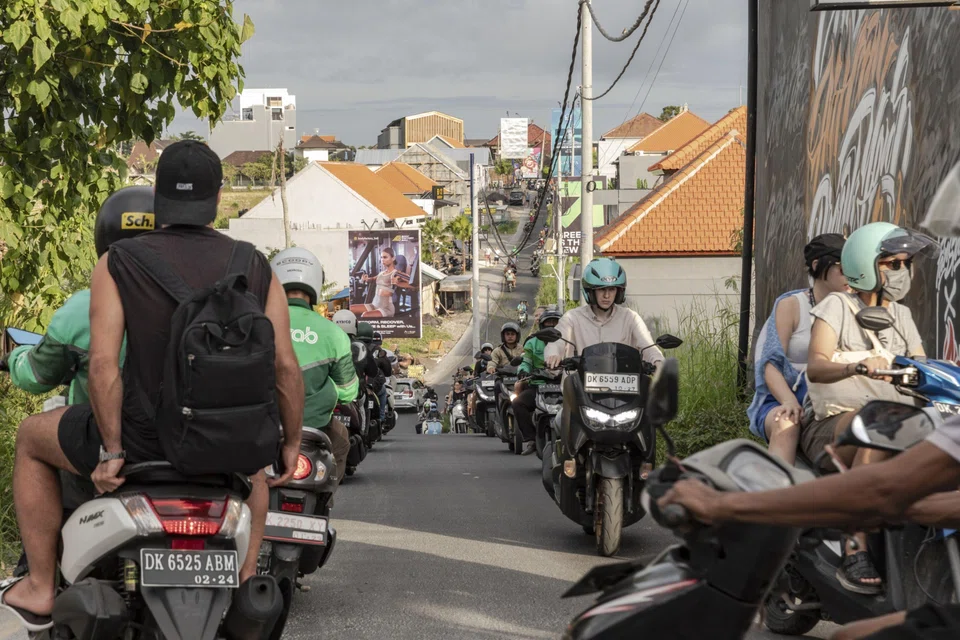
Indonesia is one of the world’s largest motorcycle markets. Data from Statistics Indonesia show that, as at December last year, there are about 125.3 million two-wheelers across the country, far higher than the 17.2 million cars on the roads. Japanese manufacturers dominate the motorcycle industry, and Honda is the market leader with a share of over 68 per cent.
While motorcycles will likely be more popular than cars for the foreseeable future, the Indonesian government wants to have electric motorcycles make up 20 per cent of the total domestic motorcycle production.
According to Indonesia’s Electric Mobility Ecosystem Association, electric motorcycles account for just 0.2 per cent of all the two-wheelers in the country today, although it expects this rate to exceed 10 per cent in the next five years.
For now, the limited driving range and the scarcity of charging stations are the largest barriers to realising this potential, said Fabby Tumiwa, the executive director of the Institute for Essential Services Reform, a Jakarta-based think-tank in the field of energy and environment.
“EVs still have lower range, speed, and incline capacity than similarly-priced internal combustion engine vehicles, which affects their overall quality,” he said. There are also limited charging stations outside the Greater Jakarta area, he added.
He said that the government should make it simpler for buyers to apply for the seven million rupiah subsidy, as the process is cumbersome due to the lengthy process and the complicated requirements. This has forced many potential consumers to withdraw their applications.
As far as cost is concerned, he noted that advancements in technology could bring down the cost of buying an electric motorcycle by up to 9 per cent by 2030. “This gradual decrease is expected to make EVs more affordable, ultimately reaching a price point comparable to traditional petrol-powered cars,” he said.