



Indonesia’s fee cap threatens ride-hailing profits, clouds outlook for Grab, GoTo
Analysts say the policy could dampen investor sentiment – just as ride-hailing firms are beginning to turn a profit

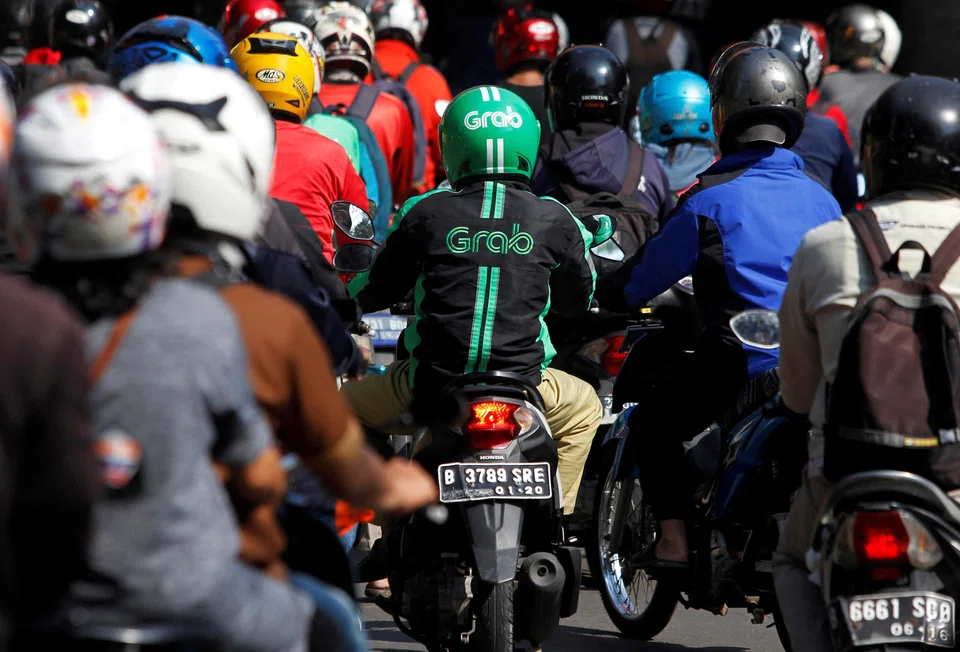
[JAKARTA] Indonesian President Prabowo Subianto’s move to slash ride-hailing commissions in the country may have brought cheer to gig workers, but analysts have raised concerns over the impact on the earnings of regional operators, including Grab Holdings and GoTo Group.
Prabowo announced on May 1 that the government will cut the commission cap charged by ride-hailing platforms from 20 per cent to 8 per cent, a policy aimed at improving the welfare of ride-hailing drivers.
The regulation, unveiled during Labour Day celebrations, will also require companies to provide accident and health insurance coverage for drivers.
The policy shift could weigh on margins for ride-hailing firms operating in South-east Asia’s largest economy, analysts said, even though details about the rule remain limited.
Indonesia accounts for a meaningful portion of Grab’s mobility business. Analysts at Citi estimate that the country contributes a mid-teens percentage of group mobility gross merchandise value, making it an important market for the Singapore-based company.
Citi estimates the commission cut could reduce Grab’s annualised earnings before interest, taxes, depreciation and amortisation (Ebitda) by US$5 million to US$10 million if the cap is applied only to two-wheeler services, which dominate Indonesia’s ride-hailing market but typically generate thinner margins.
However, if the policy also applies to four-wheel services, the hit could become more material. Citi estimates that in such a scenario, the impact could reach US$35 million to US$40 million in annualised Ebitda, equivalent to about 5 per cent of its forecast 2026 mobility Ebitda.
“We believe the share price will likely react negatively to this news as the market digests the potential impact and awaits more clarity,” wrote Alicia Yap, an analyst at Citi.
Grab is scheduled to report its first-quarter earnings on Tuesday (May 5), when its management is expected to address the potential financial implications of the new regulation and outline possible strategies to offset the impact.
In his speech, Prabowo did not specify when the new rule would take effect, or whether the commission cap would apply to both motorcycle and car-based ride-hailing services.
He also did not say whether platforms would be allowed to pass the higher costs on to consumers through higher fares or platform fees.
Analysts said the policy could dampen investor sentiment towards the sector – and especially so because ride-hailing companies have only recently begun taking a trajectory towards profitability.
The policy comes at a delicate time for GoTo Group, which recently reported a milestone in its financial performance.

Overhang issue for GoTo
In response to the policy, GoTo Group said it is reviewing the presidential decree and assessing its potential implications, including the operational adjustments that may be needed.
“We are reviewing the details and implications of the regulation and will comply with government rules,” GoTo chief executive Hans Patuwo said in a statement.
The Indonesian tech company posted its first quarterly net profit in late April, marking a key step in its efforts to achieve sustainable profitability after years of heavy spending to expand its platform.
Ari Jahja, head of Indonesia research at Macquarie Capital, said the new rule could weigh on GoTo Group’s near-term outlook.
“We view the regulation as a near-term overhang for GoTo,” he said.
He said the lower take-rate limit would likely pressure the economics of GoTo’s on-demand services segment, as the company faces materially lower commissions while potentially having to shoulder additional costs linked to mandated social protections for drivers.
“While management has indicated it will comply and is assessing the implementation details, we see downside risks to the company’s Ebitda trajectory and medium-term margins, particularly if enforcement is strict and there is limited scope to pass higher costs on through fares or other incentives,” he said.
Macquarie’s sensitivity analysis suggests that GoTo’s on-demand service segment could slip into negative adjusted Ebitda for the full year, even if only about half its gross transaction value is affected by the new 8 per cent take-rate cap.
At the group level, the brokerage estimates GoTo’s 2027 adjusted Ebitda could fall by more than 70 per cent, compared with previous forecasts.
Jahja said the potential hit could be partly offset by lower promotional spending, a structurally leaner cost base and additional platform fees introduced by the company.
Shares of GoTo Group fell 5.56 per cent on Monday, as investors reacted to the growing uncertainty over the impact of Indonesia’s new ride-hailing commission cap on the company’s earnings outlook.
Danantara factor
The policy marks a direct state intervention in South-east Asia’s largest economy, following reports that the government is seeking greater oversight of ride-hailing firms that employ millions of workers.
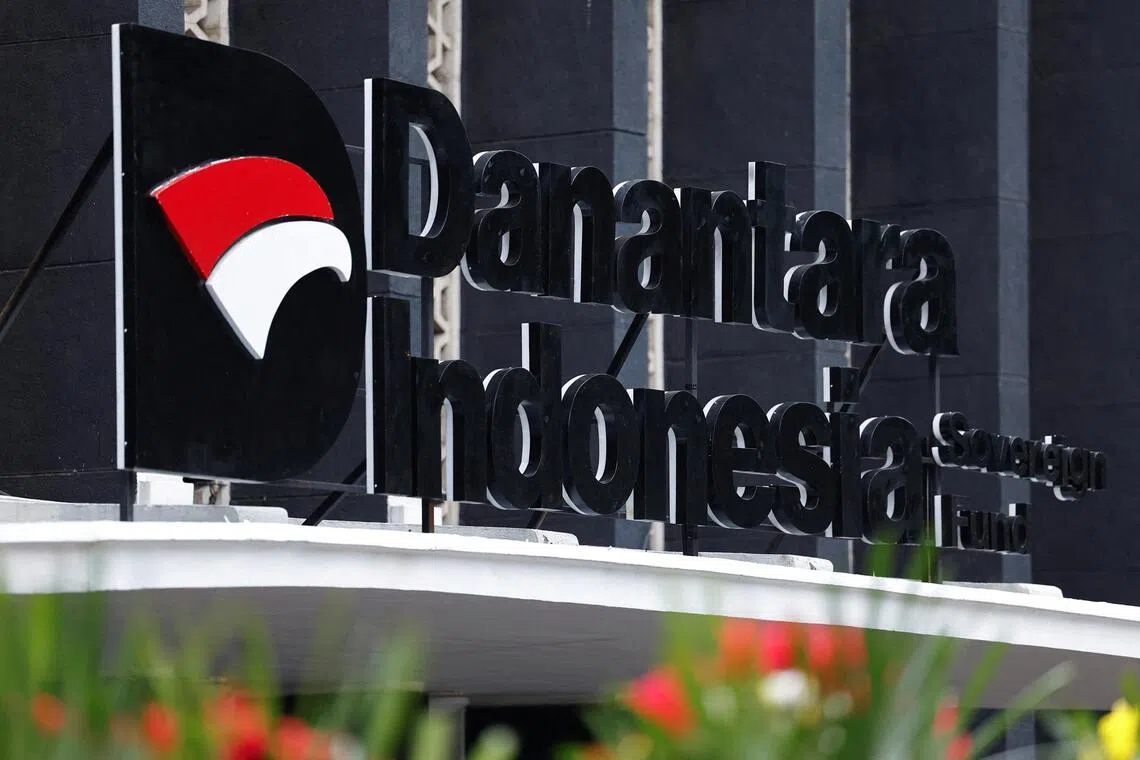
Observers are also closely watching developments in the sector after Deputy House Speaker Sufmi Dasco Ahmad recently said the country’s state investment vehicle, Danantara, could potentially acquire shares in ride-hailing companies, including Grab and GoTo.
In response to queries from The Business Times, a Danantara spokesperson said the fund continues to evaluate various opportunities but did not confirm any specific plans.
“Danantara Indonesia continually evaluates diverse market opportunities to advance its mandate of delivering meaningful socio-economic impact for Indonesia,” the spokesperson said in a statement.
“We remain disciplined in assessing opportunities based on strategic fit, fundamentals, risk-return profile and long-term value creation.”
TRENDING NOW

Once staunchly pro-China, Malaysian Chinese businesses are now distancing themselves from Beijing

New launch or resale unit? Here’s a guide for homebuyers

The lesser-known prospects in the Asian chipmaking supply chain

Cliff Tan has 7 million followers and a 4-month waitlist. Why won’t he expand his business?

