



Indonesia’s June trade surplus shrinks to US$2.4 billion amid surge in imports
It is the lowest since February this year, and lower than the US$2.98 billion forecast by economists in a Reuters poll

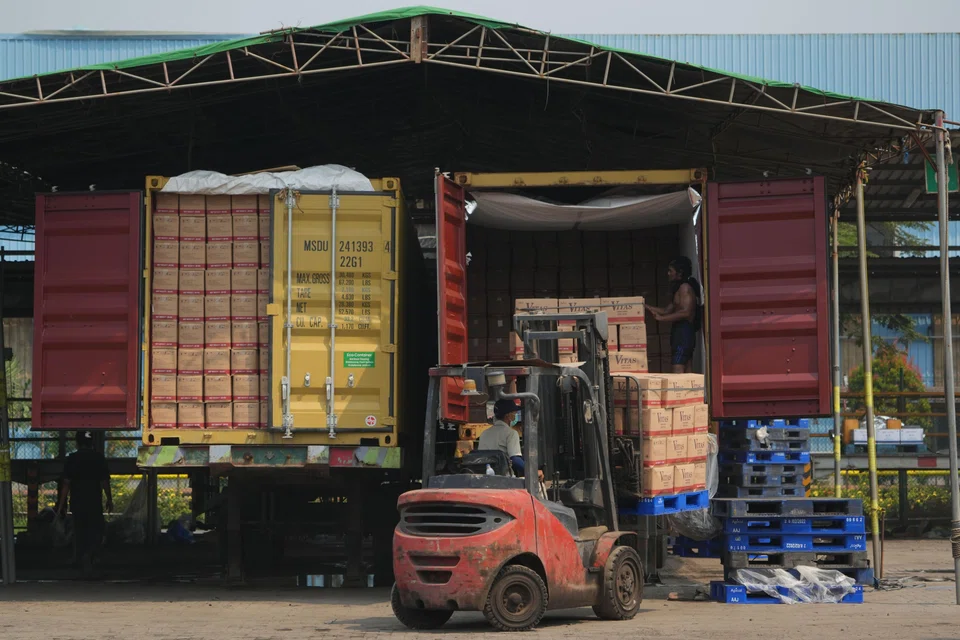
[JAKARTA] Indonesia recorded a smaller trade balance surplus of US$2.39 billion last month, down from US$2.92 billion in May, due to a notable increase in imported goods, the country’s statistics bureau reported on Monday (Jul 15).
The surplus is the lowest since February this year and lower than a forecast by economists in a recent Reuters poll that predicted Indonesia’s surplus would reach US$2.98 billion.
Amalia Adininggar, the acting head of the statistics bureau, said that Indonesia has maintained a trade surplus for 50 consecutive months since May 2020, despite a recent decrease in the surplus.
Exports from South-east Asia’s largest economy grew by 1.17 per cent annually to US$20.84 billion, marking the third consecutive month of growth but at the slowest rate during this period.
On a monthly basis, exports contracted by 6.65 per cent due to flagging global demand and commodity price normalisation.
Exports of coal and palm oil, two of Indonesia’s mainstay commodities, fell by 15.05 per cent and 1.86 per cent year on year, respectively.
In contrast, imports surged by 7.58 per cent year on year to US$18.45 billion, driven by a sharp increase in consumption goods. Imports suffered a decline of 8.84 per cent last year.
Meanwhile, imports of raw materials and capital goods showed a monthly contraction.
“Growth in consumption goods imports was seen to be highly related with demand for processed oils, specifically avtur, amid increasing needs during the Hajj pilgrimage,” said Josua Pardede, the chief economist of Bank Permata.
Last month, Indonesia faced a trade deficit of US$693 million with China, its largest trading partner.
Indonesia’s total non-oil and gas exports to China – contributing 23 per cent of total exports – increased by 1.4 per cent year on year to US$4.6 billion.
Imports from China, accounting for 35 per cent of total imports, increased by 1.68 per cent to US$5.34 billion, driven by higher orders of machinery and electronics equipment.
Rate outlook
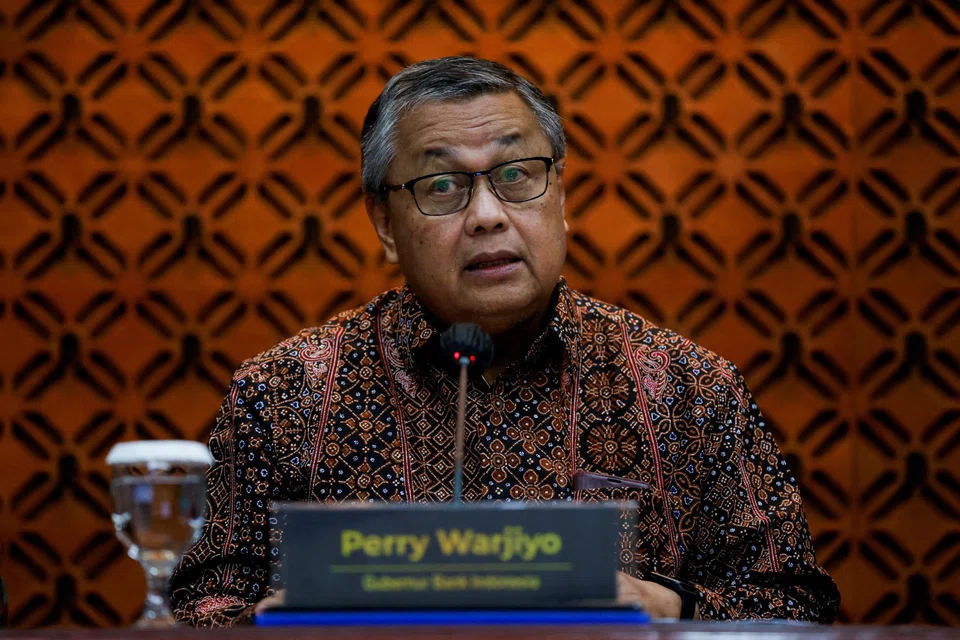
Bank Indonesia (BI) is poised to announce its latest interest rate policy on Wednesday, with governor Perry Warjiyo expected to maintain the rate at 6.25 per cent, according to consensus forecasts.
Economists have cautioned that Indonesia’s steadily shrinking trade balance surplus is exerting pressure on the rupiah exchange rate, which has been under strain this year due to the strengthening of the US dollar.
“Given the recent June purchasing manager’s index data showing a decline to 50.7, down from 52.1 in May 2024, we see this as potentially restraining exports, hence creating a possible constraint on pushing international reserves in the coming months,” said Fithra Faisal, senior economist at Samuel Sekuritas.
Economists at ING anticipate that the rupiah could continue to strengthen, bolstered by signals from the US Federal Reserve to begin easing in September.
Warjiyo has also indicated that there might be an opportunity to lower the policy rate in the fourth quarter if the rupiah stabilises.
“On a brighter note, the rupiah has been more stable recently, and BI does not see the need for further rate hikes to support the currency. With inflation at only 2.9 per cent annually and the policy rate at 6.25 per cent, real policy rates remain very supportive,” ING analysts Robert Cornell and Lynn Song wrote in a recent report.
On Monday, the rupiah traded at 16,163 against the greenback, following a robust 0.4 per cent rally that extended for an eighth consecutive day last Friday. This marks the currency’s longest winning streak since September 2016.
TRENDING NOW

Indonesia’s coal tycoon Low Tuck Kwong replaced as Bayan Resources president-director

Nvidia reinstates Jensen Huang as CEO; Trump says move poses no national security risk

Six workers file employment claims against Crystal Jade Food Manufacturing

AI agents and stablecoins a ‘perfect match’ for payments, says MetaComp’s Tin Pei Ling

