Indonesia’s large unbanked population offers opportunities for Singapore fintech players
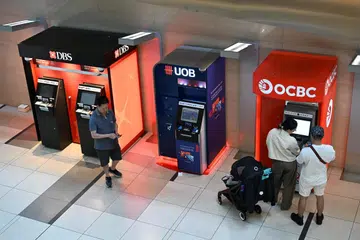
Serving the unbanked in Indonesia is fast becoming a top priority for the government and financial institutions in South-east Asia’s largest economy, given that there are some 90 million people in the country who do not have a bank account. There are another 45 million people who do own an account, but with little or no access to credit or investment products.
The size of the unbanked population makes it next to impossible for traditional banks to address this disparity on their own. Observers note that having such a large percentage of the adult population with no access to the financial sector is a huge challenge, given that they are the ones striving to avoid falling into the middle-income trap.
To help close this gap, this is where Indonesia’s fast-growing digital sector and its many fintech players can step in and make the most of the opportunities out there.
According to a recent report released by Google, Bain and Temasek, Indonesia’s fintech sector has seen significant growth over the past 2 years, bolstered by the Covid-19 pandemic as quarantine restrictions resulted in a surge in online transactions. Digital payments in Indonesia are projected to reach US$351 billion by 2025, with digital loan books expected to touch US$35 billion by that same year.
This rapid growth is attracting strong investor interest, including from Singapore. “Indonesia is a top country for Singapore-based fintech players due to its sheer size,” said Reuben Lim, the chief operating officer of the Singapore Fintech Association. “There is great connectivity between Singapore and Jakarta, and both governments enjoy close relations.”
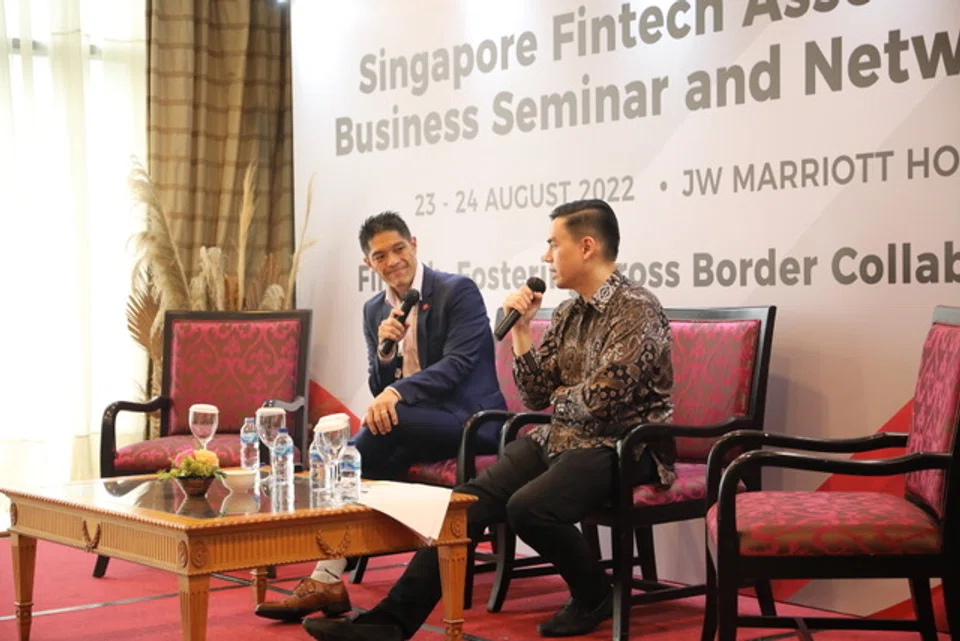
Lim was the leader of an 18-member delegation from SFA that was recently in the Indonesian capital for a trip supported by Enterprise Singapore. The visit was designed to help Singapore’s fintech companies have a better understanding of Indonesia’s business and operating landscape to enable them to expand into the market.
“P2P (peer-to-peer) lending is critical to Indonesia, so for the fintech players who can meet this need, the chances of success is higher,” he added. “Indonesia may not be ready for all the products that Singapore players can offer, but they need to start building the relationship snow because you cannot wait for the market to mature.”
As of the end of 2021, the P2P loan book in Indonesia reached US$20.4 billion from 103 fintech companies officially listed by the Financial Services Authority. This only covers about 26 million borrowers across the country, and hence there is plenty of potential for growth.
Singapore fintech players wanting to enter Indonesia, however, must enter the market with their eyes wide open, said Lim. Apart from local and international competition, they also need to comply with various regulations which include data localisation.
While having an office in Indonesia is a plus for foreign companies, he said the main key to success is having experience in working with banks, which are increasingly open to partnering with fintech firms.
“Any sovereign country will have its own regulations, but what is important is the regulations keep up with market changes,” noted Lim, adding that his takeaway from the Jakarta visit was the assurance that the Indonesian government “is clear about how to work with a larger ecosystem”.
Alwin Jabarti, the CEO of digital signature and ID company Teken Aja and the deputy secretary-general of the Indonesian Fintech Association (AFTECH), said that Indonesia’s digital ecosystem is maturing fast.
“Before 2018, the landscape of Indonesia’s fintech sector was very simple with only 2 main activities in digital lending - either through P2P or via payment systems,” he said. “But it has since expanded to include digital capital, insurtech, wealth tech and market provisioning.”
On its part, AFTECH is pushing initiatives to work with local regional and provincial banks on the disbursement of working capital lending, given that a large portion of the funds parked in these banks remains idle.
There are over 63 million micro and small and medium sized enterprises in Indonesia, which constitute over 60 per cent of the country’s US$1.1 trillion economy. However, only a fifth of them have access to financial products, and Lim said this segment provides huge opportunities for growth.
“Indonesia is too big a market to miss out on for Singapore fintech companies. It has size, scalability and most importantly the need for innovative financial products,” he said. “But to succeed, they must be willing to invest time, resources and build lasting relationships. Just having a great pitch deck won’t get them far.”