



Indonesia’s September annual inflation at 1.84%, lower than expected
The ongoing decline in prices reflects broader deflationary trends that have persisted for the past five months

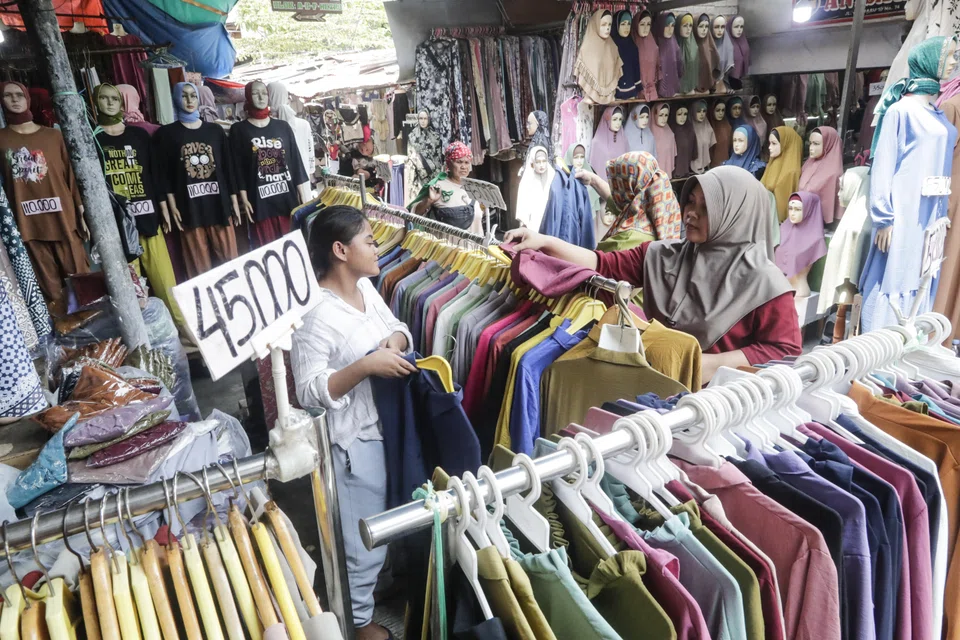
[JAKARTA] Indonesia’s inflation has steadily declined in recent months, raising concerns about weakening consumer spending in South-east Asia’s largest economy.
Indonesia’s annual inflation rate fell to 1.84 per cent in September, down from 2.12 per cent a year ago, as falling food and fuel prices helped ease inflationary pressures, indicated data released by the Statistics Bureau on Tuesday (Oct 1).
September’s inflation was the lowest recorded since November 2021 and came in below the Reuters consensus forecast of 2 per cent. However, it remained within Bank Indonesia’s target range of 1.5 to 3.5 per cent for the year.
The ongoing decline in prices reflects broader deflationary trends that have persisted for the past five months, as the country aims to achieve 5.2 per cent economic growth this year.
The volatile price index, which monitors fluctuating items such as food, saw a deflation of 1.34 per cent in September, largely due to supply-side factors as the harvest season boosted the availability of commodities such as chillis and tomatoes.
Meanwhile, core inflation, which excludes these volatile items, saw a modest increase of 0.16 per cent, reflecting a return to normal after a rise in education-related costs earlier in the year.
On a monthly basis, Indonesia’s inflation rate eased to 1.84 per cent in September, down from 2.12 per cent in August.
This continues Indonesia’s deflationary trend since May, marking the longest streak since 1999, according to the Statistics Bureau.
Fithra Faisal, senior economist at Samuel Sekuritas, notes that this softer inflation is indicative of sluggish consumption trends, with the retail and communication sectors experiencing a significant slowdown in price changes, signalling weakening demand.
Indonesia is also grappling with a slowdown in its manufacturing sector, one of the largest engines of its economy, as the purchasing managers’ index has contracted below the 50 mark for three consecutive months.
He pointed out that the current dip in consumption could pave the way for Bank Indonesia to consider a rate cut in the near future.
This move, he explained, would be designed to ignite household spending – the powerhouse driving Indonesia’s economy.
“The slowdown in consumption, combined with weakening manufacturing performance, poses a potential obstacle to achieving the government’s economic growth target of 5.2 per cent this year,” he said.
Looking ahead, Josua Pardede, chief economist at Permata Bank, expects inflation to remain subdued.
Inflation for this year is projected to stay below 2 per cent, providing room for Bank Indonesia to adjust interest rates. This outlook is supported by modest imported inflation, a stable rupiah, and stable global energy prices.
However, he said seasonal demand during Christmas and New Year could push prices up slightly by the year’s end.
“Government decisions to delay taxes on plastic and sweetened drinks will also help keep inflation low,” Pardede said.
The rupiah has continued to strengthen in recent weeks, driven by expectations of further interest rate cuts from both the Federal Reserve and Bank Indonesia, which lowered rates by 50 and 25 basis points, respectively, in September.
TRENDING NOW

Things to know about DBS’ incoming chairman Anthony Lim

DBS eyes prime brokerage business as Q3 profit falls 5% on weaker trading income

Royal Group and Sunset Hospitality abandon plans to open Casa Mett hotel off Orchard Road

George Yeo adds 100,000 Wilmar shares at S$2.97 apiece, taking stake to over 1 million shares

