Indonesia’s sovereign fund INA resets strategy to private-sector deals post-Danantara
It manages about US$10 billion in assets in a portfolio that used to be dominated by state-linked investments

[JAKARTA] After years dominated by state-linked transactions, Indonesia’s sovereign wealth fund Indonesia Investment Authority (INA) is pivoting to private-sector deals. This follows the transfer of most state-owned enterprise (SOE)-related assets to the newly set up state investment vehicle Danantara, said its top executive.
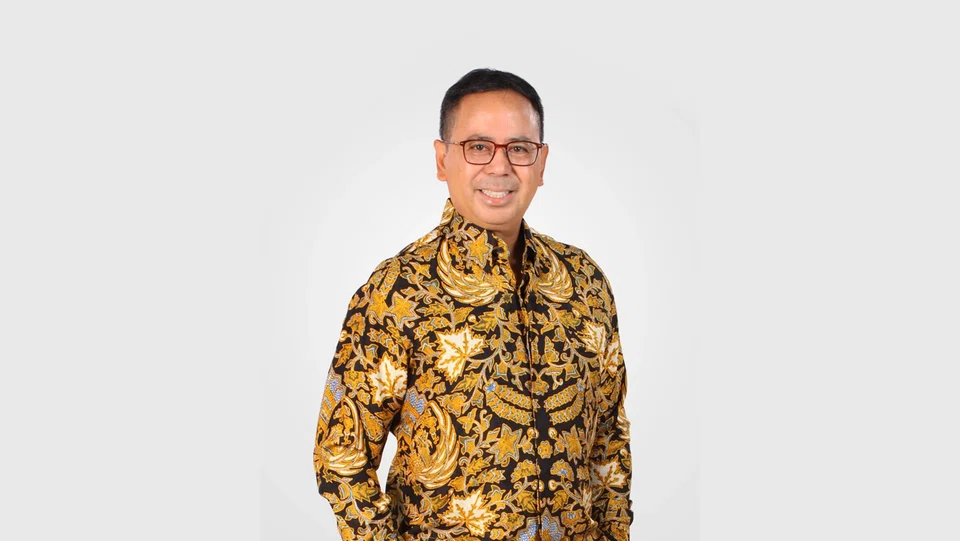
INA chief executive Ridha Wirakusumah told The Business Times in an interview: “Last year was a pivotal period for INA. We had carried out many transactions and investments involving SOEs.
“But with the establishment of Danantara, it was only natural for INA to pivot towards non-SOE deals.”
Since its 2021 inception, INA’s portfolio has been concentrated in SOE-linked infrastructure, including toll roads, ports and other public assets. It currently has some US$10 billion in total assets under management.
Dr Ridha said that INA now aims to leverage its role as a co-investor alongside global partners, even as it doubles down on investments in data centres, healthcare, renewable energy and advanced minerals such as rare earths this year.
This marks a deliberate and strategic pivot towards sectors viewed as foundational to Indonesia’s long-term economic growth.
INA was set up under former president Joko Widodo with US$5 billion in state capital to generate returns while advancing sustainable economic growth.
Before it was established, Indonesia stood out in South-east Asia for not having a sovereign investment vehicle on a par with Singapore’s Temasek or Malaysia’s Khazanah Nasional.
In February last year, President Prabowo Subianto launched Danantara, seeding it with US$20 billion in state assets and giving it a broader investment mandate.
Backed by a more robust structure and a deeper capital base, Prabowo has positioned Indonesia’s sovereign wealth platform as a “turbocharger” to push economic growth towards 8 per cent.
Several senior executives, including INA’s former chief investment officer Stefanus Hadiwidjaja, have since moved to Danantara.
Dr Ridha said the pivot should be seen as constructive, helping improve coordination and knowledge-sharing across Indonesia’s broader investment ecosystem.
The two funds are exploring an investment in a chlor-alkali and ethylene dichloride facility at petrochemical major Chandra Asri Pacific, a project valued at 15 trillion rupiah (S$1.1 billion).
“We really hope that, together, we can enrich investment knowledge in Indonesia,” said the 62-year-old former banker. “Because we do have a role in making the investment world more robust.”
Maintaining pace amid transition
INA initially focused on direct equity to attract foreign co-investors, but has since broadened its toolkit.
The fund has expanded into hybrid capital and private credit to help Indonesian companies scale overseas and bring global capital and expertise into the country.
Despite the structural transition, INA does not plan to slow its investment pace. The fund aims to maintain deployment and commitments of around US$1 billion this year, consistent with its historical average.
Since commencing operations, INA has deployed about US$5 billion in investments. Last year alone, it invested and committed more than US$1 billion.
Digital and infrastructure as cornerstone
Infrastructure will remain a cornerstone of INA’s 2026 strategy, but with a shift towards private-led projects in transportation and logistics. With Indonesia’s high logistics costs affecting competitiveness, INA sees modern warehouses and logistics centres as key to boosting efficiency and industrial growth.
“This sector has generated strong returns so far,” Dr Ridha said, noting that INA plans to move deeper along the logistics value chain.
One of INA’s strongest areas heading into 2026 is digital infrastructure, particularly data centres. Indonesia’s data centre capacity continues to lag that of regional peers, underscoring a structural gap despite rising demand from digitalisation.
The country has roughly 300 megawatts of capacity, compared with around one gigawatt in Singapore. For INA, this gap represents both a bottleneck and an opportunity.
“Many players are eager to enter the data centre space, but it requires careful planning, deep consideration and the ability to overcome significant execution challenges. We’ve been able to do that, and it’s an area we plan to expand further.”
INA has formed partnerships, including with Singapore-based multi-asset company Granite Asia, to co-invest more than US$1.2 billion in Indonesia’s tech ecosystem.
One of the flagship investments is the DayOne data centre campus in Batam. The project is the first facility in South-east Asia to deploy Nvdia’s Blackwell chips, making it fully artificial intelligence (AI)-capable. The fund plans to double, or even treble, the campus’ capacity.
On AI, INA is taking a deliberately cautious stance. While acknowledging AI’s transformative potential, Dr Ridha noted that the fund does not want to chase trends without addressing underlying constraints.
“I don’t want to jump on the AI bandwagon just because it’s popular,” he said.
Co-investment remains at the core of INA’s business model. Over the past five years, the fund has partnered 40 investors from 15 countries, executing 25 deals, including 11 last year alone.
Healthcare as a long-term bet
Healthcare is another sector where INA plans to deepen its exposure, viewing it as a long-term structural play rather than a cyclical investment.
Indonesia’s demographic profile underpins this strategy. With a population of around 280 million people and about five million births each year, demand for healthcare services is expected to rise steadily over the coming decades.
“Medical healthcare is an area we want to develop that actually plays well with our demographic,” Dr Ridha said.
INA partnered South Korea’s SK Plasma to develop South-east Asia’s largest blood plasma fractionation plant in Karawang, West Java. The project aims to reduce the country’s reliance on imported plasma-derived medicines; commercial operations are expected by the end of 2026.
Energy to power growth
Renewable energy is also central to INA’s investment agenda, particularly as power demand rises from data centres, manufacturing and downstream industries.
The fund is pursuing large-scale solar projects, with at least one major development expected to be announced outside Java. This will mark INA’s first investment in a solar power project. Beyond solar, it has also partnered Abu Dhabi-based Masdar Clean Energy in Pertamina Geothermal Energy.
As with previous deals, INA plans to partner foreign investors to bring in capital, technology and operational expertise.
One of its notable new areas of focus is advanced materials, including rare earths and downstream mineral processing.
The strategy aligns with Indonesia’s broader downstreaming agenda and evolving global supply chains, with INA seeking to position the country as a neutral and geopolitically attractive manufacturing hub.
Dr Ridha stressed that its approach to advanced minerals will be to prioritise downstream activities rather than raw extraction; it will also rely on partnerships that bring technology and expertise alongside capital.
He pointed to Indonesia’s lithium ferro phosphate (LFP) cathode active material plant in Kendal, Central Java, which has entered its third phase and is now the largest facility of its kind outside China.
The project is a joint investment with a Chinese consortium, valued at around 3.2 trillion rupiah. The plant exports to global automakers and battery producers such as LG Energy Solution, Tesla, Stellantis and Ford.
Dr Ridha said that INA’s priority remains firmly on Indonesia-linked investments. While additional government capital could allow the fund to scale up its activity, he stressed: “Every dollar must be deployed responsibly to deliver tangible impact for Indonesia.”
TRENDING NOW
Grab CEO’s wife Chloe Tong on life with Anthony Tan and finding her purpose
He built the Vingroup empire. Now South-east Asia’s richest man is handing some key roles to his sons
US says China to buy 10 million tonnes of coal in 2027 and 2028
Tokyo reverses baby bust with AI matchmaking and generous subsidies