Asean Business logo
SPONSORED BYUOB logo

Indonesia’s tech billionaires eye Singapore for family offices
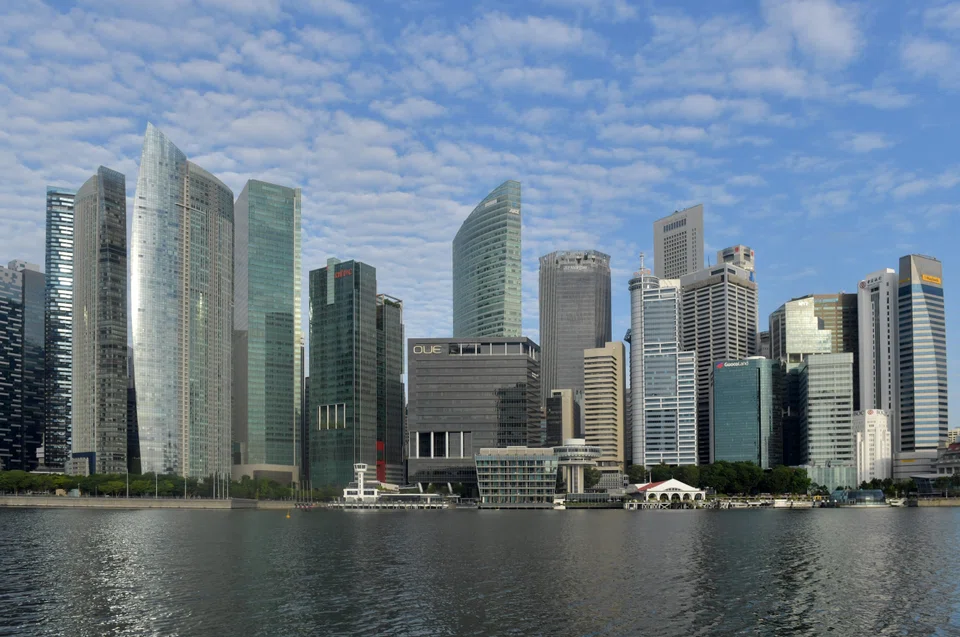
    • A shot of Singapore's central business district. Indonesia’s newly-minted tech billionaires are beginning to diversify their wealth and are increasingly looking to Singapore to set up family offices and seek new investment opportunities.
    • A shot of Singapore's central business district. Indonesia’s newly-minted tech billionaires are beginning to diversify their wealth and are increasingly looking to Singapore to set up family offices and seek new investment opportunities. PHOTO: ST
    Published Mon, Aug 29, 2022 · 05:50 AM

    INDONESIA’S newly-minted tech billionaires are beginning to diversify their wealth and are increasingly looking to Singapore to set up family offices and seek new investment opportunities.

    While Indonesia’s traditional family-owned businesses have long established a presence in the city-state, the country’s growing number of technopreneurs are now joining this exclusive club.

    South-east Asia’s largest economy has produced 13 unicorns over the past decade, including start-ups such as Gojek, Tokopedia, Bukalapak, OVO and Traveloka.

    The pandemic, however, has created a second wave of unicorns including payment gateway Xendit, investment platform Ajaib and e-logistics company J&T.

    Based on estimates by the Monetary Authority of Singapore, there were about 400 single family offices (SFOs) as at the end of 2020, and about 700 at the end of last year.

    Singapore’s central bank does not have estimates on aggregate business spending, the aggregate assets under management (AUM) held, or the amount invested locally by SFOs.

    Market players told The Business Times that the number of Indonesian family offices in Singapore has risen by as much as 50 per cent over the past 3 years.

    “Many of these new family offices are set up by Indonesia’s new tech billionaires,” said Stacy Choong, a Private Client and Tax partner at Withers KhattarWong. “Singapore has stability, an available talent pool, strong financial infrastructure, a tax- and regulatory-friendly regime, and a welcoming approach to bring suitable talent to staff family offices and manage wealth. All this makes it a gateway to Asean.”

    Ho Kah Chuan, the chief executive officer of Go Global Gem, an accounting firm focusing on private clients, told the Business Times his firm has seen the number of Indonesian clients increase significantly post-Covid 19.

    “Singapore is a sophisticated financial hub so a lot of Indonesian trading and business houses conduct transactions in the city state,” he noted. “We have seen a significant pick-up in the number of wealthy Indonesians looking to set-up family offices or trading houses over the past few months.”

    The reasons for setting up a presence in Singapore range from tax benefits to wealth preservation to succession planning. Many wealthy families are also setting up charity foundations in Singapore to invest in sustainability projects.

    “This trend is picking up, especially post-Covid 19, and it will continue to grow in the coming months,” said Ho. “Investors are more selective in technology related private equity investments, as they are now shifting focus to the real estate, food and agri-related industries.”

    He added that many young entrepreneurs, as well as the second or third generation of family businesses, are also exploring opportunities in Web 3.0 projects such as blockchain and cryptocurrencies.

    “For Chinese investors, they are generally looking to invest in Singapore for immigration purposes but Indonesia is a mixed bag,” noted Ho. “Indonesian investors want to diversify their wealth. At the same time, many of them also want their children to be based in Singapore.”

    The threshold for family office tax exemption has gone up to S$10 million assets under management in Singapore in the first year. By the second year, the minimum requirement is S$20 million.

    Scores of wealthy investors are holding cash instead of other financial assets given the volatility in global markets. The inflationary environment is also causing concern with many investors moving back to traditional assets like real estate given the new classes of assets are too risky, Ho noted.

    The Indonesian government’s second tax amnesty programme which ran from January to June this year also prompted many Indonesians to declare their assets held in Singapore.

    “Many Indonesians declared their assets and paid their taxes,” said Ho. “The family office structure in Singapore is attractive due to tax exemption for investment returns under section 13O or 13U of the tax code,” said Ho.

    Funds managed by fund managers in Singapore can adopt Section 13O and Section 13U tax exemption schemes, among which specified income (including gains) derived by the fund from designated investments is exempt from tax.

    According to a recent wealth report by Knight Frank, there are about 630 ultra-high net worth residents in Indonesia, and this figure is set to nearly double to 1,130 by 2025. These individuals are defined as people with at least US$30 million in investable assets.

    With so much wealth creation taking place, many Indonesian entrepreneurs and family businesses are looking to set up a presence in Singapore as a “control tower” for their regional expansion, said Ho.