Asean Business logo
SPONSORED BYUOB logo

Indonesia’s TikTok Shop ban to hit sellers, sparks regulatory debate on social commerce
Published Mon, Oct 2, 2023 · 05:00 AM
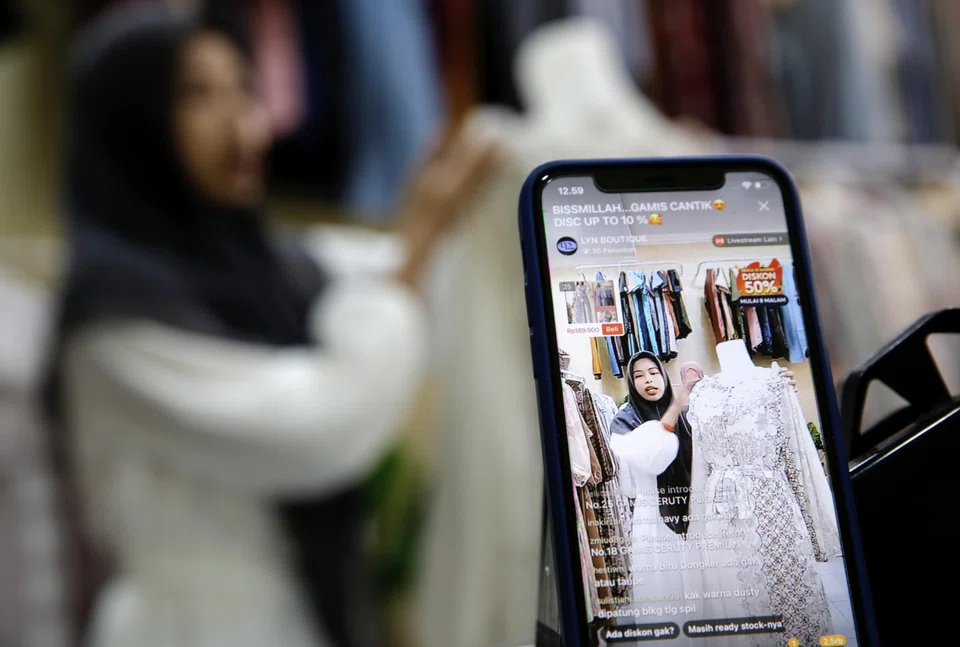
    • A sales promoter showcasing a dress as she livestreams on an e-commerce platform at a shop in Depok, Indonesia.
    • A sales promoter showcasing a dress as she livestreams on an e-commerce platform at a shop in Depok, Indonesia. PHOTO: EPA-EFE

    [JAKARTA] Dava lost his job before he even got started. The 24-year-old had received an offer as a livestream manager for a fashion brand that sells goods on TikTok, before Indonesia’s government announced a ban on TikTok Shop last week.

    “As the announcement made the news, I was contacted by the company,” he said. “They cancelled the offer letter they had previously extended to me. I was speechless, I don’t know what to tell my parents.”

    During a press conference in Jakarta on Sep 27, Trade Minister Zulkifli Hasan said there will be a one-week grace period before new rules prohibiting in-platform transactions on social media platforms such as TikTok kick in.


    If TikTok Shop wants to continue doing business in Indonesia, it must do so via a standalone app. The TikTok Shop app is currently a feature within the TikTok app itself.

    The government’s decision has left some TikTok sellers dismayed. Debora Mediawati, a housewife who sells baby formula and diapers, said the policy has placed small businesses like hers at a disadvantage.

    Since she started selling via an online livestream in 2021, the 37-year-old said, her sales have increased by 40 per cent.

    “TikTok Shop has helped me, even during the pandemic,” said Debora, who hopes to continue selling on TikTok Shop if the company does create a separate app.

    Prices for products on TikTok Shop are sometimes more competitive because some sellers receive subsidies or promotional support from TikTok. The overall lower prices attract users to the platform, which indirectly helps sellers such as Debora.

    A social media presence also helps sellers improve their exposure, which in turn adds to high street performance.

    Launched in Indonesia just over two years ago, TikTok Shop has found a valuable audience.

    Indonesians were South-east Asia’s biggest online spenders in 2022, a report by Singapore-based venture firm Momentum Works indicated, accounting for 52 per cent of the region’s total gross merchandise value (GMV) sold via e-commerce platforms.

    Out of a total GMV of US$99.5 billion, Indonesia accounted for US$51.9 billion – almost 13 times that of Singapore’s US$4 billion.

    A TikTok Indonesia representative said the company has about 125 million users in Indonesia, including two million small businesses on TikTok Shop.

    “We deeply regret the government announcement, especially how the decision will impact the livelihoods of the six million sellers and nearly seven million affiliate creators who use TikTok Shop,” the spokesperson said in a statement to The Business Times.

    Indonesian officials, however, see things differently. President Joko Widodo recently said that social commerce platforms such as TikTok Shop have contributed to the decline of micro, small and medium-sized enterprises; as well as traditional markets.

    The Jakarta-based think tank Institute for Development of Economics and Finance (Indef) said the clash between online and offline sellers highlights the need for robust debate about how to empower small businesses and creators, and update regulatory frameworks.

    Indef researcher Nailul Huda said that governments are grappling with the challenge of striking a balance across multiple competing requirements: fostering innovation, enabling economic empowerment, and ensuring compliance with regulatory standards.

    Indonesia’s digital economy is poised to become the largest in South-east Asia as its market value trebles to US$100 billion by 2025, promising more jobs and more consumer choices for an emerging tech-savvy generation, a study conducted by US tech giant Google and Singapore’s Temasek Holdings found.

    “Around 64 per cent of Indonesian online sellers use social media to sell their products. Let’s not allow this regulation to boomerang ... and hinder the progress of Indonesia’s digital economy,” Huda said.

    Social commerce holds significant influence in Indonesia, he added, as many people rely on word-of-mouth recommendations from family, friends and influencers when making purchase decisions.

    He also emphasised the crucial role of social media in facilitating the spread of these recommendations, making it easier for people to discover and act upon them.

    At the same time, social commerce also raises concerns about privacy, quality, competition, platform dependency and security. 

    “The regulations must provide clarity on whether buying and selling activities on social media are prohibited, or if the government is banning the use of technology such as TikTok Shop,” said Huda.