



Indonesia’s trade surplus plummets to US$470 million in July; lowest in 14 months
The decline signals potential risks for the rupiah, which could face greater pressure ahead

[JAKARTA] Indonesia posted a steep decline in its trade balance surplus in July, driven by a surge in import activity, according to data released by the statistics bureau on Thursday (Aug 15).
The surplus plummeted to US$470 million last month, a sharp decline from US$2.39 billion in June, marking the lowest surplus since May 2023, said Amalia Adininggar, the acting head of the statistics bureau.
It fell well short of expectations, with Bloomberg forecasting it at US$2.4 billion.
Indonesia’s exports hit US$22.21 billion in July, marking a 6.46 per cent year-on-year increase that significantly outpaced market expectations of 3.7 per cent, signalling stronger-than-expected growth in South-east Asia’s largest economy.
On a month-on-month basis, exports also saw a notable rise of 6.55 per cent compared with the previous month.
Indonesia’s export values, heavily influenced by fluctuations in commodity prices, were pressured by weaker prices earlier this year.
The country is the largest global exporter of thermal coal, palm oil and nickel, and also plays a significant role in exporting tin, copper, rubber and coffee, among other commodities.
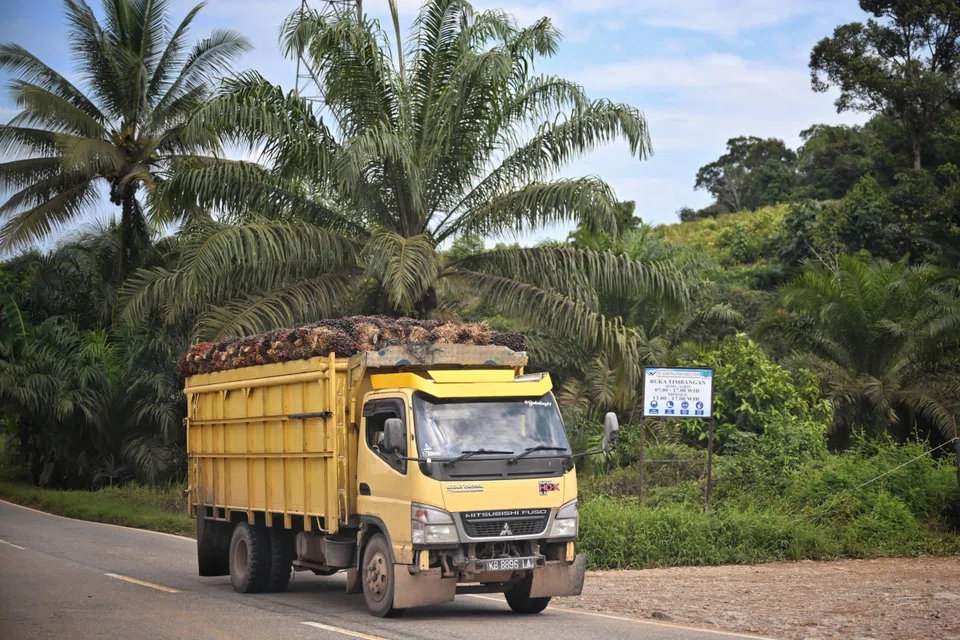
Crude palm oil exports, one of its biggest dollar earners, dropped 39.22 per cent year on year to US$1.39 billion, due to weaker global prices and slowing demand from major trading partners such as China.
Indonesia’s exports of crude palm oil to China have stalled, falling by 30.04 per cent compared with the same period last year.
However, a sharp increase in shipments of commodities such as gold and jewellery has helped offset the decline in other exports.
Key drivers of this growth included increased shipments to major trading partners, with exports to the US rising 5.68 per cent, Japan a substantial 24.32 per cent, and Asean countries by 2.92 per cent.
Meanwhile, July imports surged to US$21.74 billion, an 11.07 per cent increase on the year, fuelled by higher imports of fuel, smartphones and plastic goods.
Analysts observed that rising imports may signal a potential recovery in domestic consumption and production, as increased imports of input materials suggest industrial expansion.
The decline in surplus value signals potential risks for the rupiah, which could face greater pressure ahead.
This comes as the current account is expected to show a deficit of up to 0.9 per cent of gross domestic product for this year.
The rupiah has surged significantly, becoming one of the top performers among emerging markets, reaching 15,708 rupiah per US dollar on Wednesday.
This surge comes as expectations of the US Federal Reserve easing next month have prompted investors to boost their exposure to countries with high carry yields and promising growth prospects.
The strengthening rupiah has sparked speculation that Bank Indonesia may cut interest rates at its board of governors meeting on Monday.
So far, Bank Indonesia has kept its benchmark interest rate steady at 6.25 per cent, following a 25 basis point hike in April.
Ang Kai Wei, Asia and Asean economist at Bank of America Securities, anticipates that the central bank may cut rates in August, citing the rupiah’s improved performance against the US dollar. The currency has strengthened considerably since June, when it averaged around 16,300 rupiah per US dollar.
“If rupiah remains stable, we think that Bank Indonesia could follow through with two 25 point cuts in September and December,” he wrote in a recent note.
However, Fithra Faisal, a senior economist at Samuel Sekuritas, warned that the unexpectedly low trade surplus could hinder the rupiah’s ongoing appreciation, especially by potentially widening Indonesia’s current account deficit.
“The sharp rise in imports could indicate inflationary pressures if import prices climb, complicating the economic outlook and putting additional strain on economic growth,” he noted.
“We expect Indonesia’s GDP growth to decline to 4.9 per cent this year, down from 5.05 per cent in 2023.”






