Asean Business logo
SPONSORED BYUOB logo

Indonesia’s trade surplus soars to US$3.56 billion in April, surpassing expectations

Despite beating projections owing to slowing imports, April’s surplus falls short of March’s

Elisa Valenta
Published Wed, May 15, 2024 · 01:28 PM
    • Exports in South-east Asia's largest economy increase by 1.7 per cent year on year to US$19.62 billion.
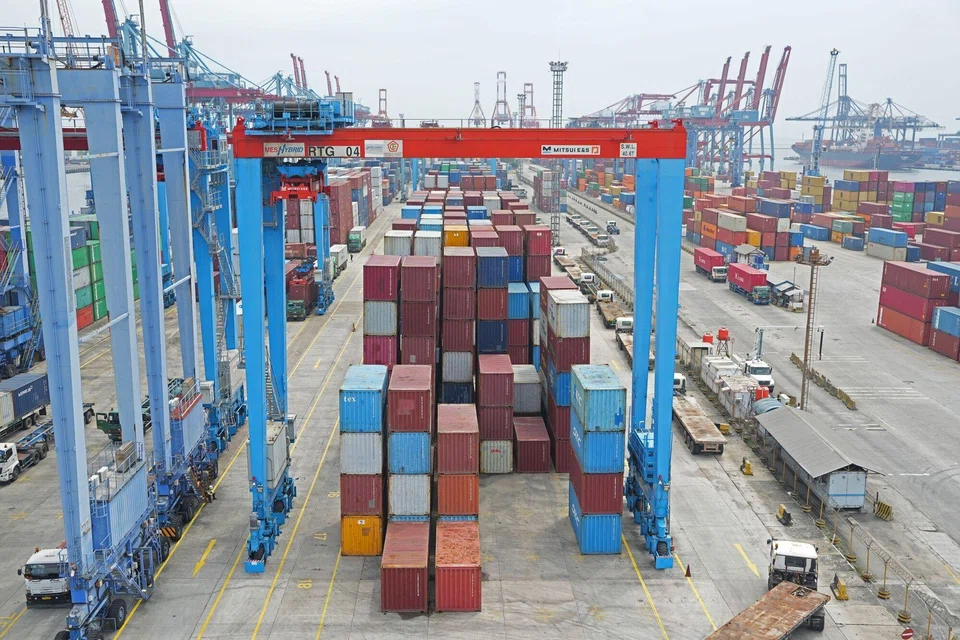
    • Exports in South-east Asia's largest economy increase by 1.7 per cent year on year to US$19.62 billion. PHOTO: BLOOMBERG

    [JAKARTA] Indonesia posted a larger-than-estimated trade surplus of US$3.56 billion in April, attributed to slowing imports, according to data from the country’s statistics agency released on Wednesday (May 15).

    Economists surveyed by Reuters had expected that Indonesia may generate a surplus of as much as US$3.3 billion. Despite surpassing economists’ projections, April’s surplus fell short of March’s, which amounted to US$4.58 billion.

    Pudji Ismartini, deputy head of Statistics Indonesia, said: “The declining surplus is primarily due to the ongoing normalisation of commodity prices and rising global uncertainty impacting global demand and trade activities.”

    The largest economy in South-east Asia saw its exports increase by 1.7 per cent year on year to US$19.62 billion. This growth marked the first in the past 11 months, amid a downward export trend gripping Indonesia.

    However, on a monthly basis, exports dropped by nearly 13 per cent due to the shortened working days during the Eid al-Fitr celebration.

    The persistent decline in commodity prices over the past year in Indonesia, one of the world’s largest coal producers, also affected the country’s export performance.

    In April, Indonesia saw a 19.3 per cent annual decrease in coal export value to US$2.61 billion.

    Export of crude palm oil, a cornerstone of Indonesian exports, fell 10.5 per cent on the month following the waning effects of heightened demand over the Ramadan fasting month in March.

    Meanwhile, monthly imports declined by 10.6 per cent to US$16.06 billion, attributed to a slowdown in the importation of capital and investment goods. On an annual basis, Indonesia’s imports grew 4.6 per cent in April, reaching US$16 billion.

    While the country has maintained a trade surplus for an extended period of around 48 consecutive months, this surplus is shrinking due to sluggish export performance caused by declining global demand, weaker commodity prices and rising geopolitical tensions.

    Josua Pardede, Bank Permata’s chief economist, urged the government to intensify efforts in diversifying export products and exploring new export markets in the future.

    Pardede emphasised that relying solely on raw goods exports leaves Indonesia vulnerable to fluctuations in international commodity prices and demand.

    Despite the weakening exports, Pardede anticipates that Indonesia’s current account deficit will remain manageable this year, with a modest rise from -0.11 per cent of gross domestic product in 2023 to -0.75 per cent of GDP.

    “This expectation is driven by several factors, including the gradual normalisation of commodity prices, and resilient domestic demand aligned with a positive economic outlook for Indonesia,” Pardede told The Business Times.