



Indonesia’s transparency push calms MSCI fears, but reform continuity is key
The country’s swift measures are sufficient to avert losing emerging market status for now, say analysts

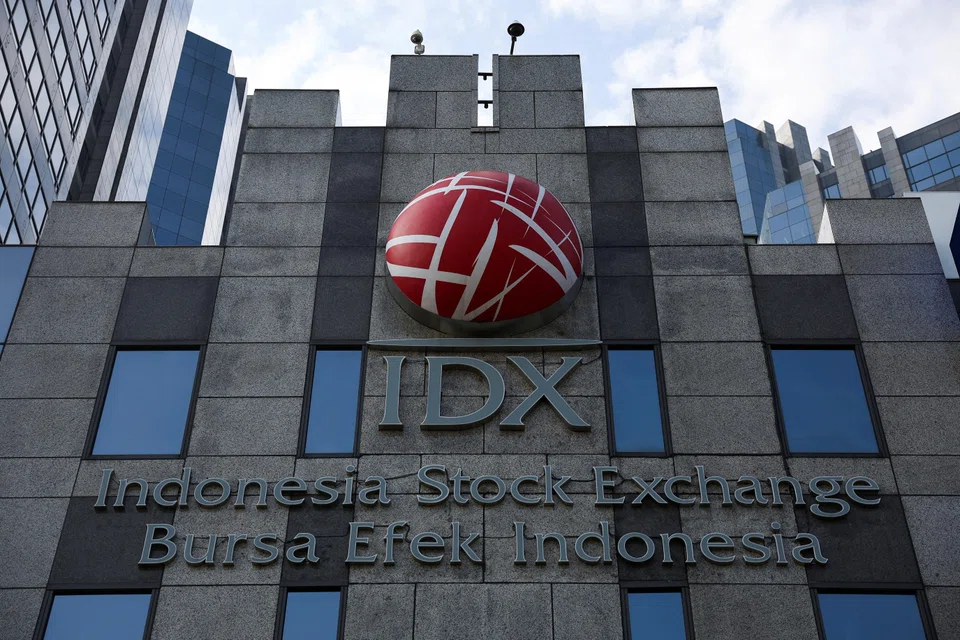
[JAKARTA] Indonesia’s swift moves to boost ownership transparency and align with MSCI’s standards have calmed fears of a market downgrade, but analysts say the real test will be sustaining reform momentum and macro policy credibility to sustain investor confidence.
For now, analysts reckon Indonesia’s swift-footed transparency measures are sufficient to avert losing emerging market status – an outcome MSCI had warned about should the country fail to address its concentrated free-float ownership issue.
Mohit Mirpuri, senior partner at SGMC Capital, said Indonesian authorities have already shown a willingness to respond and have acted swiftly to engage with MSCI, demonstrating a proactive approach that reduces the risk of a more severe outcome.
“Our base case is that Indonesia remains in the emerging markets category,” he told The Business Times. “The more realistic downside is a technical weighting adjustment, not a structural reclassification.”
Indonesian stocks staged a recovery in the second week of February after a massive January sell-off, which erased roughly US$80 billion in value following MSCI downgrade threats.
The market, which had fallen nearly 12 per cent at its lowest, recovered as regulators rolled out reforms and raised free-float requirements.
Jakarta’s benchmark index closed 0.64 per cent lower on Friday (Feb 13), but has recovered to the 8,200 level after slumping below 8,000 at the end of January.
In response to MSCI’s concerns, the Indonesia Stock Exchange (IDX) said it will publish a list of shareholder concentrations following a “constructive” meeting with the index provider.
Authorities have also pledged broader reforms to improve disclosure, including lowering the shareholder identification threshold to 1 per cent, doubling the minimum free float to 15 per cent, and providing more detailed ownership data.
Harry Su, managing director of research and digital production at Samuel Sekuritas, said enhancing transparency remains the immediate priority, while regulatory consistency will be key to preventing similar disputes in the future.
“By complying with MSCI’s request for greater transparency, I think foreign investors’ sentiment towards the Indonesian capital market will undoubtedly improve,” he said.
Although Indonesia posted 5.1 per cent growth last year – the fastest in three years and the highest among its South-east Asian peers – analysts caution that warnings from rating agencies and index providers have raised concerns over potential capital outflows, which could add pressure on the rupiah and dampen the country’s economic momentum.
Concerns are rising among investors over President Prabowo Subianto’s aggressive spending plan, which they see as being unsupported by strong state revenues. It could result in Indonesia’s fiscal deficit surpassing the legal limit of 3 per cent.
Last week, Prabowo reiterated that he will press ahead with his flagship programmes despite criticism, saying initiatives such as the free meals scheme and the development of village cooperatives will help drive economic growth.
Scrutiny of Bank Indonesia’s independence has risen after Prabowo’s nephew was appointed deputy governor, pushing the rupiah near a record low of 17,000 per US dollar. The central bank is set to hold its policy meeting this week.
Moody’s warned it could downgrade Indonesia if the budget deficit widens persistently, the currency weakens over the long term, capital outflows intensify, or state-owned firms experience significant deterioration.
A downgrade would mark Moody’s first on Indonesia since the 1998 Asian financial crisis, when the country had to seek a bailout from the International Monetary Fund.
BMI, a unit of Fitch Solutions, projects that the rupiah could weaken from around 16,785 rupiah per US dollar to around 17,500 rupiah per US dollar by the end of 2026.
“We see heightened risks of the government exceeding the 3 per cent fiscal deficit ceiling due to continued populist spending and weak tax revenue. Renewed trade tensions could weaken exports further,” BMI wrote in a Feb 13 note.
Over the past three weeks, a string of negative signals has rattled Indonesia’s markets.
Shortly after MSCI’s warning triggered a market rout, on Feb 6, Moody’s downgraded Indonesia’s sovereign outlook to negative, citing concerns over the stability of government policies and budget deficit.
Meanwhile, this week FTSE Russell postponed its planned March review of Indonesia’s equities, citing risks from high turnover and uncertainty in calculating the public float.
Chang Shu, chief Asia economist at Bloomberg, emphasised that spending efficiency and clear communication are critical for maintaining investor confidence.
“Investors need clearer articulation of the fiscal costs and how the government plans to maintain fiscal discipline while rolling out large-scale support programmes. That clarity is crucial to sustaining confidence,” she said.
Popular ratings
The recent series of shocks comes against the backdrop of strong public approval for Prabowo’s administration. A political survey released on Feb 8 showed the president’s approval rating near 80 per cent, with his popularity strongest among Gen Z voters and residents of rural areas.
The survey was conducted in January, prior to both the market turmoil later that month and Moody’s announcement on Feb 6.
Speaking at an economic forum in Jakarta on Feb 11, Hashim Djojohadikusumo, Prabowo’s younger brother and close adviser, said the disruption in the market, which delayed the rebalancing of Indonesian stocks, has frustrated the leadership.
He added that MSCI’s warning is perceived as a potential blemish on Indonesia’s international standing, raising concerns about the country’s reputation in global financial markets.
Dipo Satria Ramli of the Indonesian Economists Alliance said it is understandable that Prabowo is frustrated by the market rout, adding that the downturn has stirred political pressure for senior market officials to step down.
He cautioned that strong public approval would offer little protection if Indonesia were to lose its investment-grade status – a setback that would be difficult to reverse and could drive up the government’s borrowing costs. “Sovereign ratings could affect everything,” he stressed.






