



Indonesia’s vow to balance currency, growth may cushion rupiah
BI’s 125 basis points of rate cuts in 2025 have also reduced the attractiveness of the country’s assets
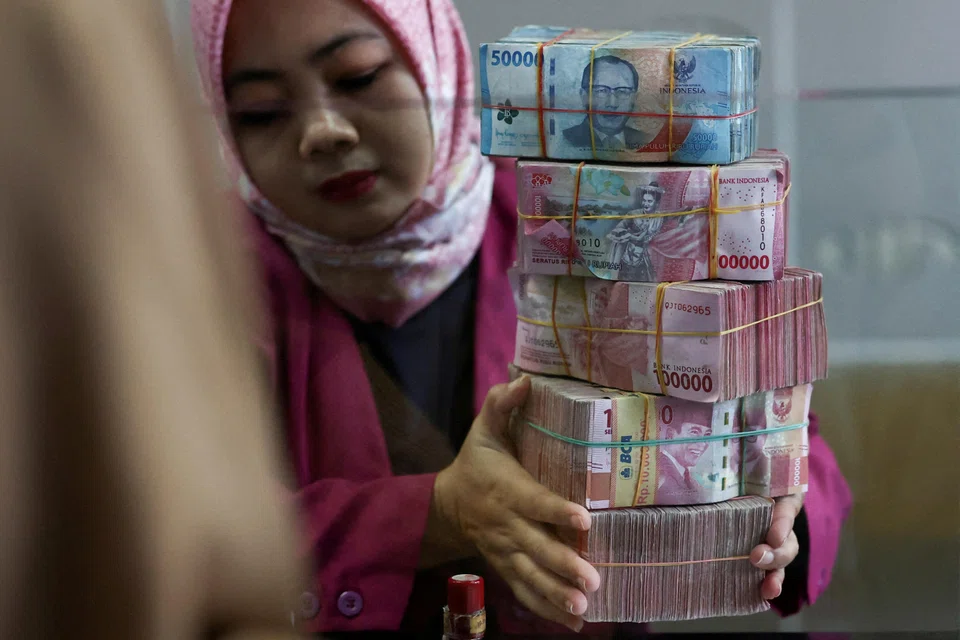
[JAKARTA] Bank Indonesia’s (BI) vow to prioritise currency stability as it tries to boost growth may cushion the rupiah at a time when investors are avoiding the nation’s assets, analysts said.
“In 2026, amid persistently high global uncertainty, monetary policy will remain focused on balancing stability and growth,” said governor Perry Warjiyo during the central bank’s annual meeting in Jakarta late Friday (Nov 28). He added that BI will continue currency stabilisation measures through interventions in onshore and offshore markets amid persistently high global uncertainty.
The pledge is “an important statement”, noted Rajeev De Mello, global macro portfolio manager at Gama Asset Management. “The central bank has given currency stability additional importance despite the lacklustre economic growth” and has toned down its dovish bias as a response to the weakening rupiah.
The rupiah has fallen more than 3 per cent against the US dollar this year to be the second worst-performing currency in Asia, with investor concerns ranging from doubts over fiscal discipline to lacklustre consumer spending and ructions in global trade.
BI’s 125 basis points of rate cuts in 2025 have also reduced the attractiveness of the country’s assets.
Heavy selling of Indonesian bonds since September has reduced US$4.6 billion of net bond inflows to a gain of merely US$20 million. And while Indonesian stocks have seen inflows in recent months, net equity sales by foreign funds still stand at around US$1.8 billion for 2025.
The rupiah was little changed at 16,664 to the US dollar early Monday. Gama Asset’s De Mello expects it to strengthen to 16,000 to 16,500 against the US dollar next year, partly due to US dollar weakness.
Suryaputra Wijaksana, an economist at UOB Kay Hian Sekuritas in Jakarta, said: “We would expect capital outflows to continue, albeit on a smaller scale as outflows in the bond market are increasingly offset by inflow in the equity market.” He expects the rupiah to modestly depreciate to around 16,700 against the US dollar by year end.
Warjiyo noted that the central bank will keep seeking room to lower interest rates to boost growth, though he hedged his remarks by nodding at the importance of financial markets. “Stability is vital for any country to achieve high and sustainable growth,” he said.


The challenge for BI is shown in recent balance of payment data, which recorded US$2.36 billion in net errors and omissions, the most since 2011.
While technical factors may be at play, the increase in errors and omissions could point to unrecorded placements of domestic funds abroad, such as additional deposits, purchases of financial assets, or delays in the repatriation of corporate profits, according to Bank Permata economist Josua Pardede, who said domestic players may be diversifying into foreign assets to preserve value.
Warjiyo’s remarks are a clear signal that monetary policy will be supportive of growth while maintaining focus on currency stability.
“The central bank does look to be putting some focus on ensuring rupiah stability, given the recent decisions to hold rates and the increase in SRBI auctions,” pointed out Alan Lau, foreign-exchange strategist at Maybank, referring to bills sold by the central bank. “Given our expectations for the broad dollar to soften into year end, we expect USD/IDR to edge slightly lower towards the 16,600 mark.” BLOOMBERG
Decoding Asia newsletter: your guide to navigating Asia in a new global order. Sign up here to get Decoding Asia newsletter. Delivered to your inbox. Free.
Share with us your feedback on BT's products and services
TRENDING NOW

Mooted COE changes will solve category issues, but higher premiums likely: observers

Grab CEO’s wife Chloe Tong on life with Anthony Tan and finding her purpose

Once staunchly pro-China, Malaysian Chinese businesses are now distancing themselves from Beijing

Cliff Tan has 7 million followers and a 4-month waitlist. Why won’t he expand his business?

