


Asean Business logo
SPONSORED BYUOB logo
Inside Asean

The Asian healthcare gold rush: Vietnam’s reforms are attracting foreign investors

The changing landscape is fuelled by rapid urbanisation, income growth and an expanding middle class

Summarise
Mindy Tan
Published Thu, Apr 23, 2026 · 01:35 PM
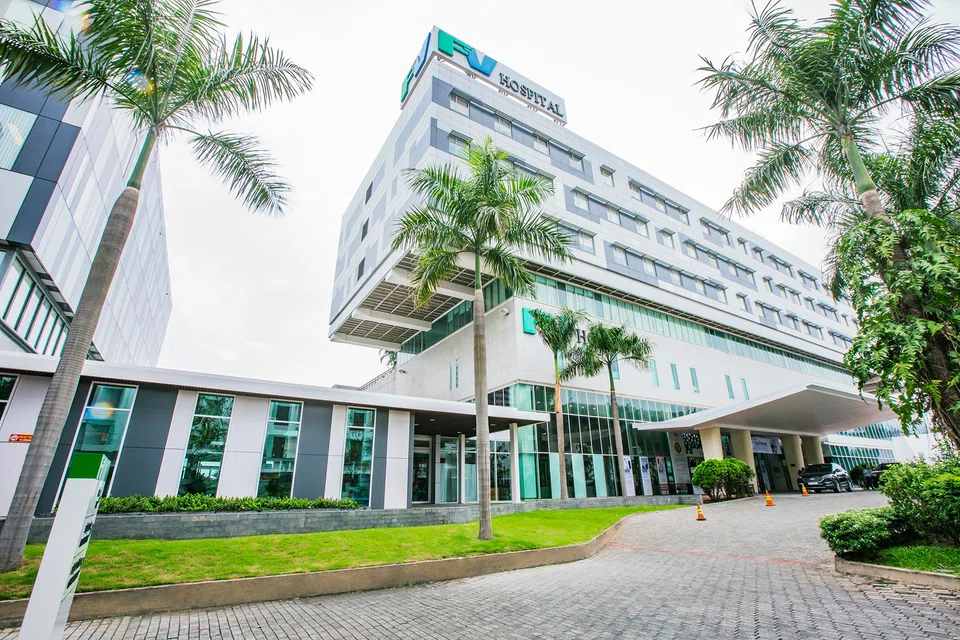
    • FV Hospital in Ho Chi Minh City, Vietnam, is owned by Thomson Medical Group.
    • FV Hospital in Ho Chi Minh City, Vietnam, is owned by Thomson Medical Group. PHOTO: FV HOSPITAL

    [SINGAPORE] Even as Vietnam’s healthcare system faces a major long-term crisis of capacity and structural strain, the country’s government is advancing significant healthcare reforms. 

    Resolution 72, which was issued last year, aims to build a modern, fair and sustainable healthcare system by 2045 by shifting from treatment-focused care to a preventive approach.

    A key target of the country’s 2021-2030 National Master Plan is to increase private hospital beds to 15 per cent of the national total by 2030. 

    Other targets include having 35 hospital beds and 19 doctors per 10,000 people by 2030; and 45 hospital beds and 35 doctors per 10,000 people by 2050. 

    Changing landscape 

    Vietnam’s healthcare landscape has undergone a structural shift over the past decade, moving from a predominantly public, hospital-centric system to a more diversified and increasingly privatised ecosystem, said Yuichi Ota, partner and Vietnam office manager at consulting firm YCP.

    This change is fuelled by rapid urbanisation, income growth and an expanding middle class. In major cities, leading hospitals are often operating at or above full capacity.  

    “Healthcare expenditure has been growing at a mid-to-high single-digit rate annually, with private spending accounting for an increasing share,” said Ota. “Insurance coverage has also expanded significantly, further stimulating demand for higher-quality services.”

    As Vietnam ages, the rising incidence of chronic diseases is accelerating the trend, noted Luke Treloar, partner, head of strategy group and head of infrastructure, government and healthcare at KPMG in Vietnam.

    “The way patients want to be treated is changing rapidly. The rise of speciality clinics and smaller facilities is one of the key trends we will see going forward.”  

    To support the Vietnamese healthcare system, the country’s authorities have set a target for private hospital beds to account for 15% of all hospital beds by 2030. PHOTO: PIXABAY

    The government is encouraging private-sector participation through incentives. Key policies include no foreign ownership caps for hospitals and clinics, tax breaks and reduced import duties for medical equipment. 

    Ota noted that foreign investment into Vietnam’s healthcare sector has “accelerated markedly” in recent years.

    “In the past, foreign participation was relatively limited and often restricted to niche segments or representative offices,” he said. “Today, we are seeing a much broader range of entry strategies, including direct investment, joint ventures and strategic partnerships across hospitals, medical devices, pharmaceuticals and healthcare services.”

    Healthcare is now one of the more active sectors for cross-border investment within Vietnam, with deal sizes and frequency both increasing particularly in private hospitals, speciality care and healthcare infrastructure, where long-term demand visibility is high, he added.

    Vietnam is building stronger private-healthcare capacity not only for its own population, but also for patients from neighbouring markets such as Cambodia, Laos and Myanmar. 

    Data from management consulting firm Imarc shows that Vietnam’s medical tourism market size is projected to grow from US$850.9 million in 2025 to about US$3.8 billion by 2034, driven by the rising prevalence of chronic diseases, continuous investments in healthcare infrastructure and the improving flexibility of visa policies. 

    Thomson Medical’s landmark healthcare deal 

    Thomson Medical Group’s US$381.4 million acquisition of FV Hospital in 2023 was not only the largest healthcare deal in Vietnam’s history, but also the largest in South-east Asia since 2020. 

    While the sheer magnitude of the investment pushed the group into the red for financial year 2025, the company is still “doubling down” on Vietnam

    An artist’s rendition of FV Hospital and its new wing. ILLUSTRATION: THOMSON MEDICAL GROUP

    On entering the market with such a major investment as their first foray, Thomson Medical’s group chief executive officer Dr Melvin Heng said simply that they “felt ready” having built operating experience across Singapore and Malaysia.

    “We were clear that if we were going to enter a new market, it had to be one where we could contribute meaningfully rather than just plant a flag,” he said.

    Thomson Medical’s doubling down is manifested physically in the form of the expansion of FV Hospital’s campus, including an additional seven-floor wing.

    It is also about service depth. Dr Heng said the group’s focus is to “strengthen higher-complexity specialities and build centres of excellence in areas where we see unmet need”. 

    This builds on the 2024 partnership with O2 Healthcare Group, a member of OUE Healthcare, to set up the first regional Thoracic Surgery Centre in Vietnam with cardiothoracic surgeon and lung cancer surgery specialist Dr Su Jang Wen.

    “Over time, the aim is to broaden complex care offerings in disciplines such as oncology, cardiac care, neurosurgery, spine, vascular and other advanced surgical fields,” said Dr Heng. 

    Thomson Medical is not the only Singapore provider expanding into Vietnam. In 2023, Raffles Medical Group acquired a majority interest in American International Hospital in Ho Chi Minh City, to augment its clinic operations there.

    More recently, GIC injected US$135 million into the paediatric clinic chain Nhi Dong 315 in 2025, building on previous Series B funding, and becoming a major shareholder in the paediatric and obstetrics chain of over 120 clinics.

    Separately, SingHealth Duke-NUS Global Health Institute and Hanoi Medical University launched a new healthcare hub in March 2025.

    The centre is designed to strengthen cooperation and enhance knowledge exchange by supporting student and researcher exchanges, providing local resources for Vietnam-based research and global health initiatives, and acting as a key facilitator for regional healthcare partnerships and innovations. 

    Vietnam’s pivot towards private sector-led growth is reshaping the competitive landscape for foreign investors. 

    Seck Yee Chung, partner at Baker McKenzie Vietnam, said: “The reforms are creating a more stable ecosystem for mergers and acquisitions and joint ventures, especially with state-owned enterprises that are being encouraged to partner with foreign investors to access technology and expertise.” 

    However, the emergence of local giants presents new competition and foreign firms must now contend with well-capitalised Vietnamese companies that are increasingly sophisticated and ambitious.

    These include the likes of Vingroup, one of the largest conglomerates in Vietnam.

    Vingroup’s Vinmec is a premium, private, not-for-profit health system, with locations across major cities including Hanoi, Ho Chi Minh City, Da Nang, Nha Trang and Hai Phong. It is one of the few hospital systems in Vietnam which have achieved Joint Commission International accreditation.

    Vinmec Times City International Hospital in Hanoi is the first hospital in the Vinmec Health System chain to be put into operation. PHOTO: VINGROUP

    The Vinmec Can Gio International Hospital, for instance, is built in collaboration with Cleveland Clinic.

    Vinmec Can Gio’s core medical and operational teams will have access to Cleveland Clinic’s advisory services, education and training. In addition, when necessary, patients may be referred to Cleveland Clinic hospitals in the US. 

    Tan Quee Peng, president of the Singapore Chamber of Commerce Vietnam, said that the chamber plans to build a committee focused on areas such as clinical services, medical devices and pharmaceuticals, and healthcare education and training.

    While the chamber has limited members within the healthcare space, chamber members have expressed interest in better understanding these areas.

    “We see this sector as potentially both commercially attractive and socially impactful,” he said.

    Inside Asean examines the structural shifts and emerging drivers shaping the region’s evolving economy. Get more insights into Vietnam here.



