



From farmland to factory floor: Vietnam-Singapore industrial parks gear up for next chapter
Facilities under the joint venture are moving from labour-intensive growth to high-tech, green goals

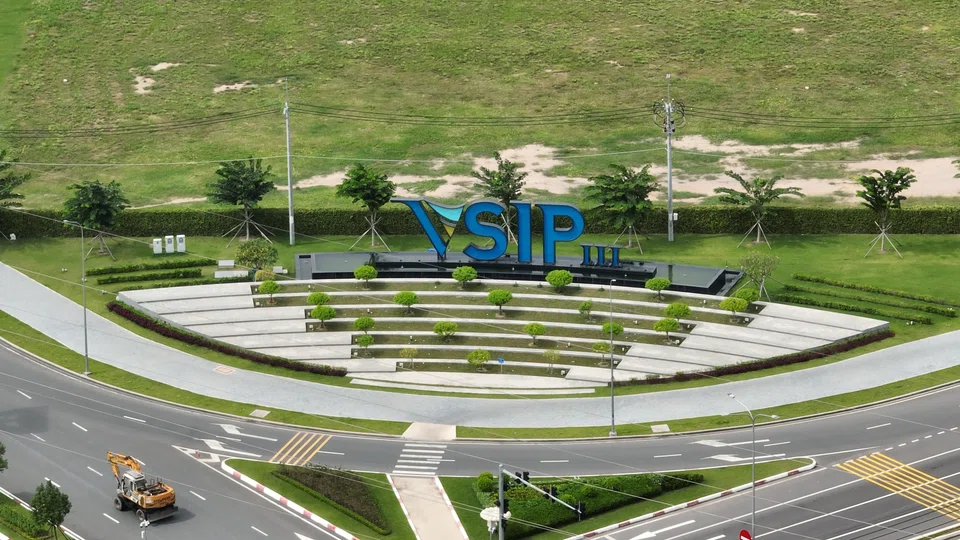
[HO CHI MINH CITY] On a humid stretch of farmland 17 km north of Ho Chi Minh City, Vietnamese and Singaporean officials gathered in 1996 to launch what was then an untested idea in Vietnam: a jointly run industrial park designed to attract foreign manufacturers to the newly opened economy.
The first facility under the Vietnam-Singapore Industrial Park (VSIP) initiative began with just 500 hectares (ha) – modest in scale, but ambitious in intent.
In 1995, Vietnam had normalised diplomatic ties with the US, formally ending decades of hostility with the world’s largest economy.
It had also become the seventh member of Asean that same year, marking the beginning of the country’s push towards industrialisation, modernisation and global integration.
Singapore, meanwhile, was pursuing a regionalisation strategy, using state-led infrastructure projects and incentives to encourage private companies to expand abroad. Central to this effort was the development of overseas industrial parks, including the Batamindo Industrial Park in Indonesia (1990) and the China-Singapore Suzhou Industrial Park (1994).
Three decades on, that experiment in Vietnam – anchored by a joint venture between Vietnam’s Becamex IDC and Singapore’s Sembcorp Development – has evolved into the country’s largest industrial park platform.
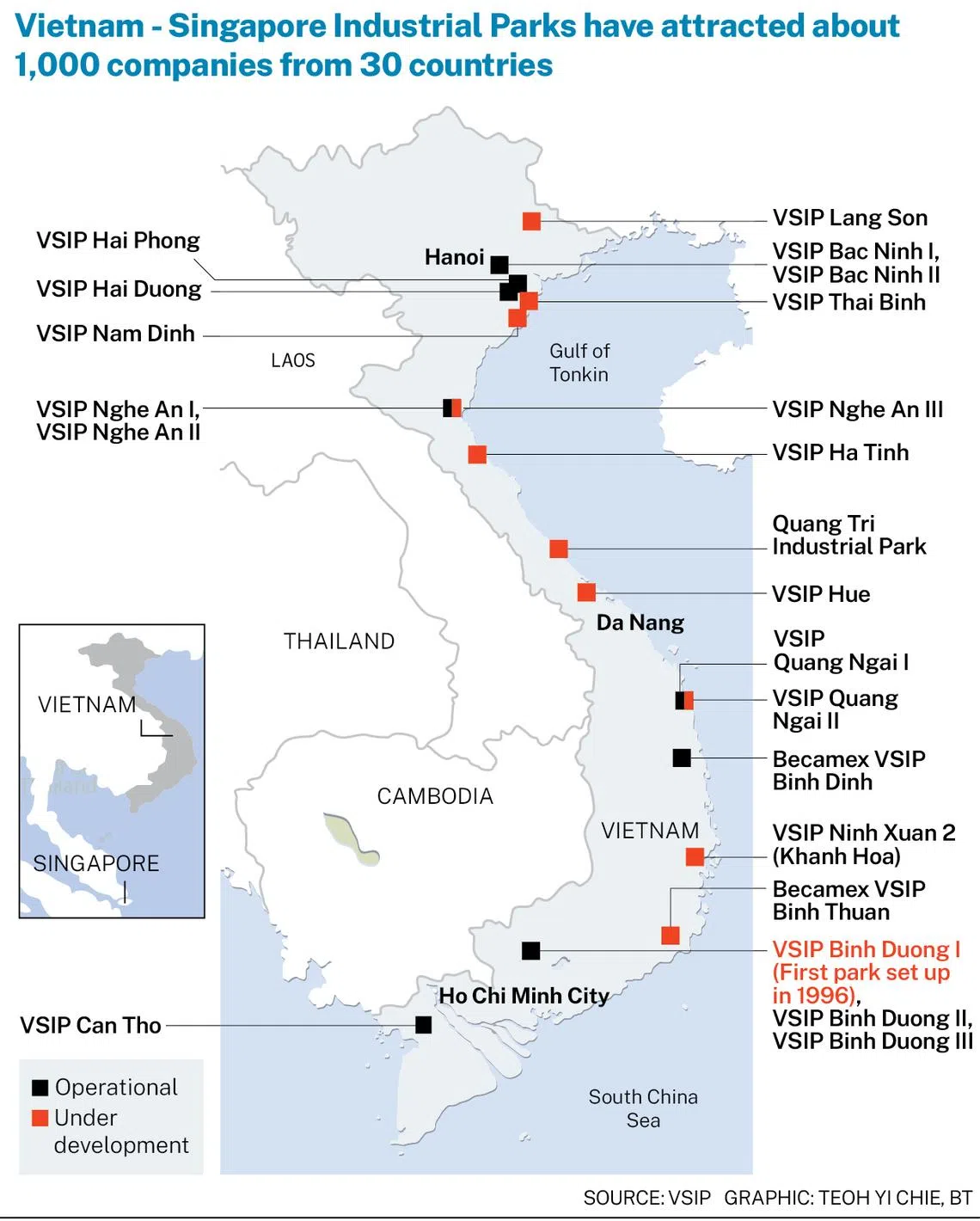
VSIP has now grown to 22 parks spanning more than 12,000 ha across 15 provinces and cities, with a plan to raise the total to 30 in 2026.
It has drawn more than US$28 billion in foreign investment and about 1,000 tenants, including Danish toymaker Lego, US food-and-drink-maker PepsiCo, and Chinese electronic components manufacturer Luxshare.
But as the initiative turns 30, its architects face a different challenge: how to reinvent a model that powered Vietnam’s industrial rise for a more complex era with its shifting supply chains, decarbonisation efforts and focus on higher-value manufacturing.
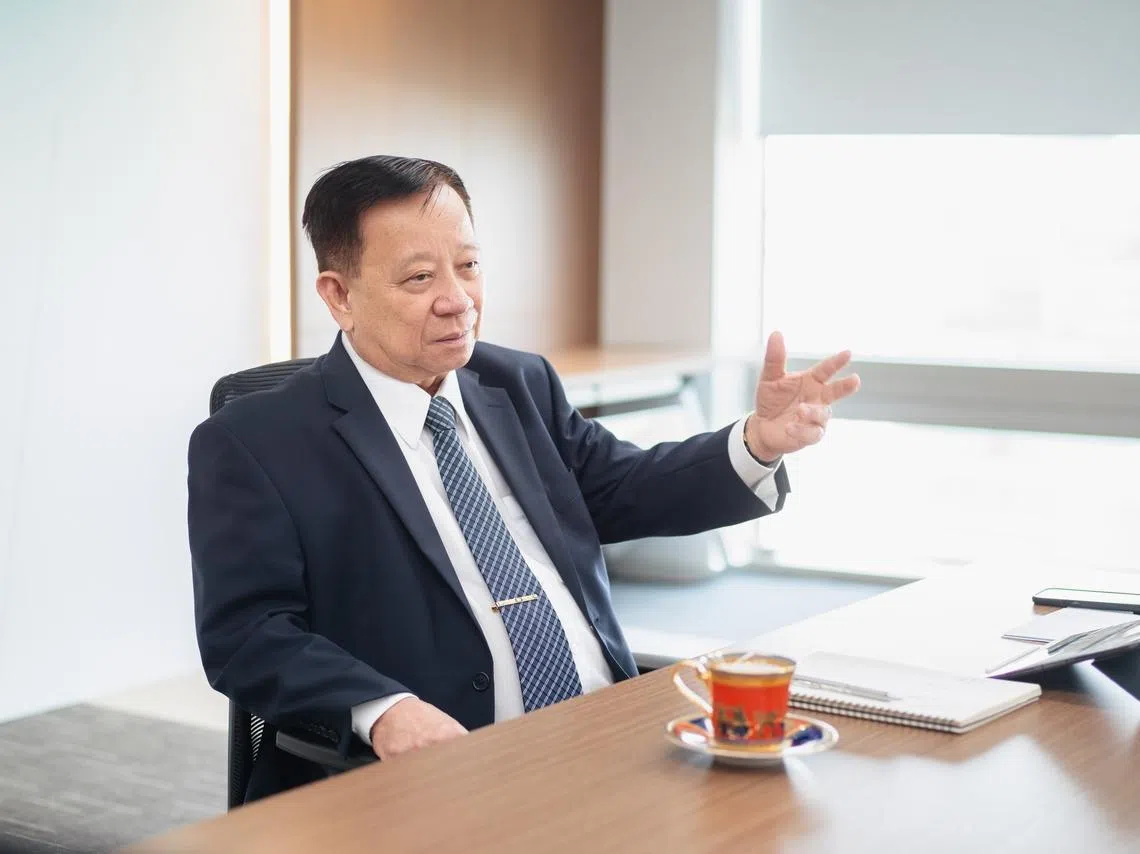
“We must always pioneer new models to match each stage of industrial development,” said Nguyen Van Hung, co-chairman of VSIP and chairman of Becamex.
“Vietnam can no longer rely on labour and land-intensive growth. The next phase must be driven by science, technology and innovation.”
Turning into a manufacturing hub
Few places capture that transformation of Vietnam more starkly than Binh Duong, where the first park under the VSIP venture is located. It was once an agricultural hinterland, but is now a manufacturing hub integrated into the orbit of Ho Chi Minh City.
In the early 1990s, agriculture accounted for as much as 80 to 90 per cent of the then province’s economy. Today, it has fallen to less than 3 per cent, with farms replaced by a dense network of factories, logistics hubs and urban developments – many anchored by VSIP and Becamex.
From the outset, the partnership with Singapore set a benchmark by introducing Singapore-style management expertise. This included a “one-stop-shop” service model, as well as efforts to streamline licensing, administrative procedures and decision-making to support tenants.
For example, VSIP established on-site customs units, allowing clearance procedures and inspections to be conducted within the park.
Helping businesses save time and costs enabled them to make investment decisions faster, recalled Hung. “After just six months, other provinces were asking why the model was only for VSIP. It then expanded very quickly nationwide and created a strong impression among international investors.”
By 1999, VSIP had drawn more than US$400 million in committed investment from 33 companies, despite the post-1997 regional turbulence following the Asian financial crisis.
Eugene Cheng, president and CEO for integrated urban solutions at Sembcorp Industries, said the Singaporean firm has leveraged its strengths in industrial planning, infrastructure reliability, institutional standards and governance to build VSIP into an internationally aligned industrial park platform.
“This approach is shaped by Singapore’s development model, with its strong emphasis on efficiency and sustainability, creating environments where international manufacturers can invest and operate with confidence,” he added.

But capital alone was never enough. Sustaining factories required people.
“If there are no workers, factories cannot operate,” Hung pointed out. “We had to build ecosystems that provide businesses with a reliable labour force, while in turn these firms create jobs for local residents and attract workers from across the provinces.”
By the early 2000s, the VSIP model began integrating industrial zones with housing, hospitals, schools and urban services, enabling workers to live within nearby townships and reinforcing a self-sustaining industrial ecosystem. Binh Duong’s population expanded from about 700,000 in the late 1990s to nearly 3.5 million today.
Scaling with Vietnam-Singapore trust
The VSIP model has then spread not through a master plan, but through what Hung described as an unusually transparent collaboration and mutual trust built over decades.
“When we started with the first 500 ha, we didn’t think about another 500 or 1,000,” he said. “We just focused on making it work.”
Singaporean partners, he recalled, were initially cautious about scaling up, concerned about the risks of building larger industrial zones in a still-developing market.
Vietnam’s side took a more aggressive stance.
“We saw it as a golden opportunity. We wanted to move faster,” Hung said. “In the end, I made a commitment: If the project failed, Becamex would buy it back.”
That willingness to take risks helped build confidence over time. What followed was an iterative process of learning and expansion – first across Binh Duong, and then into other parts of the country.
“The early success of VSIP in Binh Duong established a trusted and replicable model,” noted Cheng. “This track record gave confidence to investors and local authorities, allowing VSIP to expand systematically nationwide.”
After booking no earnings in its early years, the joint venture achieved a record net profit of more than 3.75 trillion dong (S$182 million) in 2025. It has become a core earnings driver for Becamex, which is one of the two principal joint-venture partners in VSIP alongside Sembcorp Development.
The value gains have extended to bilateral economic relations. The city-state has consistently ranked among Vietnam’s largest foreign investors, accounting for more than 22 per cent of the total registered capital in 2025 alone.
Cumulatively, Singapore is Vietnam’s second-largest investor after South Korea, with a Comprehensive Strategic Partnership in place to expand the two nations’ cooperation into digital innovation, green development and high-tech industries.
From industrial zones to innovation ecosystems
Over the past decade, VSIP’s growth has also been strengthened by Vietnam’s role as a major beneficiary of global supply chain shifts, particularly as companies diversify beyond China.
But the next phase will be more demanding.
Rising labour costs, increasingly complex production networks and tightening sustainability standards are forcing industrial park developers to move beyond the traditional model.
At the same time, Vietnam is targeting faster growth at double digits and eventual high-income status – goals that require deeper industrial capabilities and stronger integration into global technology value chains.
For VSIP, that means redefining the model itself.
The next generation – described as “VSIP 2.0” – centres on parks where sustainability and digitalisation are embedded as core design principles rather than add-ons.
That vision has been echoed at the highest political level.
Speaking at the 2025 virtual ground-breaking of a new VSIP project in Thai Binh, Singapore’s Prime Minister Lawrence Wong outlined three priorities for the platform’s next phase: smarter, greener and more connected industrial parks.
A key pillar is the development of eco-industrial parks under frameworks promoted by the World Bank and United Nations Industrial Development Organization. They have been adopted in Binh Duong’s third VSIP park (VSIP III), home to Lego’s first carbon-neutral factory.
In September 2025, VSIP also secured a landmark direct power purchase agreement to supply renewable energy directly to the Lego factory.
This represents the first large-scale renewable energy solution in Vietnam specially designed for industrial use, combining rooftop solar with energy storage to ensure stable and reliable energy supply.
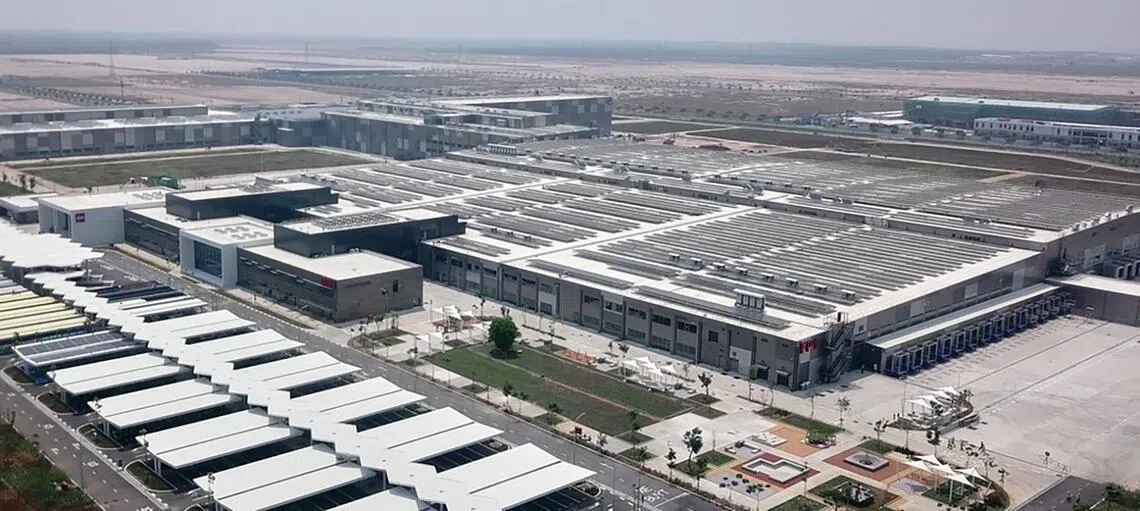
Newer projects, including VSIP parks in Ha Tinh and Thai Binh, are also being designed with optimised infrastructure and equipped with operation centres that use artificial intelligence to monitor and improve resource efficiency.
“We are also upgrading our legacy industrial parks to help longstanding tenants cut emissions and optimise operations through smart systems,” added Hung. “Strong tenant retention and engagement also create a pipeline for new investment through their partner networks.”
A more connected future
If the first phase of Vietnam’s industrialisation was about building factories, the next may be about connecting them.
Decades of rapid growth have strained transport infrastructure, particularly in the southern economic corridor linking Ho Chi Minh City to ports and industrial zones.
For multinationals reorganising supply chains, logistics reliability is becoming a critical cost. That urgency is driving a broader regional rethink.
Since 2025, the Vietnamese authorities have moved to integrate two adjacent former provinces, Binh Duong and Ba Ria-Vung Tau, into a greater Ho Chi Minh City region – an effort aimed at unlocking what Hung calls “untapped development capacity”.
Binh Duong’s land reserves and industrial base, he said, are essential to expanding the economic space of the newly configured metropolis. Its former administrative centre is now being repositioned as a science and technology hub in the northern corridor of Ho Chi Minh City – an area identified as the next industrial engine focused on high-tech manufacturing.
“Becamex, once again, feels the pressure to show how we can contribute to the new Ho Chi Minh City,” noted Hung, who was born in Binh Duong.
Becamex has proposed large-scale rail investments, including freight lines linking industrial zones with the Cai Mep-Thi Vai deep-water port cluster, the Long Thanh International Airport, and the Moc Bai Border Gate Economic Zone.
The cost of the entire proposal – estimated at around 550 trillion dong in two phases – is beyond any single developer. But Hung sees Becamex’s role as that of a catalyst, mobilising capital across sectors and countries, similar to what it did with the joint venture with Singapore.
“It’s very challenging, but the opportunity is significant,” he said. “This rail system as well as the next-generation industrial parks will serve as a powerful driver, helping Ho Chi Minh City and Vietnam overcome the lingering middle-income trap.”
Inside Asean: Vietnam examines the structural shifts and emerging drivers shaping its evolving economy. Get more insights into Vietnam here.






