‘Long-term investment’: More Vietnamese students enrol in Singapore’s higher learning institutes
Factors such as the quality of education and employment opportunities are a huge draw, but cost of living can weigh on decisions
Koh Kim Xuan &
Jermaine Fok
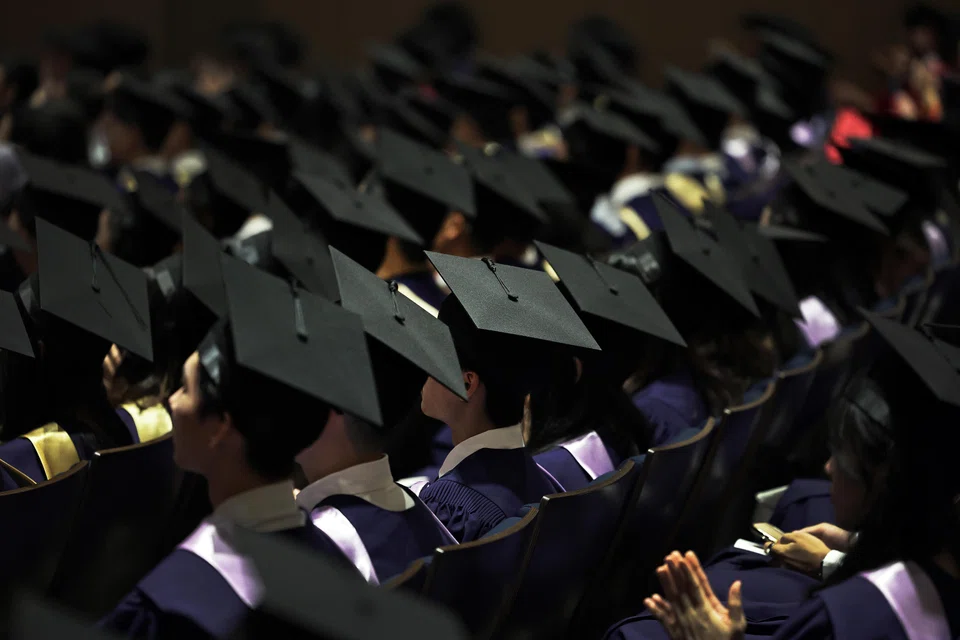
[SINGAPORE] Nguyen Minh Phuong was 13 years old when she left Hanoi to come to Singapore for her secondary school education – setting in motion plans for her to pursue higher education in the Republic.
After graduating from a junior college in the city-state, she is now studying business management at the Singapore Management University (SMU) – one of the many Vietnamese-born students that have moved here to obtain degrees at institutes of higher learning (IHLs).
Nguyen, a first-year student, said that Singapore is “starkly different” from what she was exposed to in her home country.
“Singapore stands out from other countries for its education system and affording students exposure to opportunities. I have been taught presentation and work-related soft skills, and, most importantly, the application of theoretical knowledge,” she noted.
Many families in Vietnam see similar advantages in sending their children abroad to study, reflecting the country’s rapidly expanding middle class and growing emphasis on global exposure.
According to Vietnam’s Ministry of Education and Training, nearly 250,000 Vietnamese students are pursuing higher education abroad in 2025, making them one of the largest international student communities worldwide.
According to an ICEF Monitor report from 2024, the top three countries hosting the most Vietnamese students are South Korea, Japan and Taiwan.
This outward mobility is expected to accelerate as household incomes rise, with nearly 30 per cent of Vietnam’s population projected to enter the middle class by this year, noted ICEF. That share is set to exceed 50 per cent by 2035.
As more families become richer, a growing number are choosing to send their children overseas or enrol them in international schools at home.
Data from ISC Research underscores this trend, identifying Vietnam as one of the most promising growth markets for the international school sector – accounting for about 5 per cent of newly opened international schools worldwide.
Such schools offer bilingual or English-medium education, equipping students with the skills needed for global opportunities.
This raises the question: As more Vietnamese students receive an English-based education, will a growing number look to Singapore as a preferred destination for their studies?
Safety, familiarity and quality of education
In an interview with The Business Times, Jacky Leng, deputy director of international recruitment at the Singapore campus of James Cook University (JCU), said that it has seen a sharp uptick in Vietnamese enrolments, with recent intakes recording about 30 per cent year-on-year growth.
He said that the Republic’s political stability has always been a key pull factor for students and their families, and it has become more so amid the current geopolitical uncertainties.
“Vietnamese students choose Singapore for its proximity, cultural familiarity and ease of travel, as well as its safe, high-quality, English-medium education with globally recognised degrees,” Leng added.
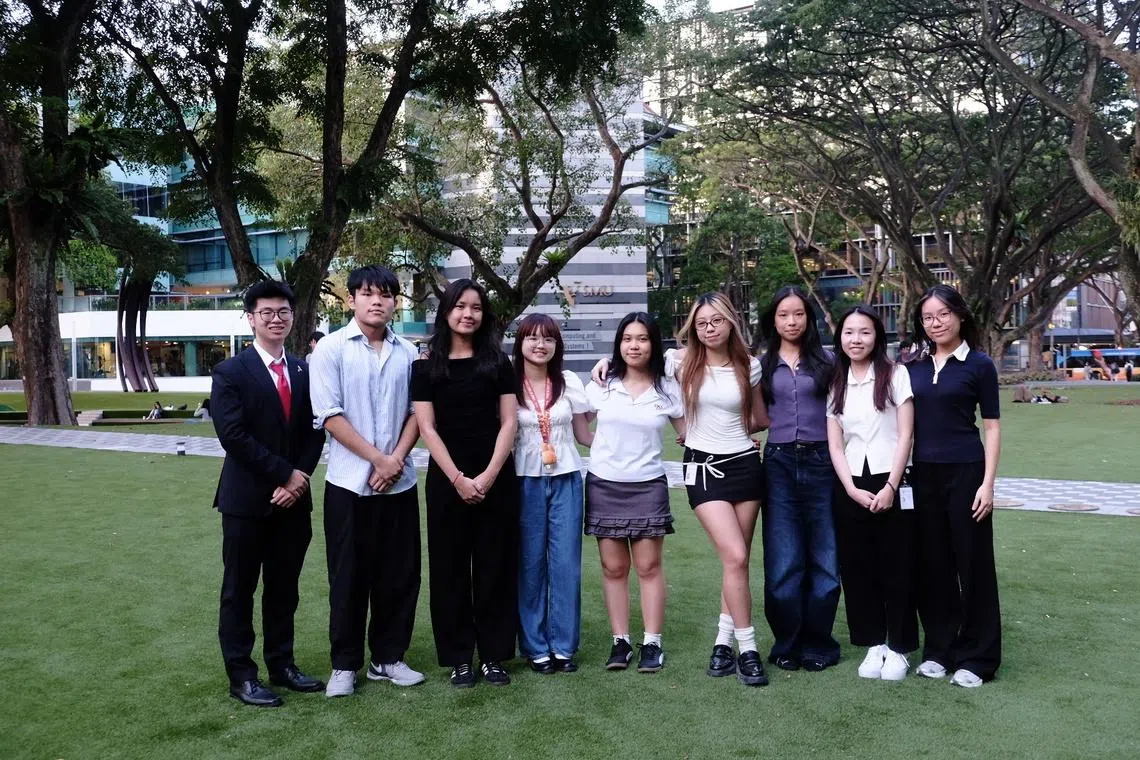
For Truong Minh Anh, a second-year business management student at SMU, the journey to Singapore was not always the original plan.
She grew up in Ho Chi Minh City, attending bilingual primary and middle schools, before enrolling in an American high school.
Like many of her peers, she had once set her sights on the conventional “American dream”, imagining herself studying in New York, while friends around her headed to universities in the West.
But with encouragement from her parents to consider Singapore – citing its proximity, safety and vibrant job market – her plans gradually shifted, which ultimately led her to SMU. It is a decision that she does not regret.
“After realising how homesick my friends got in the US and Canada, and seeing the current political situation in North America as a whole, I am very grateful that my parents chose Singapore for me,” said Truong.
She added that with the ongoing political uncertainties in the US, Vietnamese families like hers see Singapore as an alternative for their children to pursue a globally recognised degree.
Access to career opportunities
Apart from the safety and access to quality education in Singapore, Vietnamese students are also attracted by the longer-term employment opportunities that are available here.
For one, around four of the six autonomous universities in the city-state have mandatory internships that span six to 12 weeks.
Another, is the proximity to companies in a wide range of sectors, thanks to the city-state’s business-friendly environment.
“Singapore is a space for many MNC (multinational corporation) regional headquarters, which allows students to actually have a gateway (to) more regional and global career experience,” said Vincent Peh, deputy director of international student recruitment at the private education institute PSB Academy (PSBA).
Opportunities in hospitality and tourism management, for example, are in high demand among Vietnamese students, he noted. This can be attributed to Vietnam’s booming hospitality market, valued at US$23.73 billion in 2025 and projected to reach US$25.67 billion this year, according to forecasts by Mordor Intelligence.
Exposure to the sector thus positions students to pursue careers in both countries.
Phuong added: “Studying here gives me direct internship pipelines and career networks that are hard to find elsewhere in South-east Asia.
“The professional environment here pushes you to develop skills that are globally competitive; so even if I return to Vietnam after graduating, the experience and credentials carry real weight with employers back home.”
Education with a price tag
Nonetheless, the high cost of living and relatively expensive school fees may weigh on Vietnamese students’ decisions to pursue a degree in Singapore.
International students may apply for a Ministry of Education tuition grant, by which their fees are subsidised on condition that they work for a Singapore-based entity for at least three years upon graduation.
However, even with these grants, international students from the Asean region pay at least twice as much as their Singaporean peers in IHLs. At Singapore Polytechnic, Asean international students pay S$12,400 per academic year, compared with Singaporean students who pay S$3,100.
Vietnamese students also face the high cost of living in the city-state.
“Singapore is significantly more expensive than Vietnam, especially housing and food, so budgeting requires constant effort,” noted Phuong.
She highlighted that international students like herself also deal with additional expenses and responsibilities.
For example, managing their student passes or healthcare and banking issues can add “a layer of stress that local students do not have to deal with”.
International students looking to offset expenses by working part-time may find it difficult to do so, noted JCU’s Leng, given the limited flexible part-time work options at non-government institutions. This could deter student enrolment in local IHLs, he added.
Amid these challenges, the decision to study in Singapore’s institutes will depend on how families of Vietnamese students weigh the costs and benefits of pursuing an education in the city-state.
PSBA’s Peh said: “On the ground, we are still seeing students’ and parents’ decisions being driven mainly by more pertinent factors like whether the course is relevant to them in the first place, what they are looking for (in the education system), and whether they will have job opportunities.”
Le Minh, a second-year business administration student at SMU, is not under any scholarship. She says that she and her family view an education in Singapore as a “long-term investment”, even though school fees are significantly higher in the city-state than in Vietnam.
“The highly competitive environment, access to global career opportunities, and diverse communities that I could interact with make the experience valuable,” she added.
Other pull factors
That said, there are other aspects of Singapore’s education system that could attract Vietnamese student enrolment.
PSBA’s Peh pointed to Singapore’s private university sector and its shorter pathway duration compared with that in countries such as Australia and the US – with longer summer and winter holidays.
He remarked that the “more efficient pathways” offered by Singapore’s private universities could drive appeal due to their lower opportunity cost and higher return on investment.
At the same time, the Republic has been ramping up efforts to enhance transnational education and skills exchange between the two countries.
The Singapore-Vietnam Innovation Talent Exchange programme – launched in 2025 – enables Singaporeans to undertake work stints in innovation-related industries in Vietnam, and vice versa. The programme has an annual quota of 300 applications in each direction.
Peh noted that the measurable impact of this initiative remains difficult to gauge, as no direct outcomes have yet been recorded.
“I don’t think we have a clear measurable sense of whether that particular initiative has worked, but this is a very good start for Singapore – two nations, Singapore and Vietnam, collaborating and strengthening bilateral ties.”
That said, he added that students’ decisions are still largely driven by structural factors such as cost, proximity and academic rigour.
Inside Asean examines the structural shifts and emerging drivers shaping the region’s evolving economy. Get more insights into Vietnam here.