



Intel pivoting towards AI to regain leadership in chip making
Tan Ai Leng
[PENANG] The rising demand for artificial intelligence (AI) has disrupted the global semiconductor industry, as key players enter a race to offer more powerful, more efficient hardware to support the growing AI workload.
Intel, one of the world’s largest semiconductor chip manufacturers by revenue, is pivoting towards the AI arena in its quest to take back the No 1 spot in the industry. The pole position is now held by Taiwan Semiconductor Manufacturing Company (TSMC), with its new AI-powered processors.
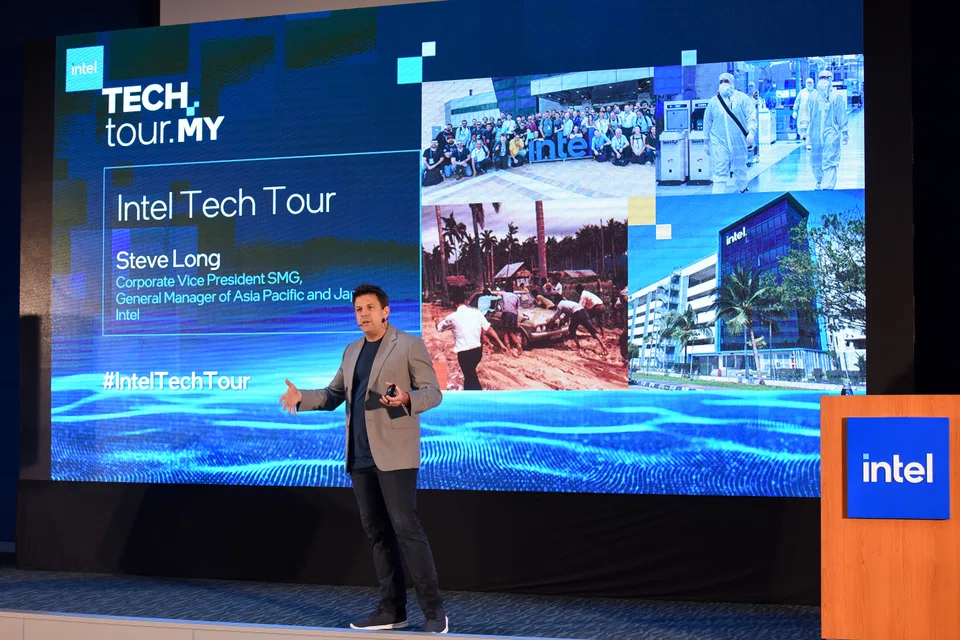
Steve Long, Intel’s corporate vice-president and general manager for the Asia-Pacific and Japan, said the world is undergoing a generational shift in which “AI will be everywhere”.
“It would be remiss if we don’t believe this (is happening). We are seeing the industry racing towards it,” he told The Business Times in a recent interview during a visit to the company’s facilities in Penang.
Bloomberg Intelligence has reported that the generative AI market will grow to US$1.3 trillion over the next 10 years, from just US$40 billion in 2022.
The industry’s transformation towards AI-driven solutions is fuelling semiconductor advancements, influencing chip design and manufacturing processes, and shaping the landscape of computing and technology, said Long.
Intel is moving in this direction by injecting key AI elements into its future central processing units (CPUs), including its 14th-generation CPU codenamed Meteor Lake, which was unveiled in mid-September.
Meteor Lake will integrate a CPU, a graphic processing unit and a vision processing unit to handle different kinds of AI workloads. Its three computing engines enable the system to respond 25 per cent faster, while improving battery life by up to 15 per cent.
Long expressed confidence that this more powerful and efficient processor, which supports more AI features, would drive the company’s sales.
Globally, the sales of personal computers (PCs) have been on the wane for the last seven quarters. Technology research and consulting firm Gartner noted that worldwide PC shipments fell by nearly 17 per cent on-year in the second quarter of 2023.
In view of the ongoing global tech down cycle, Long said Intel was “not immune” from the weaker performance worldwide.
The California-based chipmaker’s revenue was down 15 per cent year on year to US$12.9 billion for Q2 ended Jul 1; it was its sixth consecutive quarter of declining sales.
Long described the market as being in a “feast-or-famine” situation: The client computing segment (including laptops and desktop processors) is being hit by high inventories, while cloud companies remain hungry for graphic processors for AI.
But he expects the downtrend to end soon, given that recent data has pointed to a picking up of demand, with higher sales for smart cameras and a greater use of generative AI.
Gartner’s director analyst Mikako Kitagawa echoed this view. In a July report, she said the declining rate of the world’s PC market has slowed, indicating that the downtrend may have bottomed out. She said that the PC inventory was expected to normalise by the end of this year.
Malaysia a ‘manufacturing powerhouse’
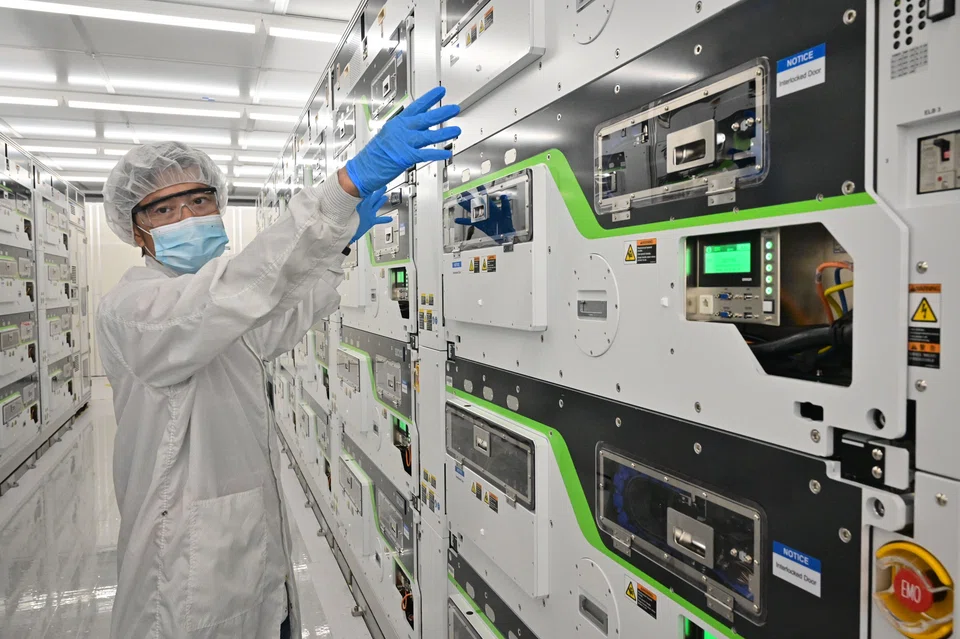
Intel’s presence in Malaysia dates back to 1972, when the company built its first assembly plant in Penang and hired just 100 employees. Today, its facilities in Penang and Kulim in Kedah have a combined space of 900,000 square feet. More than 15,000 employees are on the payroll at those two sites, including 6,000 Malaysian engineers who work in the research and development department.
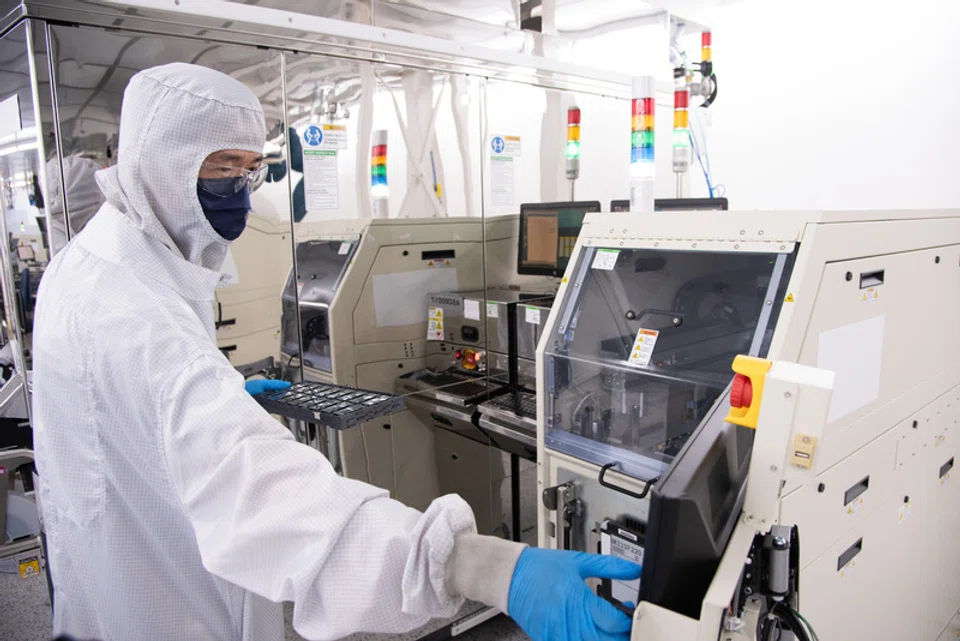
Intel has so far invested US$8 billion, and has committed another US$6 billion to expand its operations in Penang and Kulim. This sum will go towards the building of an advanced 3D packaging facility, additional chip assembly and a testing factory.
Intel Malaysia’s managing director AK Chong described Malaysia as a “manufacturing powerhouse” for Intel. More than 500 million dies have been sorted in the country since 2020; a total of 1.2 billion processor units were made in Malaysia in the last decade.
Malaysia is now the sixth-largest semiconductor exporter globally, with Intel contributing an average of a fifth of the total semiconductor exports each year.
TRENDING NOW

Mooted COE changes will solve category issues, but higher premiums likely: observers

Grab CEO’s wife Chloe Tong on life with Anthony Tan and finding her purpose

Once staunchly pro-China, Malaysian Chinese businesses are now distancing themselves from Beijing

Cliff Tan has 7 million followers and a 4-month waitlist. Why won’t he expand his business?

