Interest in South-east Asian bonds grows as China risks weigh on investors

THERE has been increased interest in South-east Asian bonds amid geopolitical risks around China and a growth in domestic demand, market watchers say.
In particular, analysts single out Indonesia as an outperformer in the year to date.
M&G Investments Asia-Pacific head of fixed income Low Guan Yi said that in recent years, domestic interest in South-east Asian government and corporate bonds has grown relative to global interest.
“Domestic pension and insurance funds have an increasing need for government bonds to match their liability profile, while banks and mutual funds have also increased their demand for bonds given surplus liquidity and below-trend loan growth,” she said.
The steady growth in domestic demand has also helped to lower the volatility of such bonds, Low said. This is unlike global investor interest, which tends to be tactical and dynamic as part of their emerging market allocations.
Similarly, Swiss investment management group Vontobel’s emerging market debt research analyst Kenny Lee said interest in South-east Asian bonds has grown as geopolitical risks around China “remain on top of investors’ minds”.
This is despite new issuance activity having been rather modest since the start of the year, resulting in lower trading activity in the region compared to previous years.
Lee noted that the weaker economic sentiment this year has contributed to stronger demand for good-quality investment-grade names in the region.
“Large trading volumes were driven by emerging market sovereign and quasi-sovereign bonds, especially in Indonesia, as investors were buying these as a proxy to trade around US Treasury rates movement,” he said, adding that such bonds have outperformed, with the US Treasury 10-year as a proxy.
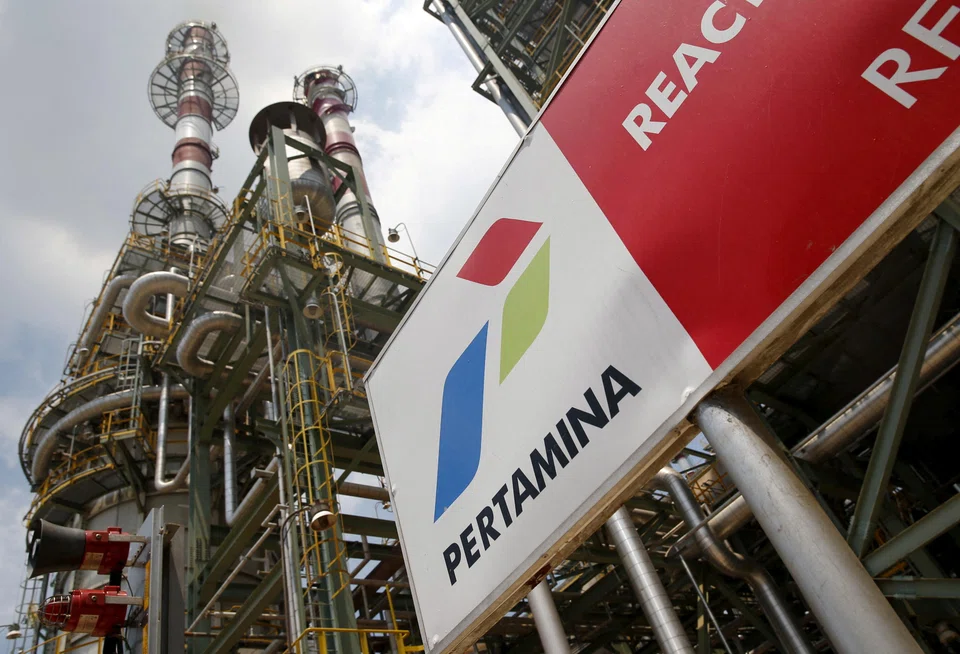
In a monthly review and outlook note published on its Asian Quality Bond Fund in March this year, First Sentier Investors analysts said the fund had purchased attractively priced Indonesian quasi-sovereigns, such as energy company Pertamina and Indofood.
Its analysts noted that while the fundamentals of Asian investment-grade corporates remain sound, the recent sharp rally in the last few months warrants a cautious stance.
This has led the fund to “tactically trade high-quality names” in the primary and secondary markets in names that have attractive issuance premiums and still offer value.
M&G Investments’ Low also noted that while South-east Asian local-currency bonds have generally fared well on the back of more benign expectations towards global and domestic interest rates, different currency performances have been mixed.
“Indonesia local-currency government bonds stood out as a key outperformer, while Malaysia local-currency government bonds underperformed as a result of the divergent currency direction in the respective markets,” she said.
Julius Baer head of investment specialists, Asia-Pacific, Rishabh Saksena said Singdollar-denominated treasury bills and government bonds as well as select high-quality investment-grade corporate bonds in both the US dollar and Singapore dollar have also been favoured as they offer attractive returns for relatively lower credit risk.
“While there could be volatility in secondary market prices of these instruments, for moderate duration, high-credit quality instruments, investors would typically tend to hold the bonds to maturity to realise the expected returns,” he said.
Similarly, Standard Chartered senior investment strategist Abhilash Narayan said the number of issuances of Singdollar-denominated corporate bonds have also been relatively few as compared to the strong domestic demand they have observed.
“While the total new issuance in the market has been in line with the trend from the past few years, this year, it has been dominated by bonds from banks or financial institutions.
“We see strong demand acting as a floor to any potential bouts of volatility and expect the market to be more defensive relative to its regional peers,” he said.
As for South-east Asian bond performance for the rest of the year, M&G’s Low noted that central banks in the region have moved to hold policy rates after following the US Federal Reserve’s rate hikes in 2022.
Both Malaysia’s Bank Negara and Bank Indonesia have paused their rate hikes in January and February.
However, more rate hikes are expected for economies such as the Philippines, even as the central bank has raised policy rates by 75 basis points in the year to date.
“Given core inflation pressure remains high, and the currency under depreciation pressure due to current account weakness, we think there is a high likelihood of one more rate hike in May,” Low said.
Therefore, she expects that Indonesian government bonds will perform the best, followed by Thailand due to a reduction in government bond issuance and improving outlook for both currencies.
In addition, as yields from recent Singapore government bill auctions decline, she said this could relieve pressure on short-end rates and give support to local corporate bonds as well.
As for non-commodity-related high-yield bonds, Vontobel’s Lee said demand for such bonds should “slowly” return as the US dollar weakens.
“As the US dollar remained strong during the third and fourth quarter in 2022, investors generally avoided non-commodity-related high-yield names in the region due to concerns around their ability to handle US dollar liabilities on their balance sheet with a weakening local-currency revenue,” he said. (*see amendment note)
Fidelity International South-east Asia client portfolio strategist Christopher Wong said the region will continue to benefit from its status as a “safe haven” as it has not been directly affected by major events happening elsewhere.
“The region can also potentially benefit from other cyclical trends as well, like the still-elevated commodity prices and the region’s close linkage to China, which allows it to benefit from the economic recovery there,” he said.
UBS Global Wealth Management chief investment officer Kelvin Tay advises investors holding cash, or those with upcoming bond maturities, against waiting for the “final rate hike” before locking in current yields.
“As the negative effects of the interest rate hikes so far become more apparent, we believe markets will increasingly start to price in the possibility of future interest rate cuts,” he said, adding that markets are already pricing in a pivot in the Fed’s policy starting in July.
“Such a pivot could come sooner if economic growth starts to show weakness, inflation abates faster than expected, or further risks to the financial system emerge.”
“This would make attractive fixed-rate returns on cash and fixed income assets harder to come by in the future,” Tay said.
*Amendment note: The article had erroneously attributed a quote to Fidelity’s Wong. It should have been attributed to Vontobel’s Lee instead.