



Invest Malaysia moves to Johor for the first time, reflecting surging investor interest
Collaboration on the Johor-Singapore SEZ by both countries could position the southern Malaysian state as a major economic powerhouse

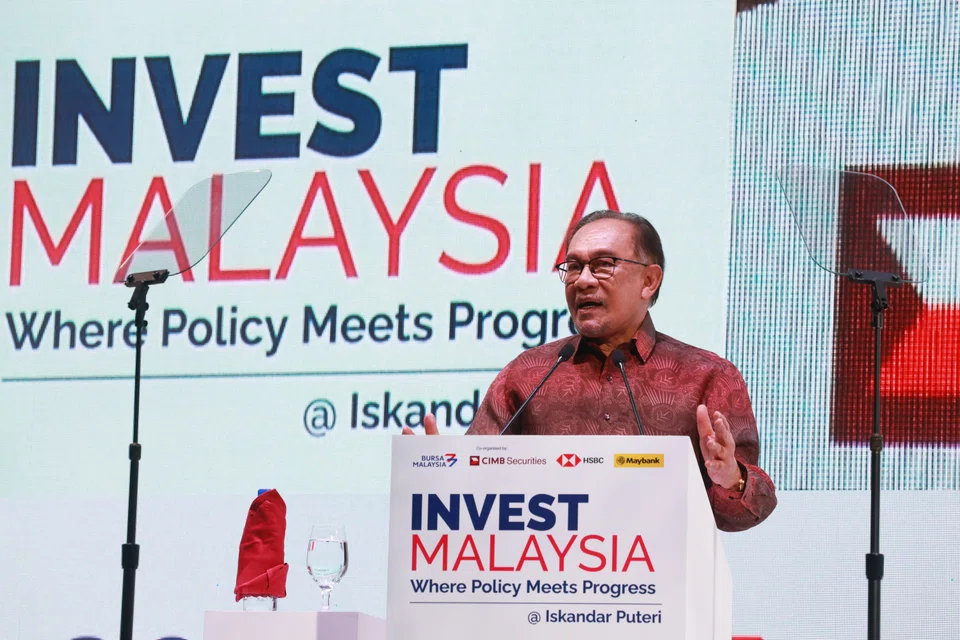
[JOHOR BAHRU] For the first time since its inception in 2005, Invest Malaysia – the annual conference organised by Bursa Malaysia – has moved from Kuala Lumpur to Johor. This significant relocation reflects the growing global investor interest in the southern state, particularly in light of the Johor-Singapore Special Economic Zone (SEZ) initiative.
Prime Minister Anwar Ibrahim, in his keynote address on Thursday (Sep 26), highlighted Malaysia’s ample energy capacity to support major development projects, including the Johor-Singapore SEZ. He gave assurance that the country not only has enough energy to meet its domestic needs but also a surplus available for export.
“The government will continue to pursue renewable energy and energy transition initiatives as it aims to achieve net-zero emissions by 2050, while also focusing on developments that attract foreign interest – such as the Johor-Singapore SEZ,” he said.
Earlier this year, Malaysia and Singapore signed a memorandum of understanding to develop the SEZ, aimed at enhancing bilateral investment and facilitating the movement of people and goods between the two nations.
Anwar noted that both countries are working towards finalising a deal by year-end, emphasising that this collaboration could position Johor as a major economic powerhouse.
Acknowledging minor disagreements with Singapore, he stated: “Every country has problems with their neighbours, but this shouldn’t escalate into tensions.” He also expressed confidence in resolving challenges for mutual benefit.
The Malaysian government is actively courting foreign investors into Johor with a range of incentives such as a 0 per cent tax rate for family offices in Forest City and concessionary corporate tax rates between 0 and 5 per cent for businesses.
Additionally, a reduced individual income tax rate of 15 per cent is offered for knowledge workers and Malaysians employed there.
Anwar emphasised that the government’s bold, though sometimes unpopular, economic measures have had a positive impact on the economy. For example, the removal of targeted diesel subsidies has bolstered investor confidence and stabilised the stock market.
Best performing exchange in Asean
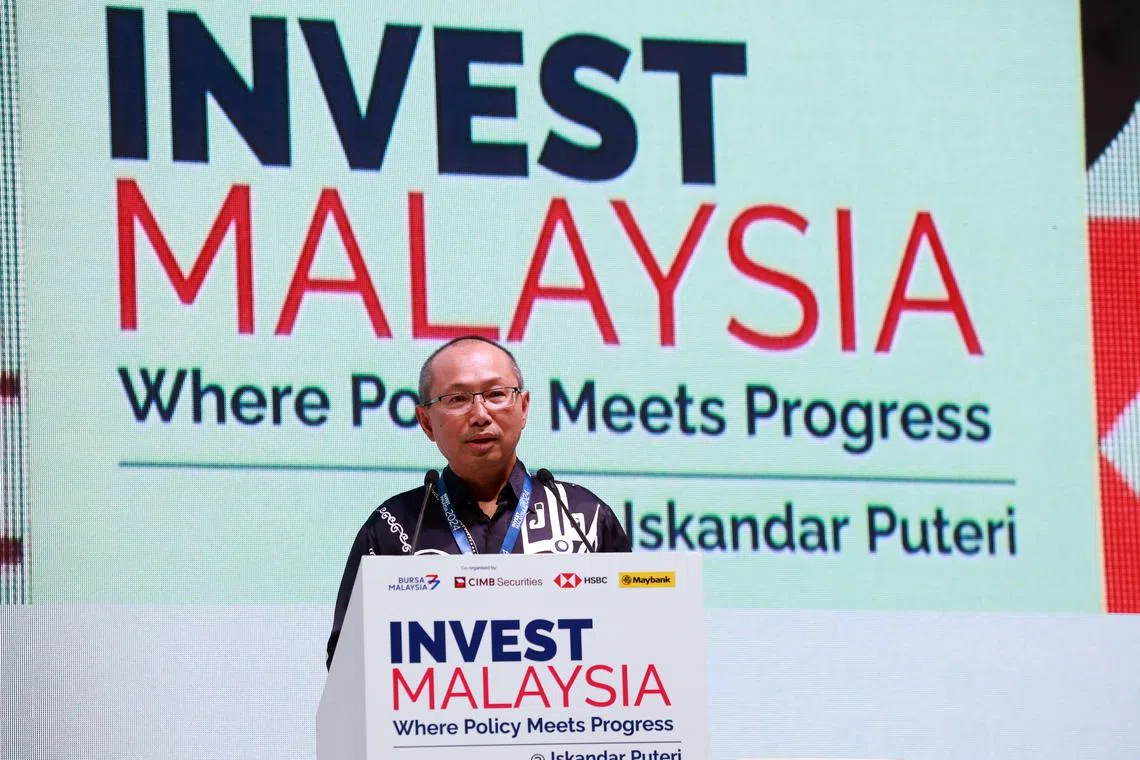
Bursa Malaysia chairman Wahid Omar echoed this sentiment, noting that 2024 has been an exceptional year for the equity capital market.
As at Wednesday, Malaysia’s benchmark FBMKLCI has gained 15 per cent year to date, making it the best-performing market in Asean.
He reported that Bursa Malaysia’s overall capitalisation reached RM2.05 trillion (S$622.3 billion), surpassing the RM2 trillion level for the first time in May this year.
“The market outlook remains robust, bolstered by sustained interest from both domestic and foreign investors,” Wahid added.
He cited recent reports from investment banks such as Maybank, CIMB and HSBC, which have raised their 2024 year-end targets for the FBMKLCI to 1,720, 1,732 and 1,740 points, respectively. One institution even issued a higher 2025 year-end target of 1920 – 14.7 per cent above Wednesday’s close of 1,673 points.
With a significant increase in trading activity and a net inflow of nearly RM4 billion from foreign investors, Malaysia’s equity market is poised for continued growth, reflecting the confidence in the nation’s economic trajectory, he added.
TRENDING NOW
Prima to move out of historic Keppel Road flour mill building in 2028
Temasek-related Azalea, SeaTown, Seviora Capital to merge in 2027
Family offices see more tailored products, leverage ‘collective firepower’ for direct deal access
Singapore room rates soar, but hotels seeing mixed demand from F1 race and events

