Asean Business logo
SPONSORED BYUOB logo

IPO sugar rush sweeps Vietnam as bets on stock market upgrade build

Big brokerage firms are leading the charge on new offerings despite sustained selling by foreign investors

Summarise
Jamille Tran
Published Tue, Sep 30, 2025 · 02:37 PM
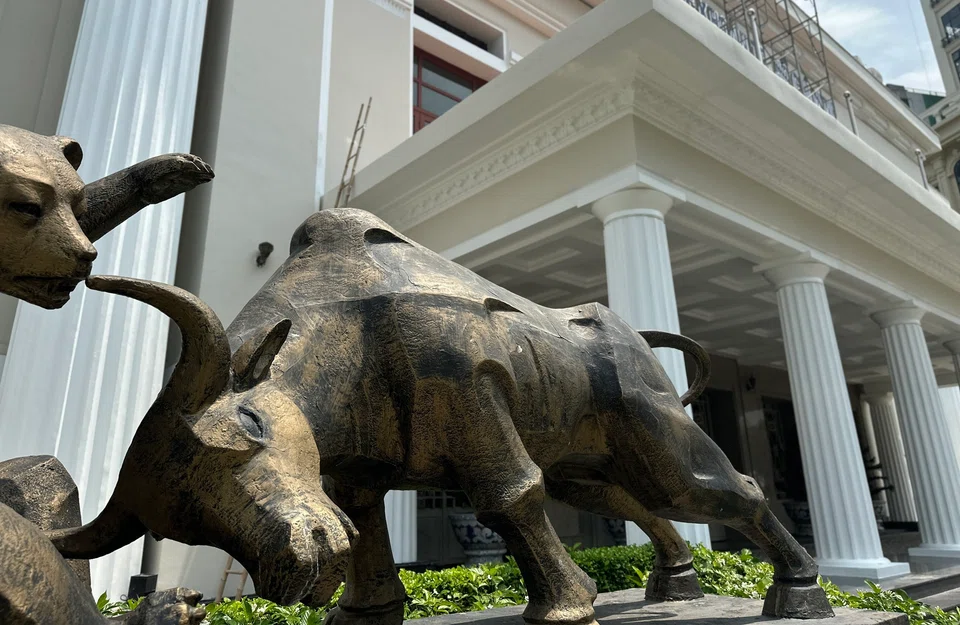
    • The bullish sentiment, evident among local investors, has driven a 31.6% gain in the benchmark VN-Index year to date, well ahead of regional peers.
    • The bullish sentiment, evident among local investors, has driven a 31.6% gain in the benchmark VN-Index year to date, well ahead of regional peers. PHOTO: JAMILLE TRAN, BT

    [HO CHI MINH CITY] A wave of initial public offerings (IPOs) in Vietnam, led by the country’s major brokerage firms aiming to raise at least US$1 billion, is unfolding as the stock market’s key index has gained over 30 per cent in the year to date.

    Techcom Securities (TCBS), which completed its public stock sales earlier this month, fetched a record valuation for a brokerage firm and was oversubscribed. This highlights investor enthusiasm for the sector poised to benefit the most from the Vietnamese stock market’s potential upgrade to emerging-market status this October, the outcome of which remains uncertain.

    Following the hot response to TCBS’ IPO, other brokerages are also racing to offer their shares to the public between Q4 2025 and Q1 2026, tapping robust domestic demand; this, despite strong foreign sell-offs.

    VPBank Securities (VPBankS) – a unit of private lender Vietnam Prosperity Joint Stock Commercial Bank, or VPBank – aims to raise 12.7 trillion dong (S$620.1 million), which will mark the largest IPO in the country’s stockbroking space.

    Meanwhile VPS Securities – Vietnam’s largest securities firm by market share – plans to triple its charter capital to 16.4 trillion dong through a combination of an IPO, a bonus share issuance and private placement. 

    VPBankS has priced its stock at 33,900 dong apiece, indicating a forward price-to-earnings (P/E) ratio of 14.3 and a valuation of nearly US$2.4 billion. Meanwhile, VPS has yet to announce its share price, but it will be no less than 22,467 dong per share.

    For TCBS, which offered shares at 46,800 dong each with a forward P/E ratio of 20, its post-IPO valuation reached US$4.1 billion – the highest on record for a Vietnamese brokerage firm.

    A report by Techcom Capital shed light on the pricing, noting that the industry average P/E ratio is in the range of 20 to 25. Historical data from upgraded markets showed a typical 15 to 20 per cent increase in the ratios upon reclassification of the stock market.

    The forward P/E ratio of Vietnam’s benchmark VN-Index is at 13.8.

    After receiving approval from the State Securities Commission and completing the off-exchange IPOs, these brokerage stocks of TCBS, VPBankS and VPS are set to list on the country’s bourses – Ho Chi Minh Stock Exchange (HoSE) or Unlisted Public Company Market (UPCoM).

    Robust domestic demand

    TCBS said it has seen more than 26,000 investors register to purchase a total of over 575.16 million shares during the pre-listing IPO from Aug 19 to Sep 8, while the offering was only for 231.15 million shares, resulting in a pro-rata allocation of 40.18 per cent.

    Vietnam’s stock-market capitalisation across the three local bourses is at around US$285.6 billion, or roughly 60 per cent of the country’s gross domestic product in 2024. The nation aims to raise it to 120 per cent of GDP by 2030, estimated at US$780 billion, said the report.

    As at the end of August, Vietnam had about 10.75 million stock-trading accounts, with 99.37 per cent held by retail investors. Nearly 260,000 new accounts were created in August, marking the highest level since the start of the year.

    VPS has led the local market share since 2021, capturing 15.37 per cent of the total transaction volume on the HoSE in the second quarter of this year, followed by SSI Securities and TCBS.

    In the derivative segment, VPS holds a dominant 47.71 per cent market share, far ahead of its competitors.

    Market upgrade bets

    Vietnam has been on global index provider FTSE Russell’s watch list for a reclassification from frontier-market to secondary-emerging-market status since 2018, and is poised for an updated review to be announced on Oct 7.

    While some brokers and government officials have expressed confidence about the upgrade, it remains a guessing game for market participants until the official announcement comes next week.

    The bullish sentiment, however, has been evident among local investors. It has driven a 31.6 per cent gain in the benchmark VN-Index in the year to date, well ahead of regional peers. Analysts attributed the surge to Vietnam’s pro-growth reforms, better-than-expected trade deal with the US and rising optimism over the market upgrade.

    Market watchers projected that net foreign inflows totalling about US$5 billion, driven by both passive and active investors, may occur before and after the upgrade.

    However, foreign investors have followed a different trajectory, registering a record US$3.7 billion in net sales of Vietnamese stocks on HoSE so far this year, with significant spikes in August and September. These have surpassed the US$3.2 billion net outflow recorded in 2024, indicated data from Bloomberg.

    “Even if the upgrade is announced soon, new passive inflows from global index-tracking ETFs are likely to begin only around March 2026. This delay is due to the typical five-to-six-month time frame required for FTSE to include or adjust the weightings of Vietnam’s stocks in its indices,” said Quan Trong Thanh, head of equity research at Maybank Investment Bank Vietnam.

    Analysts have cited several factors behind the ongoing foreign sell-off, including the large USD-VND interest rate differential, the wave of technology investments in the US and profit-taking momentum.

    The dong has depreciated by over 3.6 per cent against the greenback since the beginning of this year, despite the US dollar index having fallen by 9.7 per cent in the year to date, making it the worst-performing currency in Asean.

    “Macroeconomic factors have become more important for foreign investors than the upgrade narrative,” Thanh added.

    Nguyen The Minh, head of research and development for retail clients at Yuanta Securities Vietnam, echoed this viewpoint, predicting that foreign investors would continue to sell, even if the upgrade occurs. However, he expected that the net selling pressure could ease or stabilise in the last quarter of this year.

    “US Federal Reserve rate cuts, along with the wave of new IPOs and the development of new financial products in the stock market, are key drivers that will soon attract foreign capital back into the Vietnamese stock market,” Minh added.

    The IPOs of non-financial companies, including the agriculture arm of steel giant Hoa Phat and infrastructure subsidiary of Gelex Group, are also in the pipeline for the last few months of this year.

    Various prominent firms have also announced IPO and listing plans for the 2025-2030 period, including Highlands Coffee, a leading food and beverage chain operator; Viettel IDC, a major player in data centre services; Bach Hoa Xanh, a consumer goods retail chain backed by electronics retail giant Mobile World; Long Chau, one of Vietnam’s largest pharmacy networks; and Masan Consumer, the consumer goods arm of Masan Group.

    Earlier this month, Vietnam reformed its IPO and listing rules by issuing a new decree that streamlines the approval process and reduces the IPO-to-listing timeline from 90 days to 30, enabling the trading of shares to start sooner.