JB-Singapore RTS Link: From hours to just 20-minute ‘seamless’ trip
Tan Ai Leng
[KUALA LUMPUR] When the Johor Bahru-Singapore Rapid Transit System (RTS) Link is up and running by end-2026, the plan is for passengers to take just 20 minutes or less to get from one end to the other – and that includes the time to clear customs and immigration.
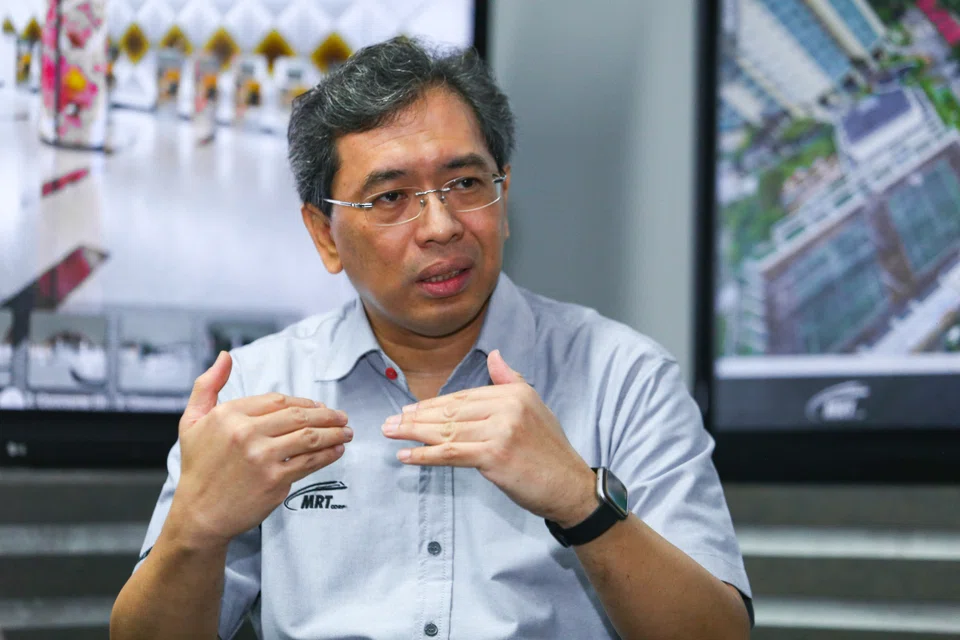
This is a target Mohd Zarif Hashim, the chief executive officer of Malaysia’s Mass Rapid Transit Corp (MRT Corp), set since he started overseeing the development of the RTS Link in September 2020.
The actual travel time for the 4 km journey on the light-rail shuttle service is about five minutes. If all goes well, going through the joint customs and immigration – only at the point of departure – will take 10 to 15 minutes, he said.
“(The clearance) must be within 15 minutes. If not, the construction of the RTS Link to facilitate the seamless mobility of people will be meaningless,” he told The Business Times in an interview at his office in Kuala Lumpur last Friday (Jan 12).
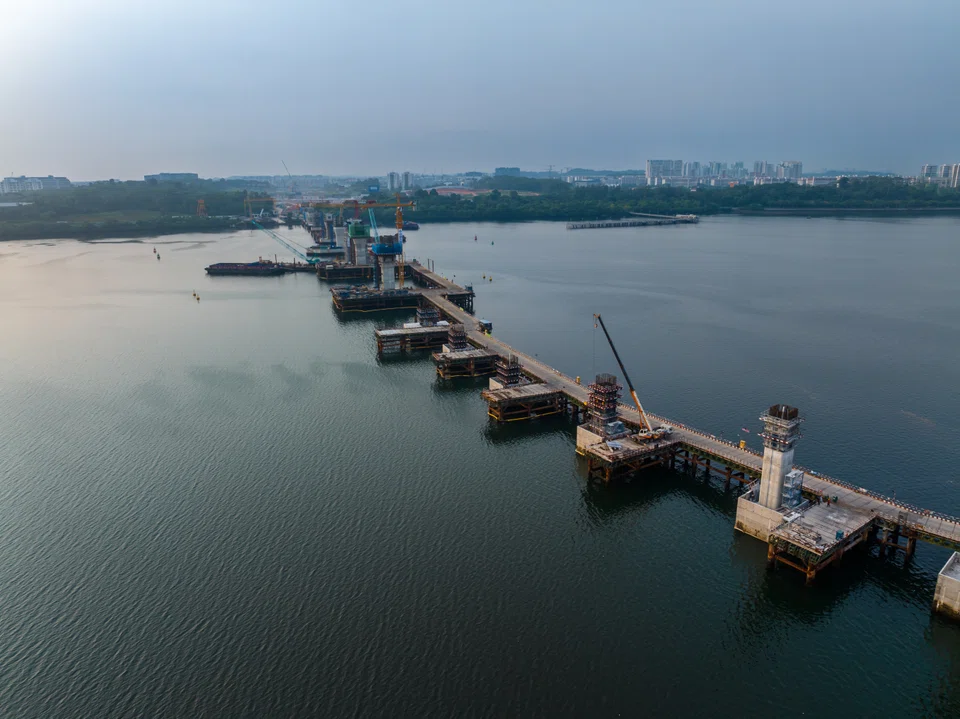
The day before, Singapore Prime Minister Lee Hsien Loong and Malaysia Prime Minister Anwar Ibrahim were in Johor for a ceremony to mark a construction milestone of the RTS Link. The project – estimated to cost RM10 billion (S$2.87 billion) – is 65 per cent complete.
During PM Lee’s visit, it was also announced that Singapore and Malaysia are exploring the possibility of having passport-free QR code clearance at their land checkpoints. If this comes to pass, Mohd Zarif said, it would be a big step towards making travel on the RTS Link as quick as possible.
During the interview, the 53-year-old said he hoped the RTS Link would pave the way for an “economic corridor” between Johor and Singapore that will benefit both sides.
“The RTS Link is not just meant for ferrying people to and from Singapore. This greater mobility will encourage the flow of ideas, knowledge and talent, to create an economic corridor that makes use of the advantages of the two countries,” he said.
When operational, the high-volume shuttle service will be able to transport 10,000 people per hour in each direction – between Woodlands North in Singapore and Bukit Chagar in Johor Bahru.
Establishing this economic corridor will result in more investors looking at opportunities in the region, in fields such as renewable energy, electric vehicles and artificial intelligence, said Mohd Zarif.
Land connectivity between Singapore and Malaysia has been largely dependent on the Causeway and the Second Link for decades. Congestion is especially heavy during the peak travel season, and it is common for travellers to wait four hours or more to clear immigration and customs.
The Causeway, one of the world’s busiest border crossings, caters to around 350,000 people commuting daily for work, school and social visits.
Malaysia’s Transport Minister Anthony Loke said last week that the RTS Link will help reduce congestion on the Causeway by about 35 per cent.
Prospects in Bukit Chagar
With under 36 months to go before the RTS Link project is complete, Mohd Zarif said that MRT Corp is also planning a mixed development on a 2.4 hectare plot in Bukit Chagar, which is near the Johor Bahru customs, immigration and quarantine complex.
He is optimistic that the RTS Link will position Bukit Chagar as a key meeting point for companies on both sides of the border, which will in turn elevate Johor Bahru into a business hub of idea incubation.
In July 2023, MRT Corp signed an agreement with Hong Kong’s MTR Corporation to embark on a large-scale rejuvenation of Bukit Chagar, to transform it into an economic hub.
Mohd Zarif said various studies have been done to curate the most suitable lifestyle elements that would pull in younger people to live and work there. While he could not reveal many details at this point, he said there are tentative plans for a retail mall, as well as residential and hospitality components.
The development has attracted the interest of nine investors from Malaysia and overseas, including Australia, China and Hong Kong. MRT Corp has shortlisted three of them and is still finalising the deals, he said. The results will be announced in the second quarter.
“We expect that Bukit Chagar, which is the older part of the Johor Bahru city centre, to lead in the change of the city’s transformation,” he said.
“But this development is not enough, and we hope the spillover effect can be enjoyed by other areas in Iskandar Malaysia (the main southern development corridor in Johor) as well.”