


Asean Business logo
SPONSORED BYUOB logo

From Johor to Borneo: Malaysia plotting Brunei-Sarawak SEZ to tap new growth frontier

Malaysia is eyeing a Brunei-Sarawak SEZ to boost trade, mirroring the Johor-Singapore model, as thousands of Sarawakians commute to Brunei for higher wages and a strong exchange rate

Summarise
Tan Ai Leng
Published Mon, Mar 17, 2025 · 12:24 PM
    • Miri offers cost-competitive land, a skilled workforce and abundant renewable energy, positioning northern Sarawak as a hub for green industries and advanced manufacturing.
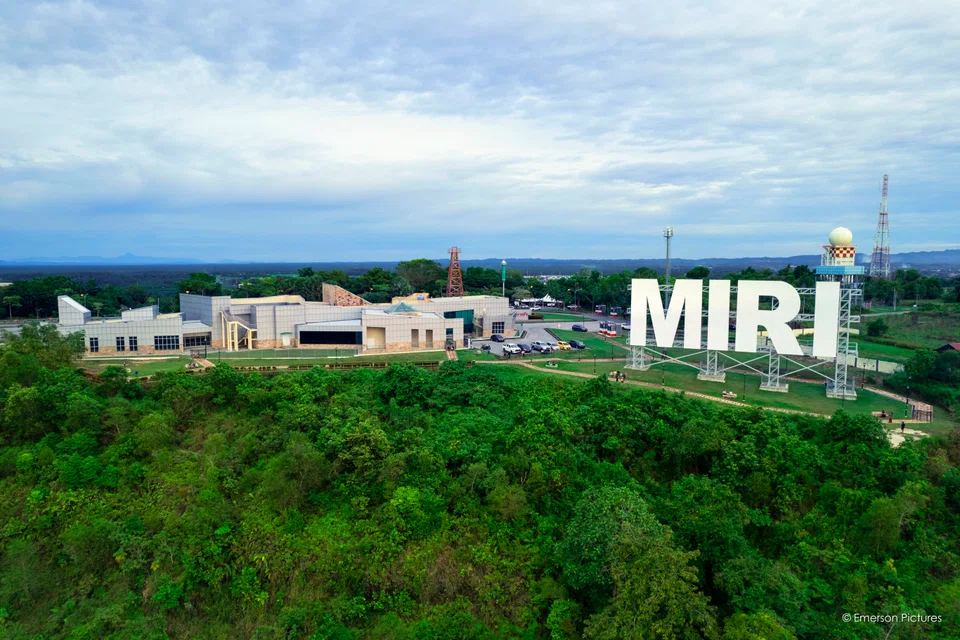
    • Miri offers cost-competitive land, a skilled workforce and abundant renewable energy, positioning northern Sarawak as a hub for green industries and advanced manufacturing. PHOTO: EMERSON PICTURES

    [KUALA LUMPUR] Every weekend, thousands cross the Kuala Belait-Kuala Baram border, a key link between Brunei and Miri in Malaysia’s Sarawak state. Among them is Hannah Chow, a Miri-born teacher who has called Brunei home for over eight years.

    Chow, her husband and their two children travel to Miri once or twice a month to visit family. Their Saturday morning journey is usually smooth, with immigration clearance taking around 30 minutes. But during peak hours, the process can stretch to one or two hours as more tourists cross the border, she told The Business Times.

    “Most Bruneians come to Miri for leisure, food and shopping,” she said, adding that she stocks up on essentials such as baby diapers and cleaning detergents, which are 30 to 50 per cent cheaper in Miri than in Brunei.


    “And of course, there’s the seafood that everyone loves,” she added.

    Sounds familiar?

    As cross-border traffic between Miri and Brunei surges, Malaysia is now weighing a Brunei-Sarawak Special Economic Zone (SEZ) to mirror the Johor-Singapore model that was launched in January.

    “Miri is Brunei’s main gateway into Sarawak,” said Miri lawmaker Chiew Choon Man, a key proponent of the SEZ. “Business activity is booming, but we need to create more value. The idea of a special economic zone emerged after seeing the Johor-Singapore SEZ take shape.”

    A border economy in motion

    Miri has transformed from a quiet oil town, where Royal Dutch Shell drilled Malaysia’s first oil well in 1910, into a bustling city. PHOTO: EMERSON PICTURES

    Chow, 36, teaches at a private high school in Bandar Seri Begawan and is part of a Malaysian diaspora that has moved to Brunei for better wages.

    She declined to disclose her salary, but said it was comparable to what she earned in Singapore in her previous job.

    As at 2022, about 52,000 Malaysians lived in Brunei, according to Malaysia’s Department of Statistics. Nearly 70 per cent were skilled workers while 24 per cent were semi-skilled.

    Around 40 per cent earned between B$1,000 and B$3,000 a month, while another 40 per cent took home between B$3,001 and B$9,999. Some received monthly salaries as high as B$15,000.

    Under the Currency Interchangeability Agreement in 1967, Brunei’s and Singapore’s currencies are interchangeable at par and without charge, meaning one Singapore dollar is equivalent to one Brunei dollar, and vice versa.

    Chiew, who was born and raised in Miri, compared the Brunei-Miri border dynamics to those between Singapore and Johor Bahru. Hundreds of thousands cross the Malaysia-Singapore border daily – Malaysians commuting for work and Singaporeans heading to Johor Bahru for shopping and entertainment.

    Miri and Brunei share a similar cross-border relationship. “It’s similar, but also different,” Chiew said. “While Singapore and Brunei both have stronger currencies, Bruneians mainly visit Miri due to limited consumer goods and services back home.”

    “The Kuala Belait-Kuala Baram border is always busy on Friday evenings and weekends,” he added. “In 2019, about half a million cars crossed the border annually. Traffic slowed during the Covid-19 pandemic, but last year, volumes returned to pre-pandemic levels.”

    The economic activity has helped transform Miri from a quiet oil town, where Royal Dutch Shell drilled Malaysia’s first oil well in 1910, into a bustling resort city.

    Expanding the economic pie

    Lee Chean Chung, chairman of the Centre for Regional Strategic Studies, says Miri and Brunei are facing the same challenge, which is to reduce reliance on fossil fuels and addressing resource depletion. PHOTO: TAN AI LENG, BT

    Lee Chean Chung, chairman of the Centre for Regional Strategic Studies, said a Brunei-Sarawak SEZ could play a vital role as companies seek to diversify their supply chains.

    “Miri and Brunei sit at the heart of Borneo, close to Indonesia’s new capital, Nusantara, as well as the Philippines and Vietnam,” he said.

    Beyond cross-border commerce, Brunei was Malaysia’s sixth-largest Asean trading partner in 2023, with total trade exceeding US$2 billion.

    In October, Sarawak Premier Abang Johari pledged support for Brunei’s goal of generating 10 per cent of its electricity from renewables by 2035, in line with the Paris Agreement.

    Brunei’s gross domestic product per capita stood at about US$33,663 in 2024, reflecting its capital reserves and highly educated workforce, with an 80 per cent labour participation rate among advanced degree holders.

    An overview of Brunei:

    • Area size: Around 5,765 square kilometres (sq km)
    • Population: 465,278 (as at January 2025)
    • GDP per capita (2024): Around US$33,663
    • Key economic activities: Oil and gas; services; agriculture, forestry and fishery; finance and insurance; communication and information technology
    • Major ethnicities: Malay (around 74 per cent), Chinese (around 10 per cent), indigenous people and others (foreigners)

    Miri, meanwhile, offers cost-competitive land, a skilled workforce and abundant renewable energy, positioning northern Sarawak as a hub for green industries and advanced manufacturing.

    “The Double KB corridor (Kuala Belait-Kuala Baram) could evolve into a single economic ecosystem that attracts global investors,” Chiew said.

    He emphasised that the collaboration seeks to expand market reach, as the combined populations of Brunei and Miri, Sarawak, are significantly smaller than major economic hubs such as the Klang Valley or the planned JS-SEZ.

    According to data from Worldometer, Miri’s 2024 population was around 300,500, while Brunei’s was 465,278, totalling less than one million.

    An overview of Sarawak:

    • Area size: Around 124,450 sq km (Miri around 4,700 sq km)
    • Population: Around 2.5 million (as at December 2024)
    • GDP per capita (2023): Around US$16,280
    • Key economic activities: Oil and gas; agriculture (palm oil); manufacturing and construction; services; tourism
    • Major ethnicities: Iban (around 29 per cent), Chinese (around 23 per cent), Malay (around 23 per cent), Bidayuh (around 8 per cent) and others ethnic groups

    Renewable energy as key driver

    Miri lawmaker Chiew Choon Man says the idea of Brunei-Sarawak SEZ is inspired by the Johor-Singapore SEZ. PHOTO: TAN AI LENG, BT

    Just a week after Malaysia and Singapore formalised the Johor-Singapore SEZ, Chiew led a parliamentary delegation to Brunei’s Legislative Council to propose a similar initiative for Brunei and Sarawak.

    The Brunei-Sarawak SEZ aims to synergise Brunei’s infrastructure, including deep-sea ports and an international airport, with Sarawak’s land resources and skilled labour pool.

    Brunei lawmakers welcomed the proposal, recognising its potential to boost economic diversification and create new employment opportunities.

    Lee emphasised the Brunei-Sarawak SEZ’s role as a potential model for regional economic cooperation. “Although the plan is still in its infancy, we hope to develop the area into a regional economic powerhouse for the Borneo region.”

    Unlike the Johor-Singapore SEZ, which is driven by manufacturing and services, Brunei and Sarawak’s economies remain heavily reliant on oil and gas.

    “The challenge for both is reducing reliance on fossil fuels and addressing resource depletion,” Lee said, noting that the rising requirements for environmental, social and governance compliance is another reason for Brunei and Miri (and Sarawak) to seek diversification.

    The proposed SEZ is expected to prioritise strategic sectors, with renewable energy as a key driver, alongside high-value exports, technology, pharmaceuticals, and the burgeoning halal food market, as well as tourism.

    “The rising global demand for halal products, especially from the Middle East, presents a significant opportunity for Sarawak and Brunei,” he added.

    Moreover, the region’s rich forest resources offer substantial potential for decarbonisation initiatives within the SEZ.

    Time for Borneo to shine?

    Market observers anticipate the proposed Brunei-Sarawak SEZ will prioritise on renewable energy sector, alongside high-value exports, technology, pharmaceuticals, halal food market and tourism. PHOTO: EMERSON PICTURES

    Liew Wui Chern, a policy analyst and lecturer at Universiti Tunku Abdul Rahman, said the SEZ could help strengthen Borneo’s economy, especially with Indonesia moving its capital to Nusantara.

    If Indonesia relocates its economic activities, Nusantara and Brunei could emerge as twin economic centres in Borneo, he added.

    A proposed Pan-Borneo railway linking Brunei, Kuching, Miri and Nusantara is expected to improve regional connectivity.

    Sarawak’s recent acquisition of MASwings – now rebranded as AirBorneo – also aims to enhance air connectivity within the region.

    Brunei has long sought to diversify its economy beyond oil and gas, but foreign investors remain cautious due to its status as a non-democratic Muslim monarchy, Dr Liew noted.

    “Malaysia, with its parliamentary democracy and constitutional monarchy, could complement Brunei by attracting global investors to the SEZ,” he said.

    Long road ahead

    Despite its promise, market observers remain cautious about the timeline for the Brunei-Sarawak SEZ.

    Lee said: “It took Johor and Singapore a few decades for Malaysia and Singapore to realise the first SEZ between two countries.”

    He added: “Getting buy-in from both sides will take time, and co-investment discussions may take years.”

    Chiew concurred, noting that policy harmonisation, modernised immigration facilities and regulatory alignment were key hurdles.

    “This won’t happen overnight, despite its huge potential,” he said.


