Asean Business logo
SPONSORED BYUOB logo

Johor-Singapore SEZ could draw more tech giant interest as Middle East data centre attacks prompt rethink

As geopolitical risks push hyperscalers to diversify, Johor could emerge as a viable alternative hub

Summarise
Tan Ai Leng
Published Mon, Mar 23, 2026 · 07:00 AM
    • The Johor state government is becoming more selective in data centre investment, signalling a shift towards high-quality, more efficient developments.
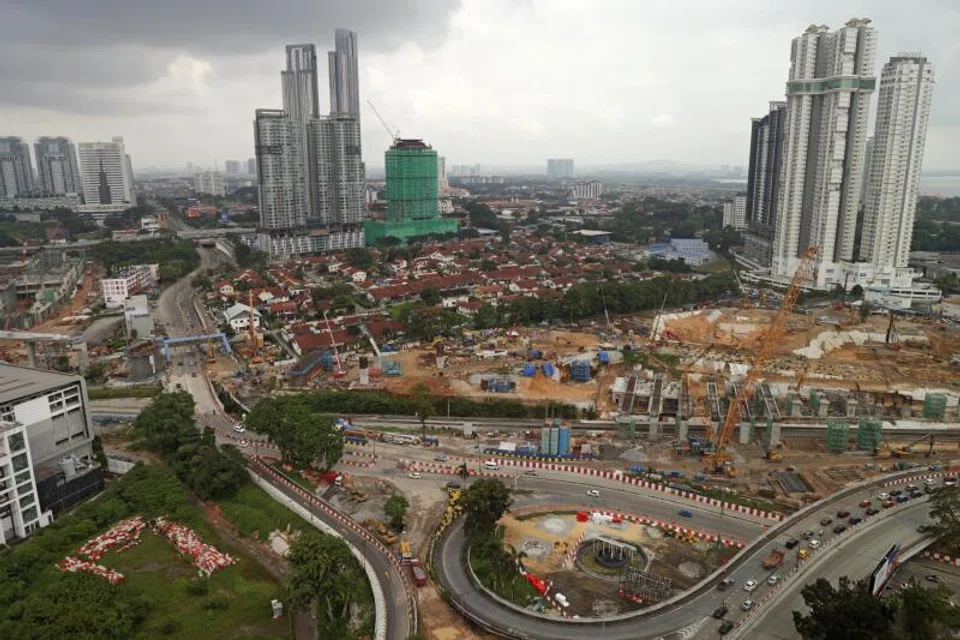
    • The Johor state government is becoming more selective in data centre investment, signalling a shift towards high-quality, more efficient developments. PHOTO: BT FILE

    [KUALA LUMPUR] The Johor-Singapore Special Economic Zone (JS-SEZ) could draw fresh attention as a potential node for global cloud infrastructure, as drone strikes on data centres in the Middle East make tech giants think about diversifying into regions such as South-east Asia.

    Sarah Jane Mahmud, senior industry analyst at Bloomberg Intelligence, told The Business Times: “Early investment flows suggest that South-east Asia is already benefiting from these shifts, with the JS-SEZ attracting substantial capital and a growing pipeline of data centre projects that position it as a preferred node in global cloud infrastructure planning.”

    She added that global tech firms are closely reviewing their exposure to the Middle East as geopolitical risks rise, with employee safety, business continuity and supply chain resilience now central to location decisions.


    The Middle East has spent years pitching itself as the next frontier for global cloud infrastructure, but those ambitions have been jolted as geopolitical risks mount, including drone strikes that hit Amazon Web Services (AWS) data centres in the United Arab Emirates (UAE) and Bahrain, exposing vulnerabilities in critical infrastructure.

    Market observers said recent disruptions are hastening a move towards more geographically spread, multi-region deployment strategies, as operators aim to limit over-concentration and protect critical infrastructure.

    Dedi Iskandar, Asia-Pacific regional director at datacenterHawk, noted growing market chatter around accelerating data centre development in key markets such as Malaysia, Indonesia, Thailand and India.

    Still, any shift is expected to be gradual, with the JS-SEZ’s expansion constrained by infrastructure, utilities and geographic limitations.

    First military strike on cloud

    Over the past decade, Gulf economies have leveraged sovereign wealth and the Saudi Vision 2030 initiative to become a digital bridge between Europe, Asia and Africa.

    Data centre investment in the Middle East is gaining momentum, driven by artificial intelligence (AI) and cloud infrastructure demands from tech giants such as Nvidia, Google and AWS.

    According to Research and Markets, data centre colocation market investments in the Middle East are projected to reach US$33.79 billion from 2025 to 2030.

    Recent “kinetic risk” to these physical assets underscores the danger of regional over-reliance.

    That shift gained urgency after Mar 1 strikes involving the US, Israel and Iran damaged AWS’ three facilities in the UAE and Bahrain, becoming the first known case of a major cloud provider’s physical assets being targeted in a military conflict.

    The incidents triggered fires, structural damage and prolonged power disruptions, with recovery expected to be slow due to water damage from fire suppression systems. AWS has since advised customers to back up data and shift critical workloads to alternative global regions.

    This wake-up call is unfolding at a time when demand for digital infrastructure is surging. AI is expected to drive at least 25 gigawatts (GW) of new data centre capacity globally this decade, while global cloud spending is projected to exceed US$2 trillion by 2030, according to Fitch Solutions unit BMI.

    Following the incident, datacenterHawk’s Dedi said new data centre builds and expansions in the Middle East appear to have slowed, with some projects on hold as operators await clarity on the conflict.

    “However, we have not yet seen a direct reallocation of capacity from the Middle East to the JS-SEZ,” he said, noting that data centre projects are highly capital-intensive and difficult to relocate once investments have been committed.

    “In the near term, operators are more likely to pause construction activity to safeguard workers until conditions stabilise,” he added.

    Shifting map of cloud infrastructure

    Against the unpredictable backdrop, South-east Asia is gaining traction as an alternative destination for digital infrastructure investment.

    Bloomberg Intelligence’s Mahmud said the JS-SEZ is emerging as a compelling alternative: Malaysia offers substantial land availability and tax incentives, while Singapore contributes established hyperscale capacity but faces constraints from high costs, limited land and tight energy resources.

    According to estimates by real estate group JLL, Malaysia’s operational data centre capacity is expected to double from about 1,025 megawatts (MW) at the end of 2025 to roughly 2,100 MW by the end of 2026.

    Johor – the backbone of the JS-SEZ – accounts for about 70 per cent of Malaysia’s data centre capacity under construction, far outpacing Greater Kuala Lumpur’s roughly 30 per cent.

    A further 4 GW is planned nationwide.

    “JS-SEZ is currently one of the hottest data centre corridors in South-east Asia, supported in part by a flight to stability amid rising geopolitical tensions in the Middle East,” said Samuel Tan, chief executive officer of Olive Tree Property Consultants.

    However, the shift remains measured. “What we are seeing is more of a hedging strategy than a mass exodus,” he said, noting that hyperscalers such as Google, Microsoft and AWS continue to invest heavily in Gulf markets, while accelerating secondary hubs in South-east Asia.

    Johor has seen record investment approvals exceeding RM110 billion (S$35.8 billion) in 2025, with a significant portion coming from firms balancing Middle Eastern exposure with Asian stability, said Tan.

    Backup today, backbone tomorrow?

    Johor’s strategic location adds to its appeal. It sits along one of the world’s busiest shipping lanes, the Strait of Malacca, which also serves as a key corridor for subsea cables that carry global Internet traffic, enhancing connectivity and reducing latency.

    Policy changes are also helping to strengthen Malaysia’s position. Recent reforms to cabotage rules now allow foreign operators to deploy and manage subsea cable infrastructure more easily – a move seen as critical for hyperscalers seeking greater control over connectivity, according to BMI.

    Major investments are reinforcing that momentum. Microsoft has committed US$2.2 billion to digital infrastructure and skills development in Malaysia, the largest such investment in South-east Asia to date.

    Even as investors turn to Johor, questions remain over whether it can support a more central role.

    Dedi noted that the key factors for a backup location, in order of priority, are: latency, data sovereignty, availability of utilities – including power, water and fibre connectivity – followed by cost and geographical stability.

    From a distance: limits of geography

    While the JS-SEZ is gaining traction as a destination for cloud infrastructure investment, its distance from the Middle East limits how it can be used.

    In simple terms, it is too far to serve as a real-time backup or failover location. When systems fail, companies need data to switch over almost instantly. The longer the distance, the greater the delay – known as latency – which can disrupt applications that rely on split-second responses.

    “India is likely to be a more viable alternative due to its closer proximity,” Dedi added.

    Tan said Johor’s latency – about 80 to 100 milliseconds to Dubai and more than 150 milliseconds to major European hubs – is too high for real-time failover, where systems must run simultaneously across locations.

    Instead, Johor is better suited for backup and disaster recovery functions, where data is stored securely and can be restored when needed.

    Its strongest use case remains as a failover for Singapore, said Tan, noting that Johor provides sufficient geographic separation – typically 20 to 30 km – while maintaining sub-two-millisecond latency for high-frequency synchronisation, helping to offset Singapore’s land and power constraints.

    Constraints and trade-offs

    Despite its momentum, Johor faces structural constraints.

    While the JS-SEZ benefits from clearer zoning and regulatory certainty, utility resources such as power and water remain controlled at the national level. If supply constraints persist, it will be difficult to prioritise these resources solely for JS-SEZ developments, said Dedi.

    “Power and water shortages in Johor, as well as local opposition to projects near residential areas, could pose challenges for further expansion,” he added.

    The Johor state government is also becoming more selective in data centre investment. Tan said approvals for water-intensive and non-AI-related facilities have tightened, signalling a shift towards high-quality, more efficient developments.

    Johor nonetheless retains a cost advantage. Industrial power tariffs are roughly half of Singapore’s (about US$0.135 per kilowatt-hour compared with US$0.239 in Singapore) – this will significantly lower operating expenses.

    At the same time, investors are also placing greater emphasis on policy certainty, added Tan.

    The forthcoming JS-SEZ blueprint and masterplan are expected to provide clearer regulatory guidance, although its launch – initially scheduled for Mar 30 – has been postponed following a Cabinet decision.

    Dedi echoed that view, noting that Malaysia has begun tightening regulations on new data centre developments, even as Johor grapples with infrastructure constraints and rising community concerns.