



Johor-Singapore SEZ poised to absorb Singapore’s lower-skilled jobs – but that may be the point
This shift could well align with the economic objectives of both nations

THE upcoming Johor-Singapore Special Economic Zone (SEZ) is shaping up to be more than just a symbol of cross-border collaboration – it might soon become the new hub for lower-skilled jobs currently filled by foreign workers in Singapore.
Rather than being a drawback, this shift could align with the economic objectives of both nations.
Situated just across the Causeway, the SEZ presents a compelling proposition for Singapore firms aiming to reduce costs, while retaining access to the Republic’s markets and infrastructure.
This proximity allows businesses to transfer labour-intensive operations to Johor while keeping high-value roles in Singapore, thus complementing the Republic’s ambitions to move up the value chain.
For Johor, the SEZ offers an opportunity to mitigate its long-standing “brain drain”, as Malaysians seeking employment often move to Singapore.
By creating jobs locally, the SEZ could encourage talent to stay within the region, while simultaneously driving revenue through industrial land sales and construction activities tied to the establishment of new factories and facilities by foreign companies.
Cross-border collaboration
Details about the incentives for companies on both sides of the Causeway in the upcoming SEZ remain unclear for now.
A joint agreement is expected to be signed by Singapore and Malaysia ministers in January, a month later than planned.
Despite the lack of clarity, describing Singapore’s industrialists as eager might still be an understatement.
Flip through business chamber surveys, economic analyses – or even stories in The Business Times – and one theme consistently dominates: rising costs.
Labour, land, and utilities expenses continue to weigh heavily on businesses, particularly in cost-sensitive sectors.
For manufacturers, logistics operators, and offshore and marine companies – industries reliant on substantial labour and physical infrastructure – the appeal of relocation to Johor lies in immediate cost savings.
An offshore and marine company shared with BT that Johor’s lower costs for land, labour, and utilities could translate into total estimated savings of 30 to 50 per cent, with a break-even period – the time needed to recover initial capital expenditure – of “just a few years”.
Johor Chief Minister Onn Hafiz Ghazi, speaking at an August dialogue, mentioned hearing from a data centre operator that the cost of doing business in Johor is 70 per cent lower than in Singapore.
With such significant cost advantages, it is no surprise that the SEZ is emerging as an appealing alternative, particularly as firms face tighter foreign manpower policies in Singapore.
For instance, the dependency ratio ceiling – the ratio of local employees to Work Permit holders – for Singapore’s marine shipyard sector will be reduced from 2026, while levies for foreign workers will increase.
This move, announced by the authorities in March, aims to “nudge the sector to pivot to more productive and resource-efficient activities”.
In addition, the local qualifying salary (LQS) was raised in July to S$1,600 from S$1,400 for full-time workers, and to S$10.50 per hour from S$9 for part-time workers.
The number of local workers earning the LQS determines a firm’s quota entitlement to hire foreign workers.
Zoning limitations
However, the SEZ is unlikely to be a quick-fix for the cost challenges faced by Singapore companies.
For one thing, its success will hinge on fulfilling the promise of seamless integration with Singapore’s economy. Efficient cross-border logistics, streamlined customs processes, and robust infrastructure are crucial to making the zone attractive to businesses.
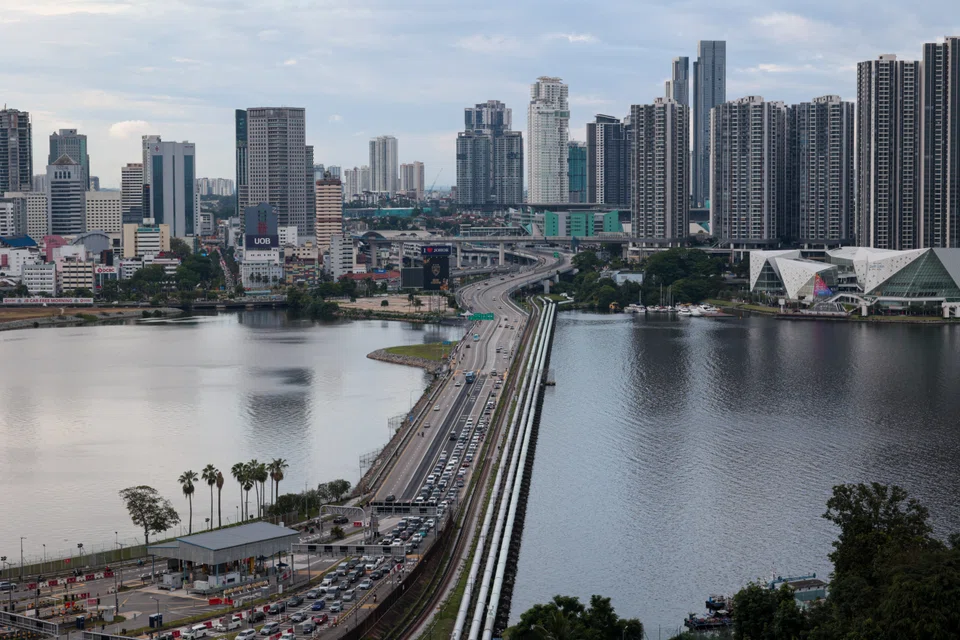
The already heavily congested Causeway – the busiest land crossing in the world – is likely to face additional strain as companies begin to shift operations.
Any infrastructural improvements to expedite customs clearance are likely to take months, if not years, to complete.
During this time, companies dealing with time-sensitive products, such as food manufacturers or caterers, may delay establishing operations in the SEZ.
Furthermore, current information suggests that the SEZ will be divided into sector-specific zones, with only certain industries permitted in each area.
This zoning approach could limit the range of sectors able to relocate and fully capitalise on the potential cost savings.
As businesses await the January 2025 agreement to shed light on incentives and operational details, the SEZ stands as a potential game-changer for regional collaboration – poised to reshape labour markets and economic landscapes for years to come.






