As Johor votes, investors watch for continuity in cross-border growth push
Key question is whether the next administration can keep momentum for JS-SEZ and other projects

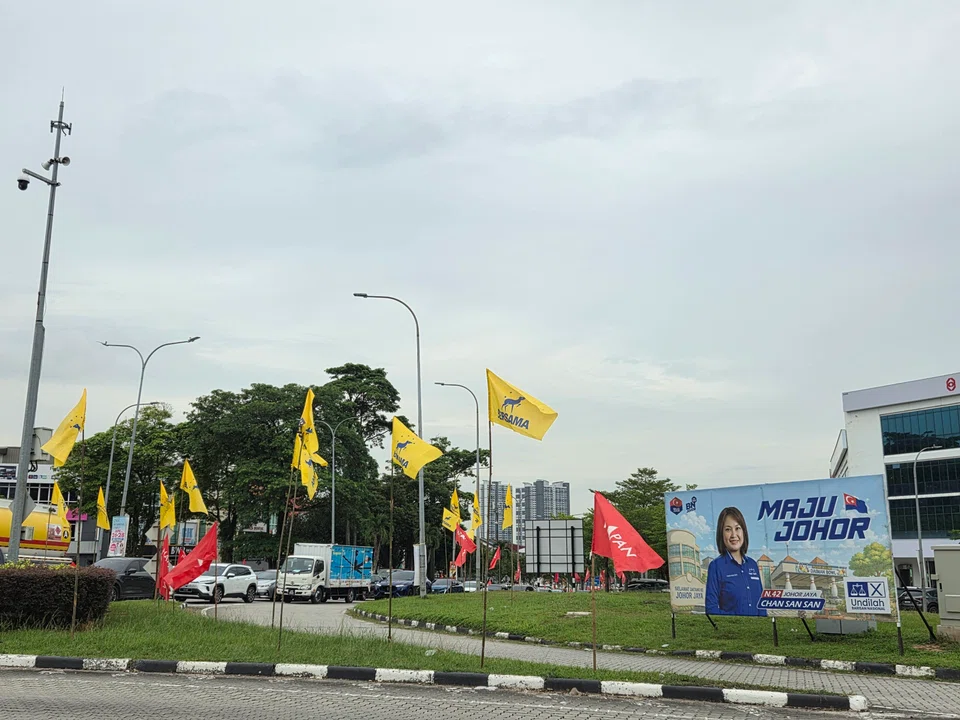
[KUALA LUMPUR] Johor voters head to the polls this Saturday (Jul 11) in a high-stakes state election that analysts and industry players say is unlikely to slow the southern state’s Malaysia-Singapore growth pact.
However, it could shape the stability and execution momentum behind them.
At the centre of those growth plans is the Johor-Singapore Special Economic Zone (JS-SEZ), Rapid Transit System Link, and a wave of investments and infrastructure projects that have made Johor a central pillar of one of South-east Asia’s most ambitious bilateral growth corridors.
“Politically, this election matters a great deal. Economically though, I would say the direction has already been set,” Previndran Singhe, founder and group CEO of Zerin Properties Group, told The Business Times.
The JS-SEZ, he pointed out, is “not a campaign pledge”.
“It is a signed framework between two sovereign governments, and much of the capital committed so far – from data centres to industrial parks to the RTS Link – was never contingent on a state election outcome.”
Malaysia’s southernmost state posted an expansion of 8 per cent in gross domestic product in the first quarter of 2026, marking the highest growth rate among the country’s states.
It also drew RM16.9 billion (US$4.1 billion) in foreign direct investment during the quarter, much of which is directly tied to major cross-border initiatives.
That has turned this weekend’s state election into more than a contest over who governs Johor. For investors, the key question is whether the next state administration can maintain policy continuity and execute projects that have become central to Malaysia-Singapore economic integration.
The incumbent Barisan Nasional (BN) – the long-established coalition led by the United Malays National Organisation (Umno) – is widely seen as the front runner, given its support in traditional Malay-majority strongholds.
But analysts said that Pakatan Harapan (PH), the reformist multi-ethnic coalition led nationally by Prime Minister Anwar Ibrahim’s Parti Keadilan Rakyat, is expected to put up a tougher fight in urban and Chinese-majority constituencies, where voter sentiment is less firmly in BN’s favour.
Policy analyst and assistant professor at Universiti Tunku Abdul Rahman Liew Wui Chern, who recently conducted fieldwork across Johor, said BN remains strongest in its traditional heartlands.
Contests in urban constituencies such as Johor Jaya, Perling and Skudai, however, are expected to be closely fought, he said.
Adding to the uncertainty is Bersama, a new party contesting 15 seats. Its presence could fragment opposition votes in multi-cornered fights, making the final electoral arithmetic highly unpredictable.
For the business community, the political race is secondary. Economists and corporate leaders emphasise that the overriding priority for investors is policy continuity.
“Regardless of who wins,” Prof Liew said, “the critical question is whether the next administration can maintain momentum and effectively execute the landmark JS-SEZ and other vital cross-border infrastructure projects.”
Focus on economic growth
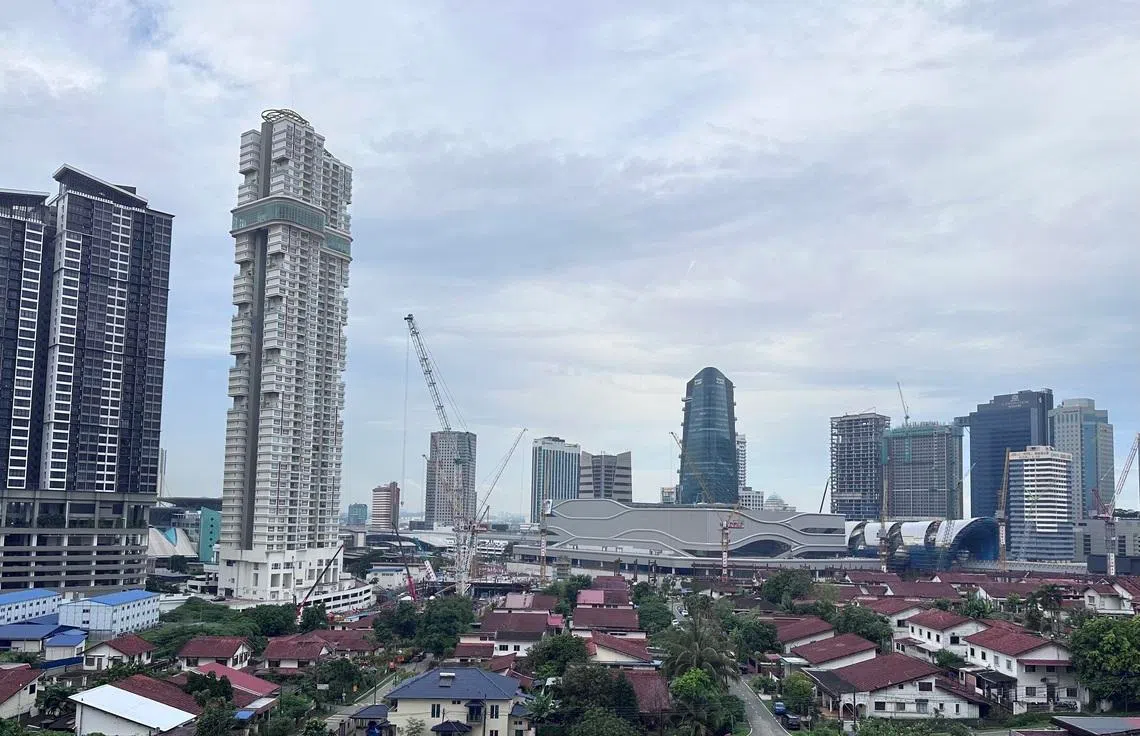
Zerin Properties’ Singhe said the real question for investors is not whether policies change, but how efficiently they are implemented. He stressed that what is really at stake is the pace of execution rather than the direction of policy.
“A strong, stable mandate for the incumbent government would likely mean continuity and quicker momentum, since approvals and coordination tend to move faster when there is political clarity,” he added.
OCBC senior Asean economist Lavanya Venkateswaran said that investors are also likely to distinguish between politics and policy.
“We do not expect the incoming administration to undo the economic policies put in place to bolster Johor’s economy; it may boil down to some policy fine-tuning,” she said in a recent report.
Venkateswaran noted that the roll-out of the JS-SEZ, rapid expansion of data centres, the planned RTS Link and the RM10 billion elevated Autonomous Rapid Transit (e-ART) system have reinforced Johor’s position as a cross-border economic hub.
For businesses already operating in Johor, the focus has shifted from attracting fresh investments to ensuring the state has the capacity to deliver what has already been committed.
Singhe said that inquiries from investors have remained resilient despite the election campaign. “We are not seeing inquiries pause. Deals already in motion, whether due diligence, land searches or joint venture discussions, are continuing as usual,” he said.
“In fact, we are seeing more inquiries recently, though I would be cautious about linking that directly to the election. It is more a reflection of the broader economic trajectory, the SEZ incentives, demand from semiconductor and data centre players, and continued spillover from Singapore.”
No cause for alarm for JS-SEZ
Prof Liew observed that Johor’s business community broadly wants political stability to sustain ongoing projects, while also expecting improvements in governance and public service delivery.
Among voters, he said, concerns have shifted towards issues that directly affect daily life, including employment opportunities, traffic congestion, flood mitigation and the rising cost of living.

For investors, however, the message is more straightforward, Prof Liew said.
“There is no cause for alarm,” he added, highlighting that the JS-SEZ is a bilateral initiative backed by the governments of both Malaysia and Singapore.
“Whatever the outcome this Saturday, the economic momentum of Johor is here to stay.”
That confidence is shared by business owners on the ground.
David Chung, who owns businesses in Johor Bahru, Singapore and Kuala Lumpur, said he is considering travelling home to cast his vote this weekend.
Unlike previous elections, where he felt there was a pressing need for political change, he now believes that Johor’s business environment has improved significantly.
“What concerns me most is not a massive overhaul of the government, but rather better execution,” he said.
“Malaysia has good development master plans and policies, but it lacks execution. To me, the deciding factor will be who is capable of pushing through with implementation, rather than who is making big promises of change.”
For many Johoreans living and working across the Causeway, the election also represents the hope that the state’s economic transformation will create opportunities closer to home.
A first-time voter working in Singapore, who declined to be named, said: “I hope commuting between Johor Bahru and Singapore becomes smoother, and that there will be better job opportunities in Johor so I can eventually return home to work.”